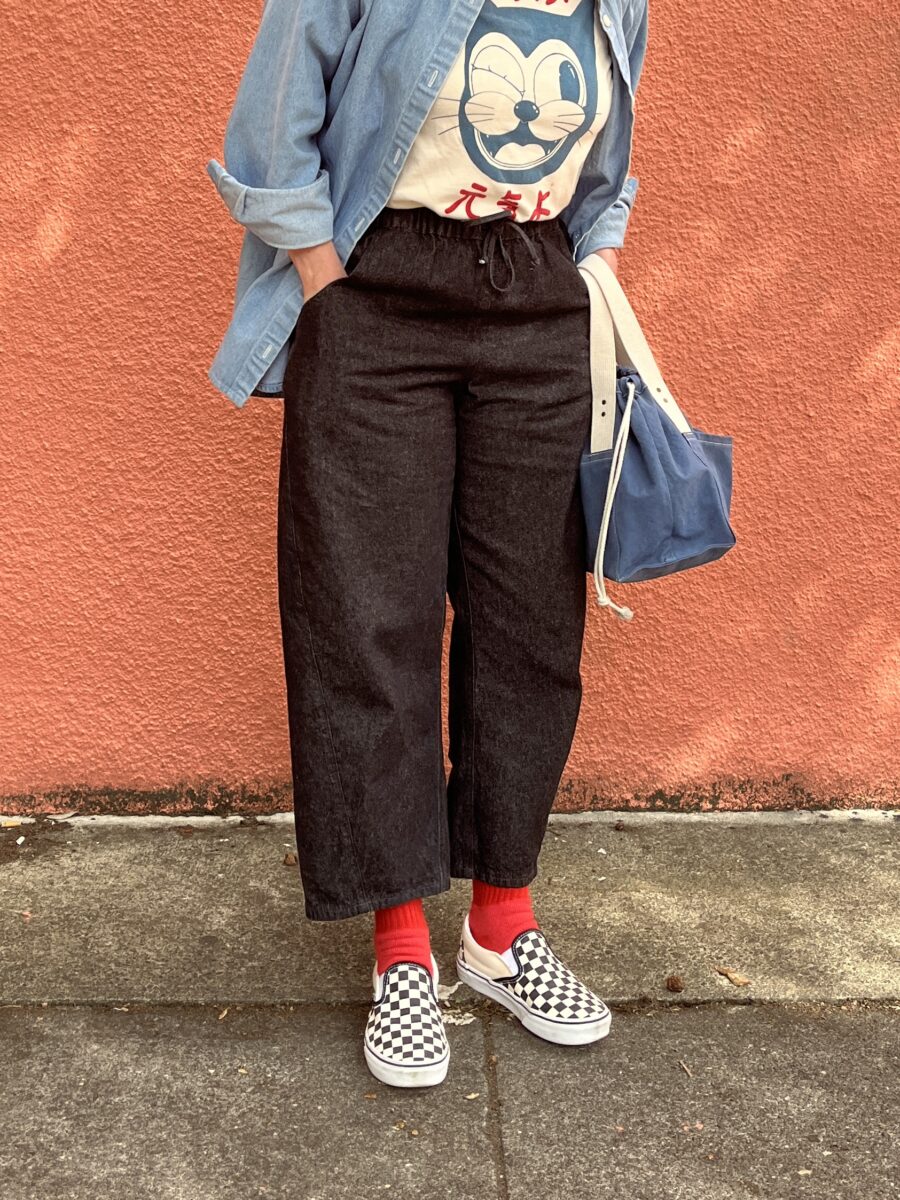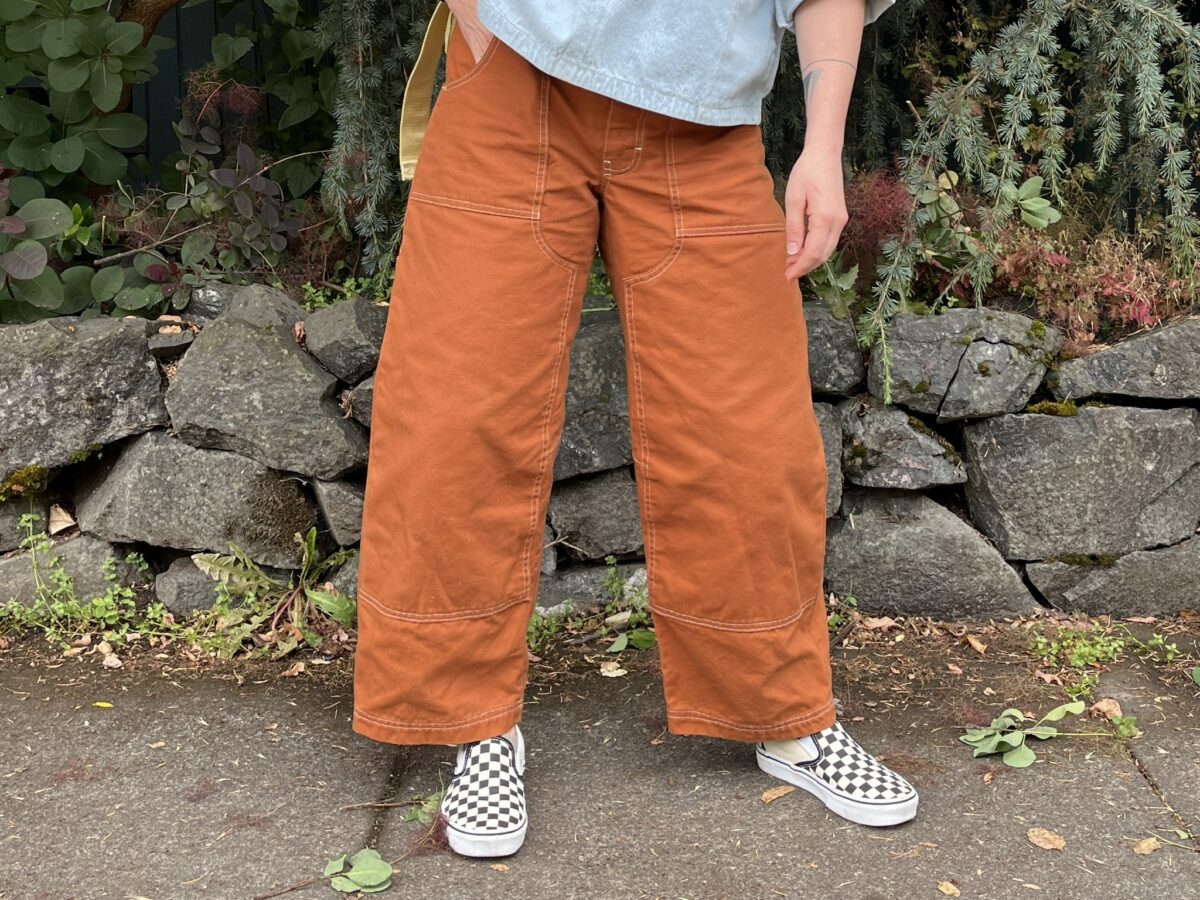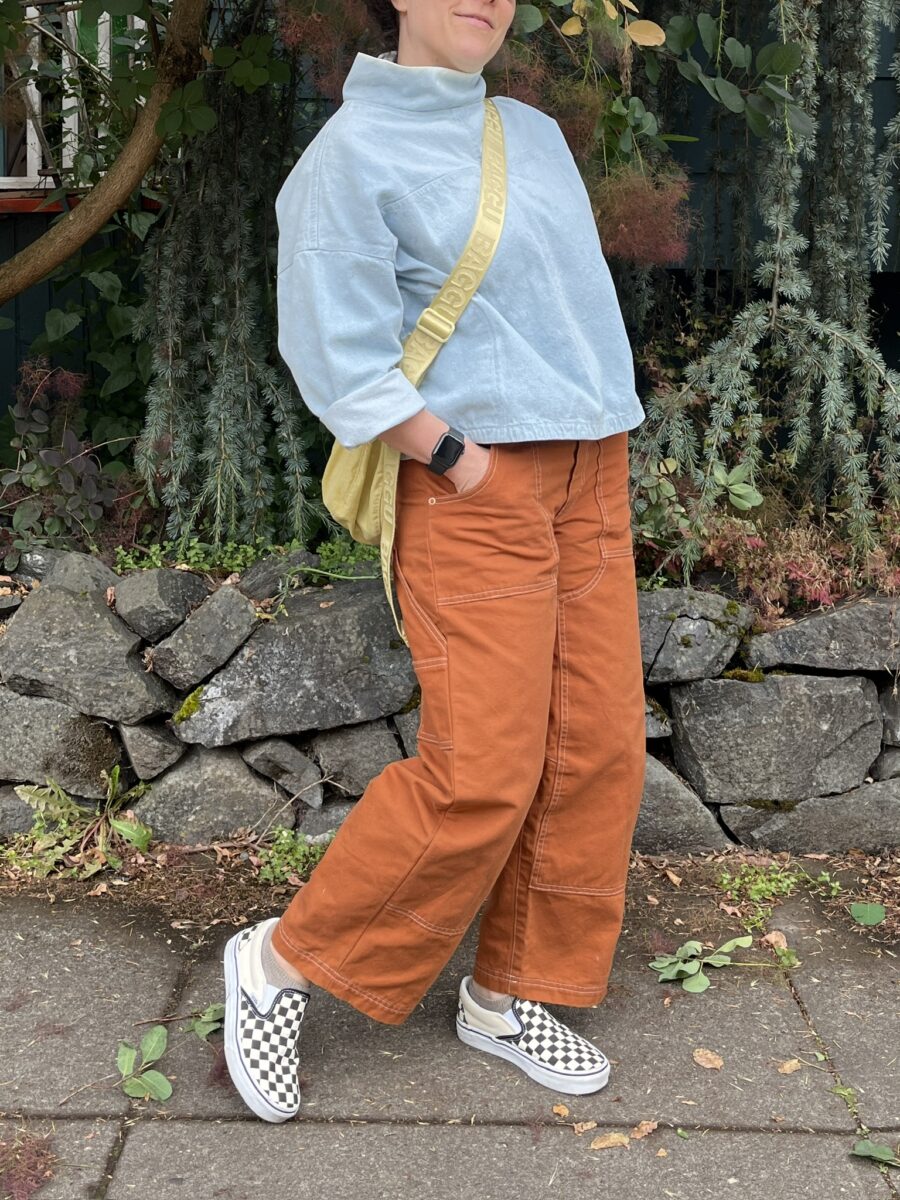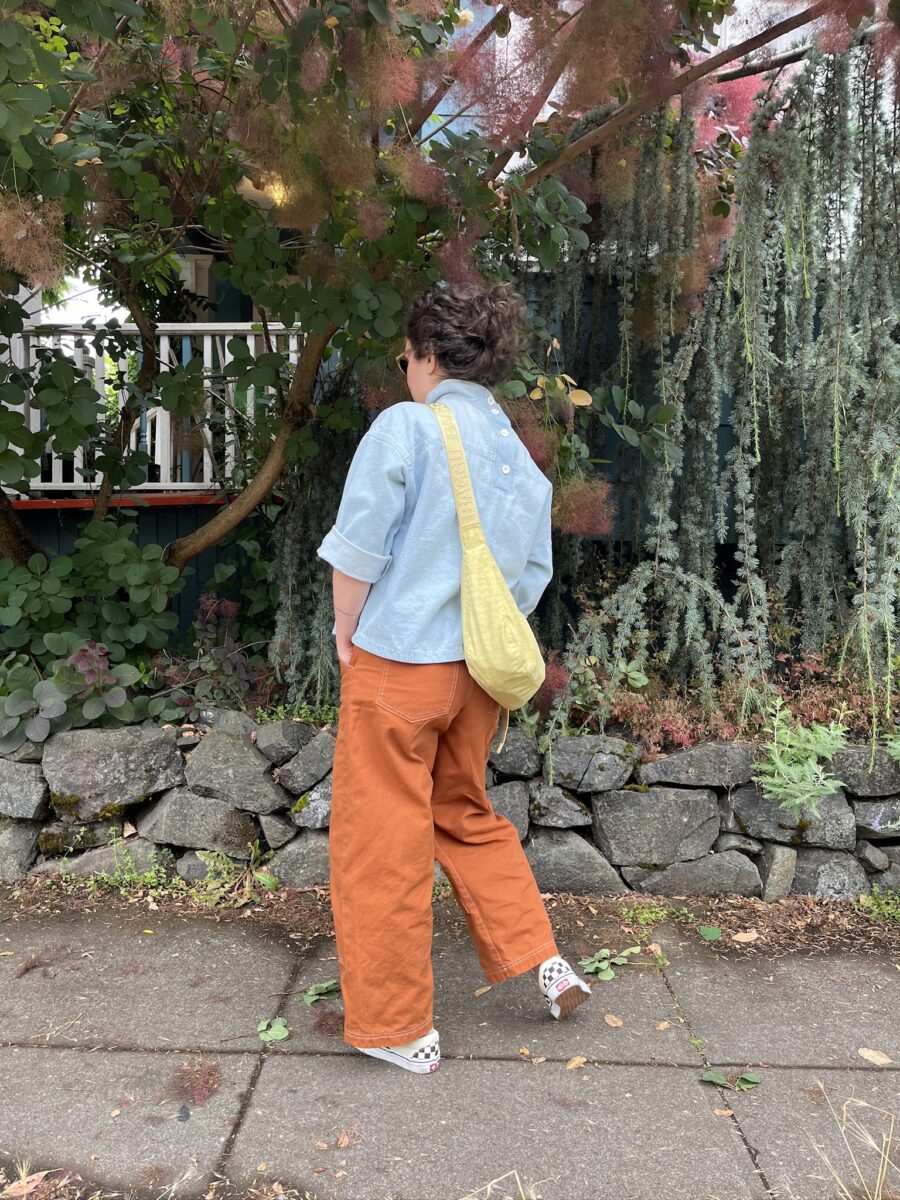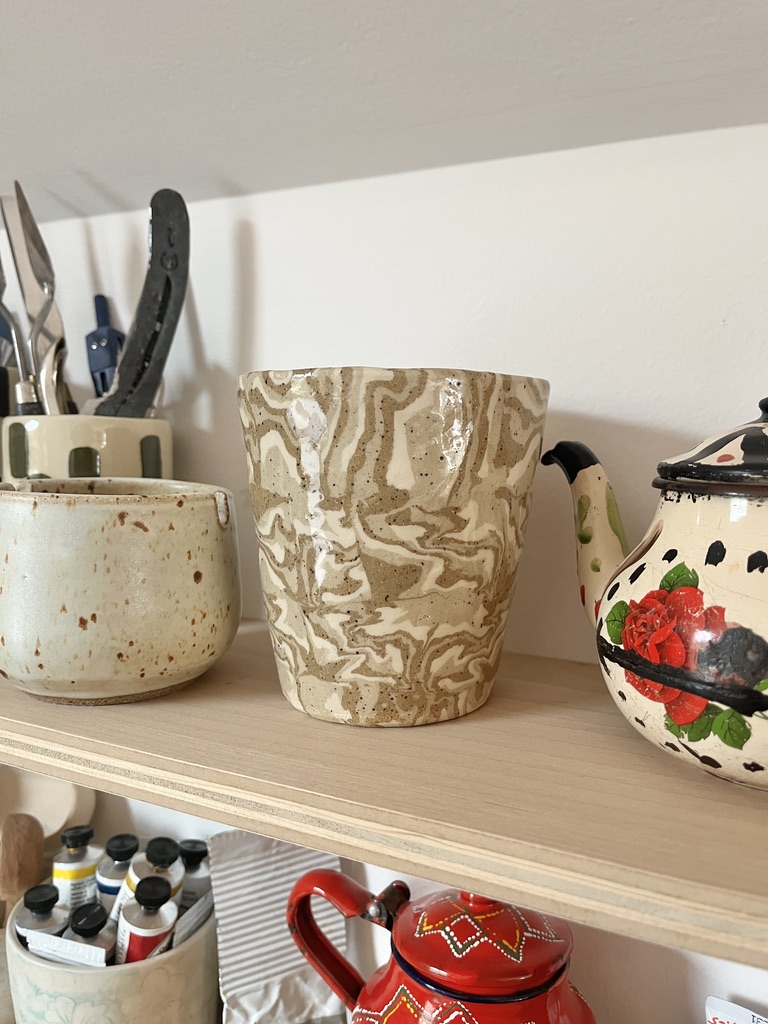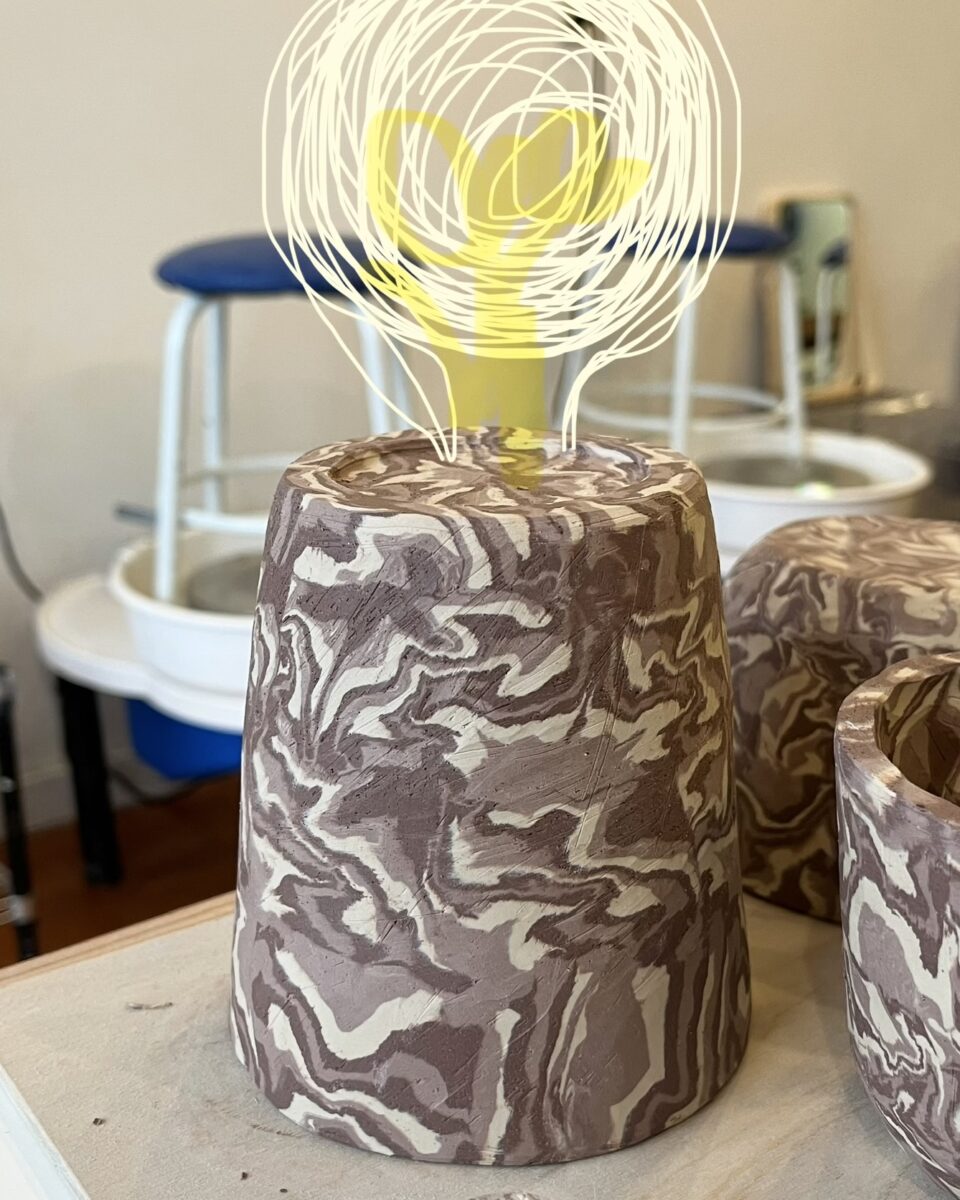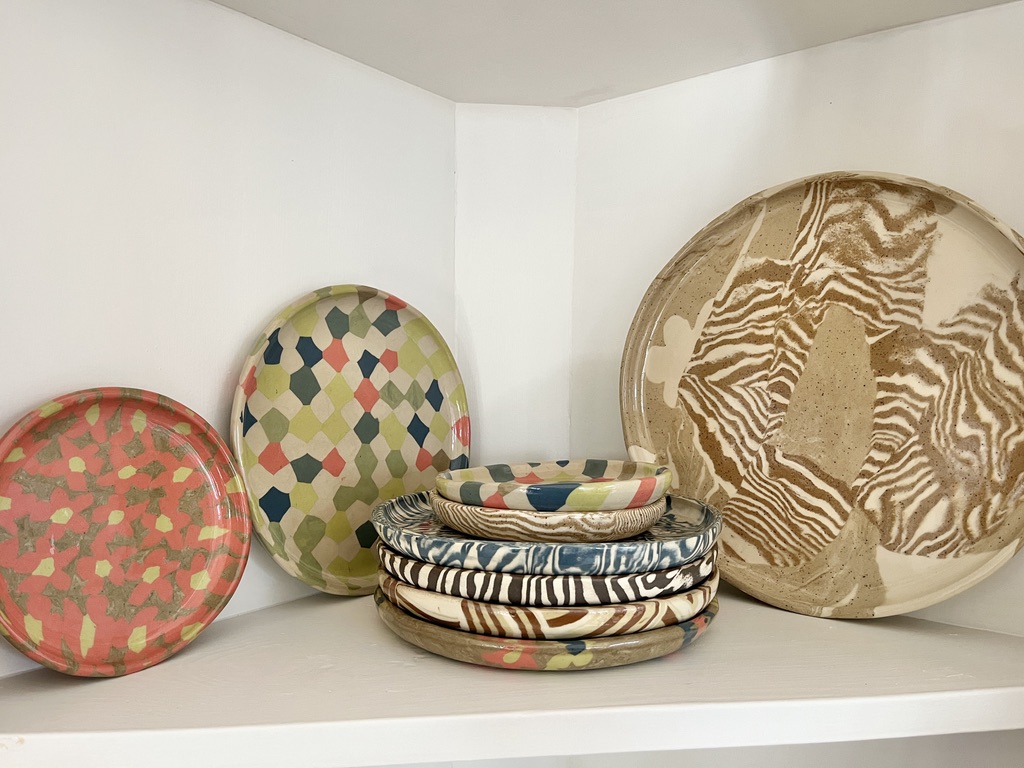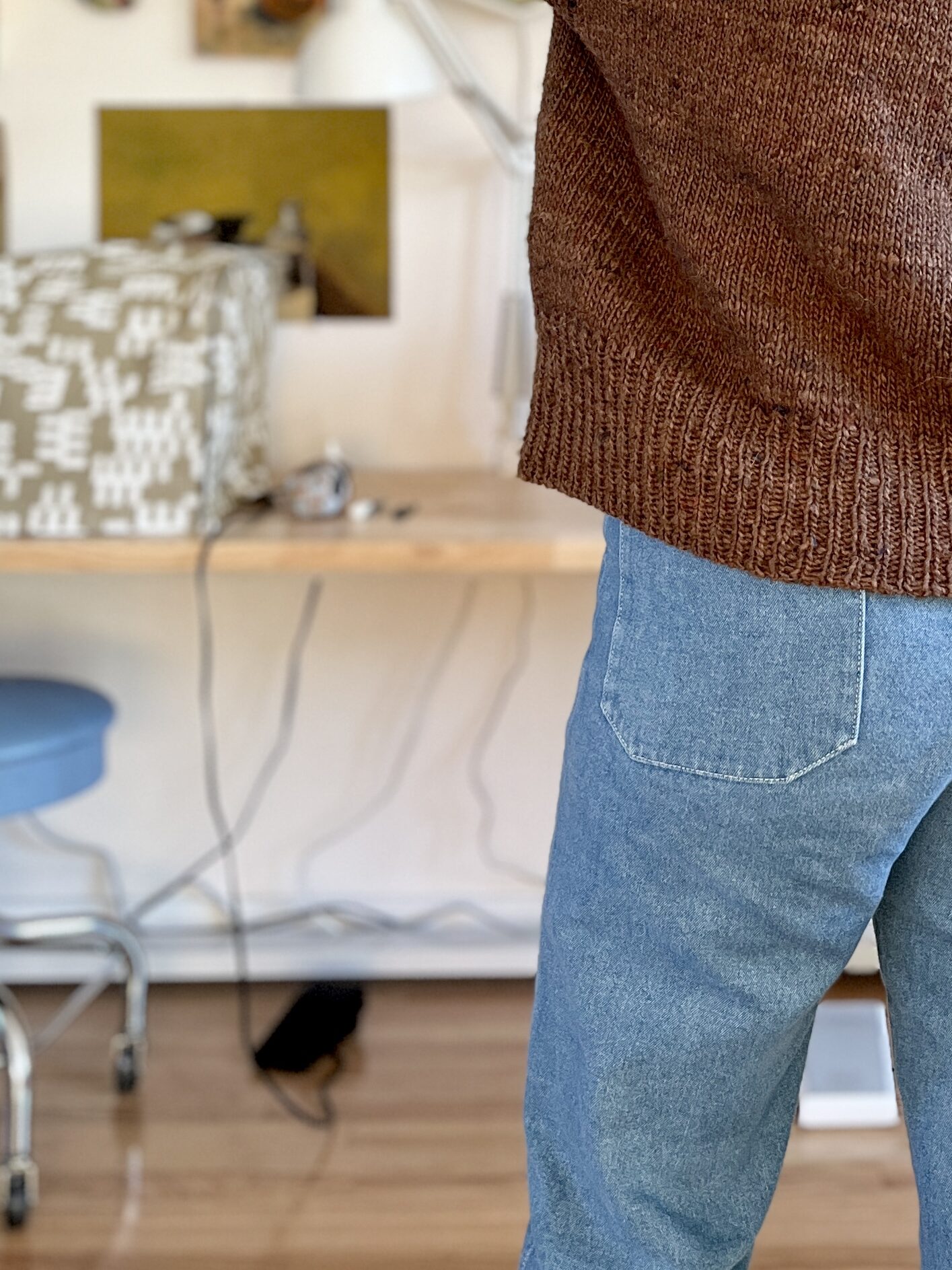

I’m off Instagram, but I’m sewing pants.

1 Comment

I started using Instagram like anyone else – posting food and scenes from daily life. It was used infrequently and I mainly followed a very small group of people, all of which I knew in real life.

Then I started sewing. Instagram became a huge source of inspiration and information. It was a place to socialize with other sewists, find indie patternmakers, see inventory of local fabric shops, be inspired by hacks, and learn what fit adjustments worked for others. It was great. And I was hooked… but it felt positive.

There were a lot of reasons I decided to deactivate my account, but the main one was all the couch rotting I was doing with it. I am all for resting, but I wasn’t even looking at things I cared about. My entire feed was ads and people I wasn’t following and yet, I was still on it all the time. When presented with time that could be spent doing anything pleasurable, I’d opt to open the app instead. Sure, I could have deleted it (and I did) but I always found some way to scroll.

So what am I doing to stay connected? Ravelry and Threadloop. I have been regularly using Ravelry for about four years and although I’ve had an account since beta testing, I’m only just starting to use the free version of Threadloop. There aren’t any public posts yet, but I do value the sharing of makes, so once I’ve taken helpful pictures and written some words, I’ll make some projects public.

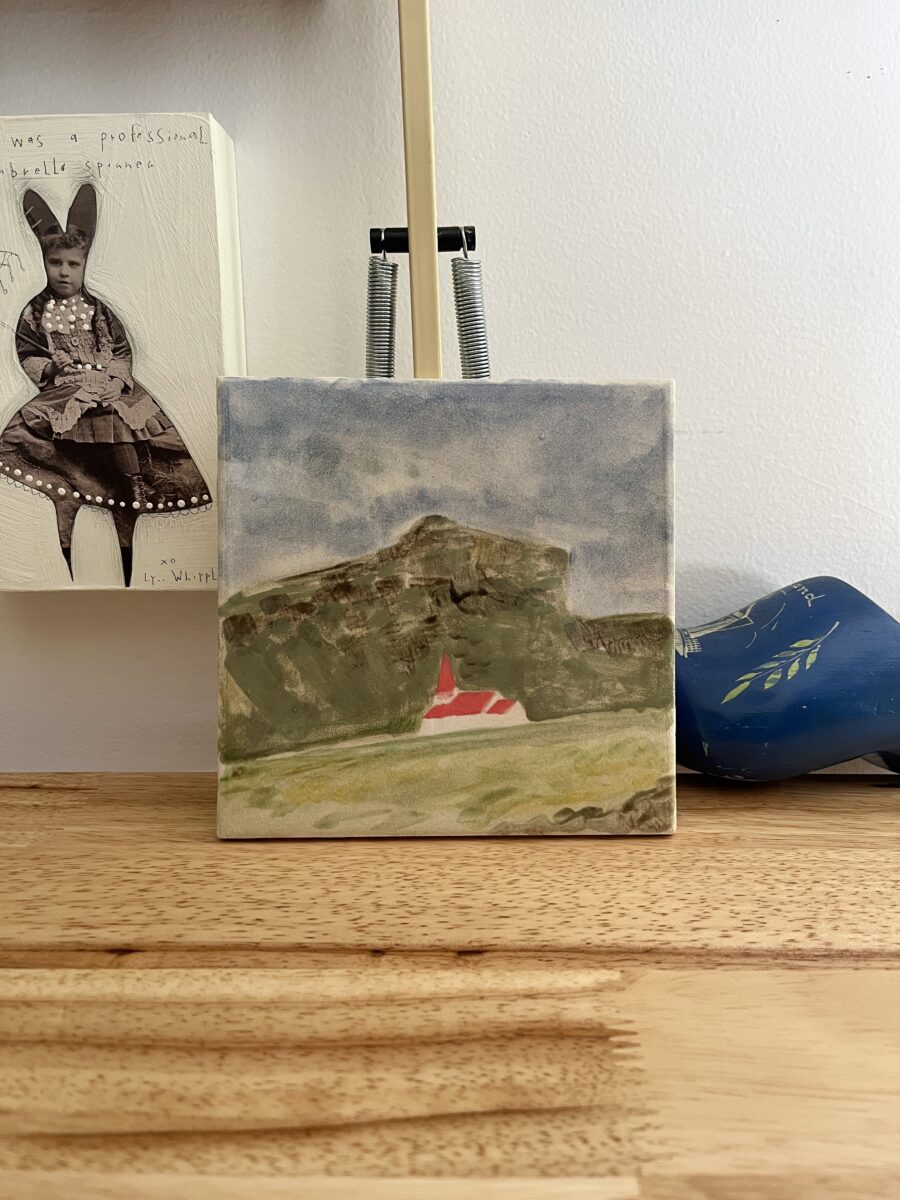
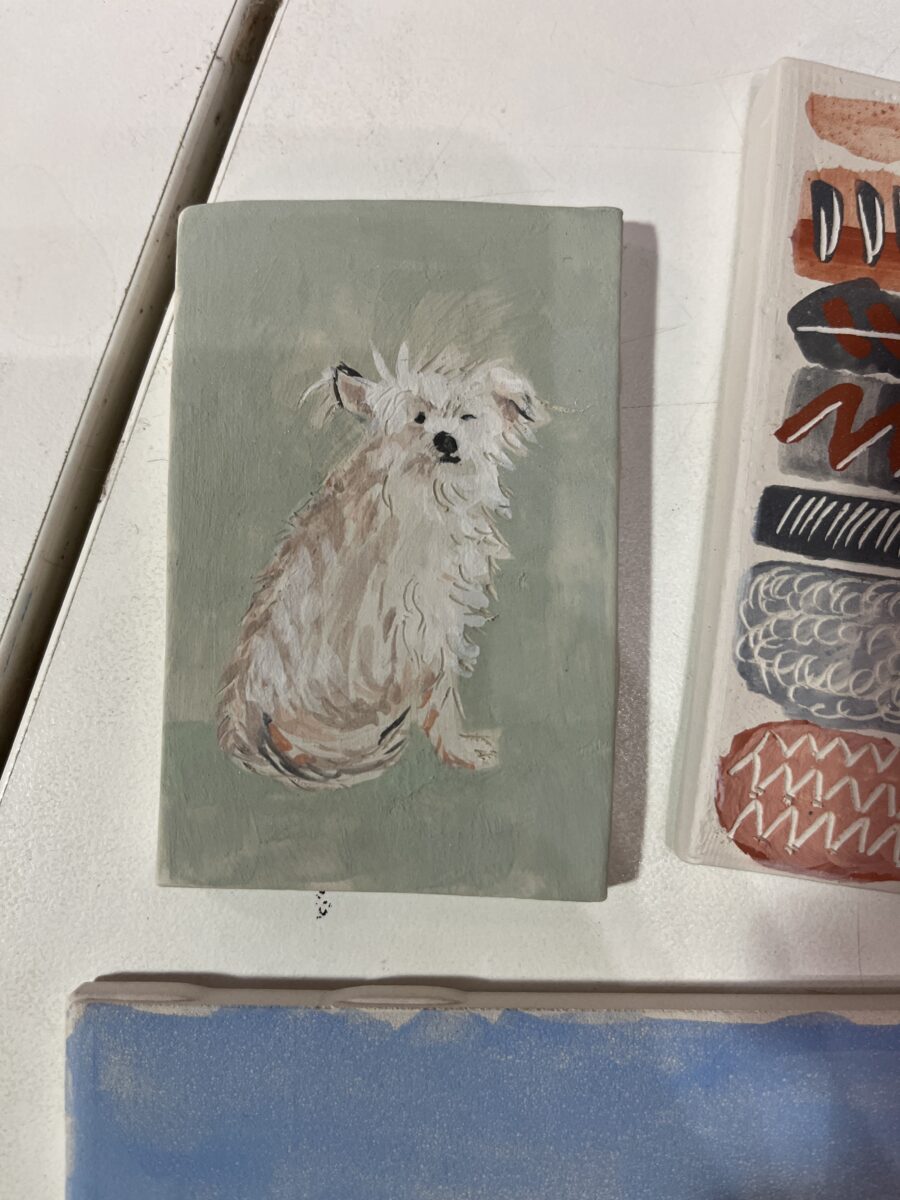
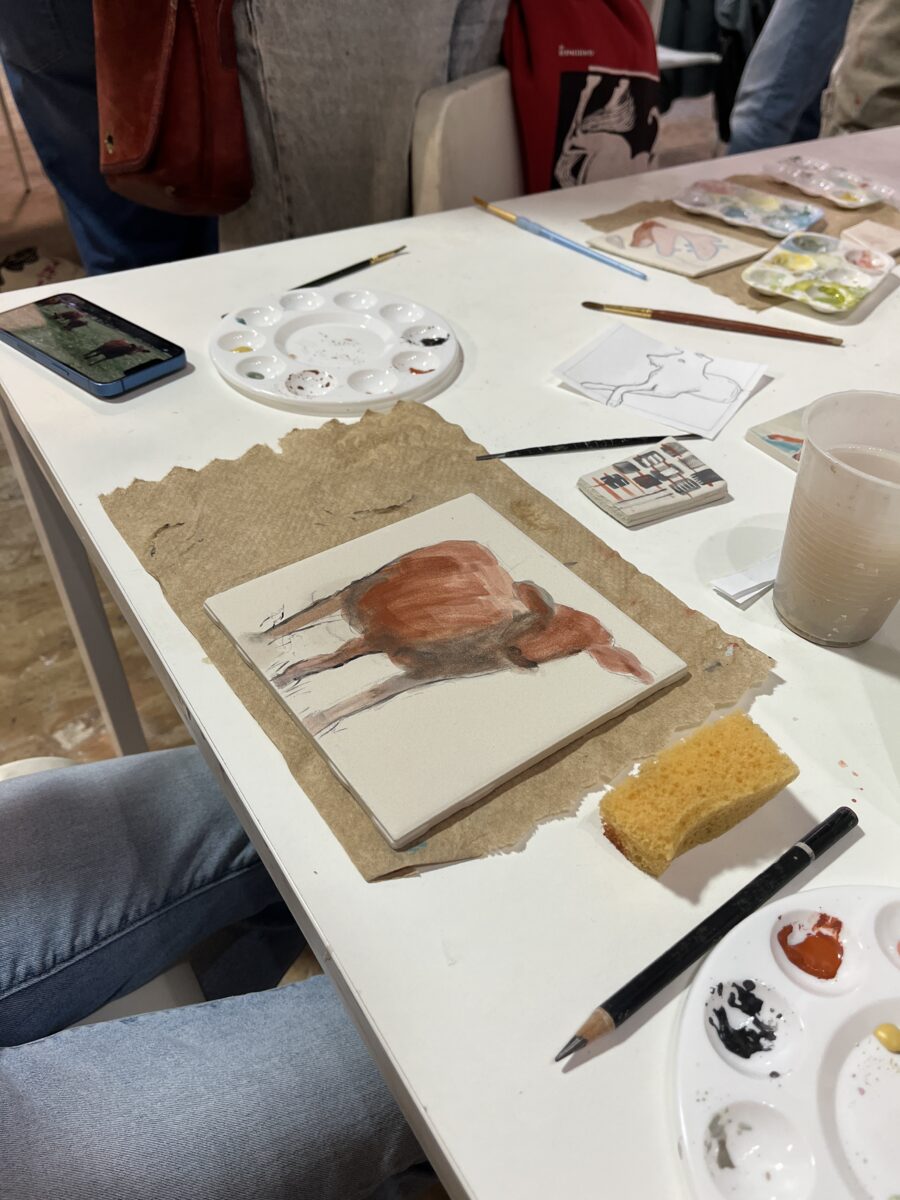
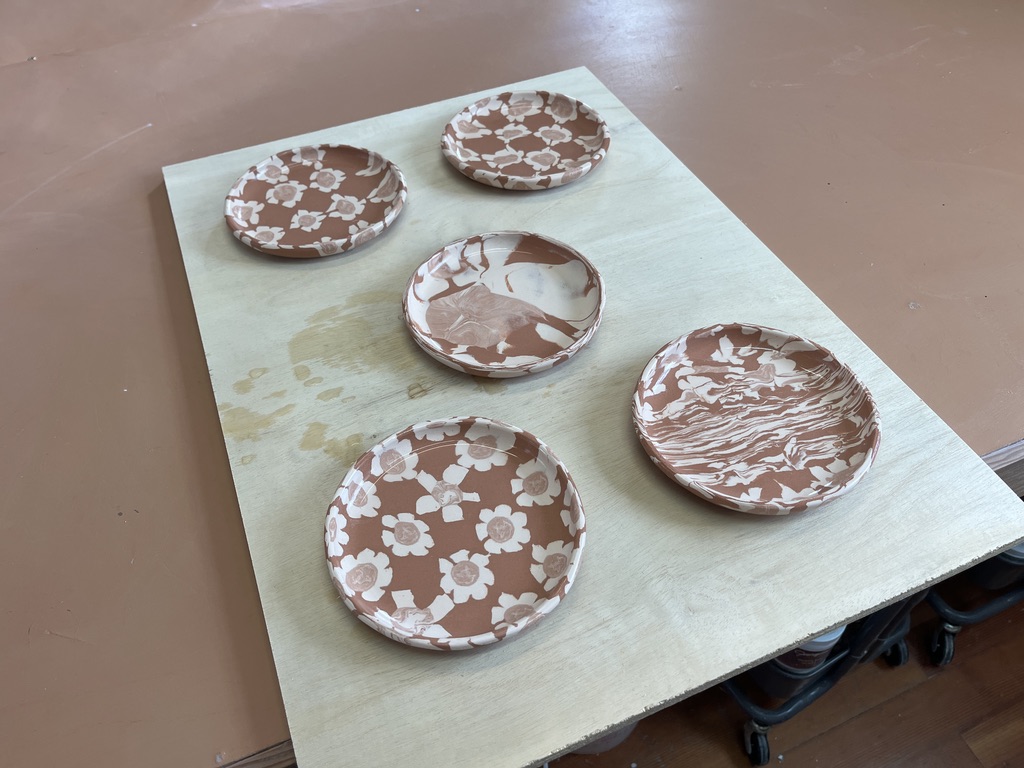
I miss seeing ceramics and paintings and travel sketches and all that. And I miss occasionally being fed something cool happening in my city. So I’m not sure where to seek out content like this. Pinterest has about as many ads as Instagram.

It’s only been a couple weeks, but I have felt some mental changes. I’ve been reading and Logbooking, and I’ve been sewing! Like a lot! Here’s some of what I’ve been making:

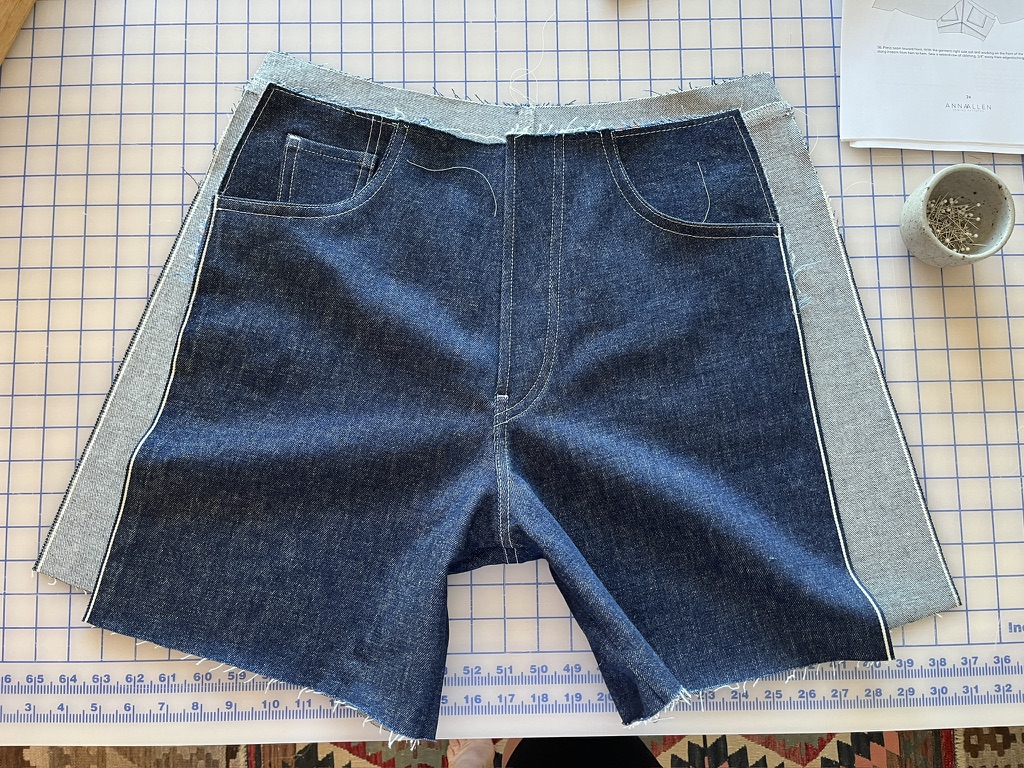
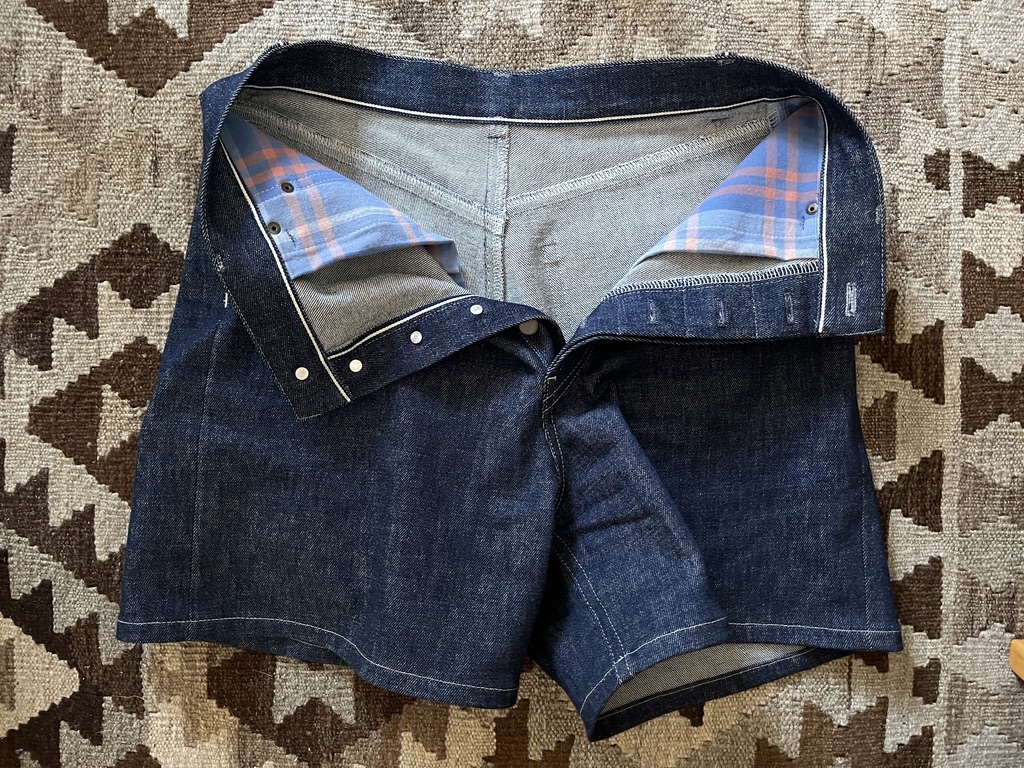
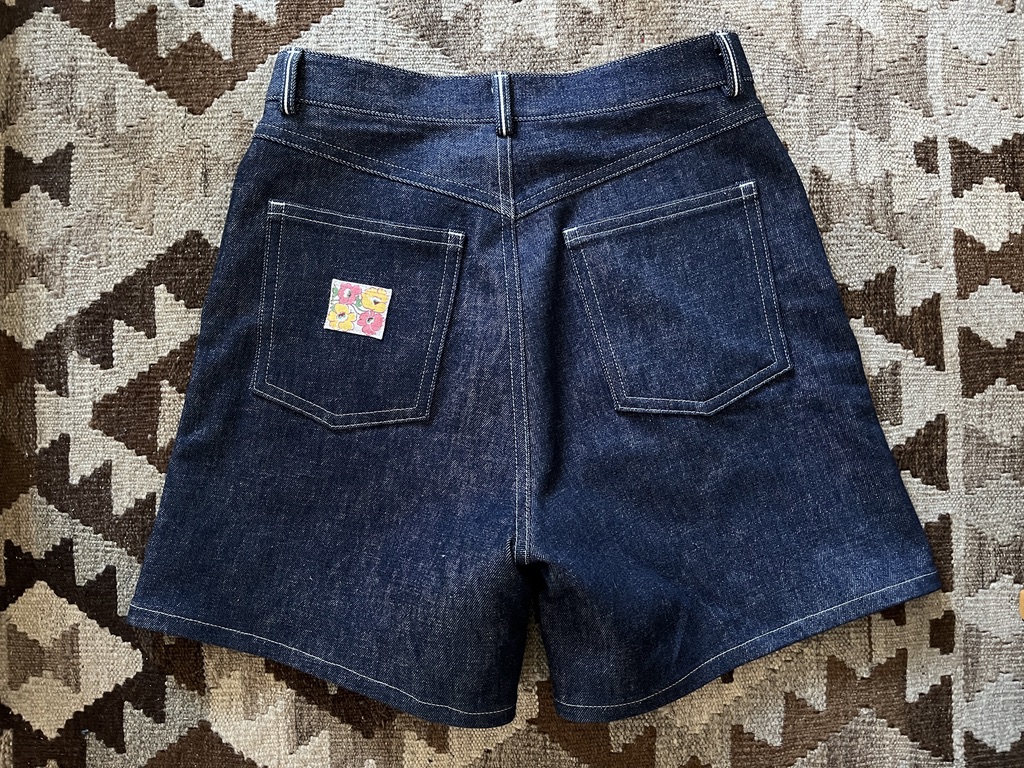
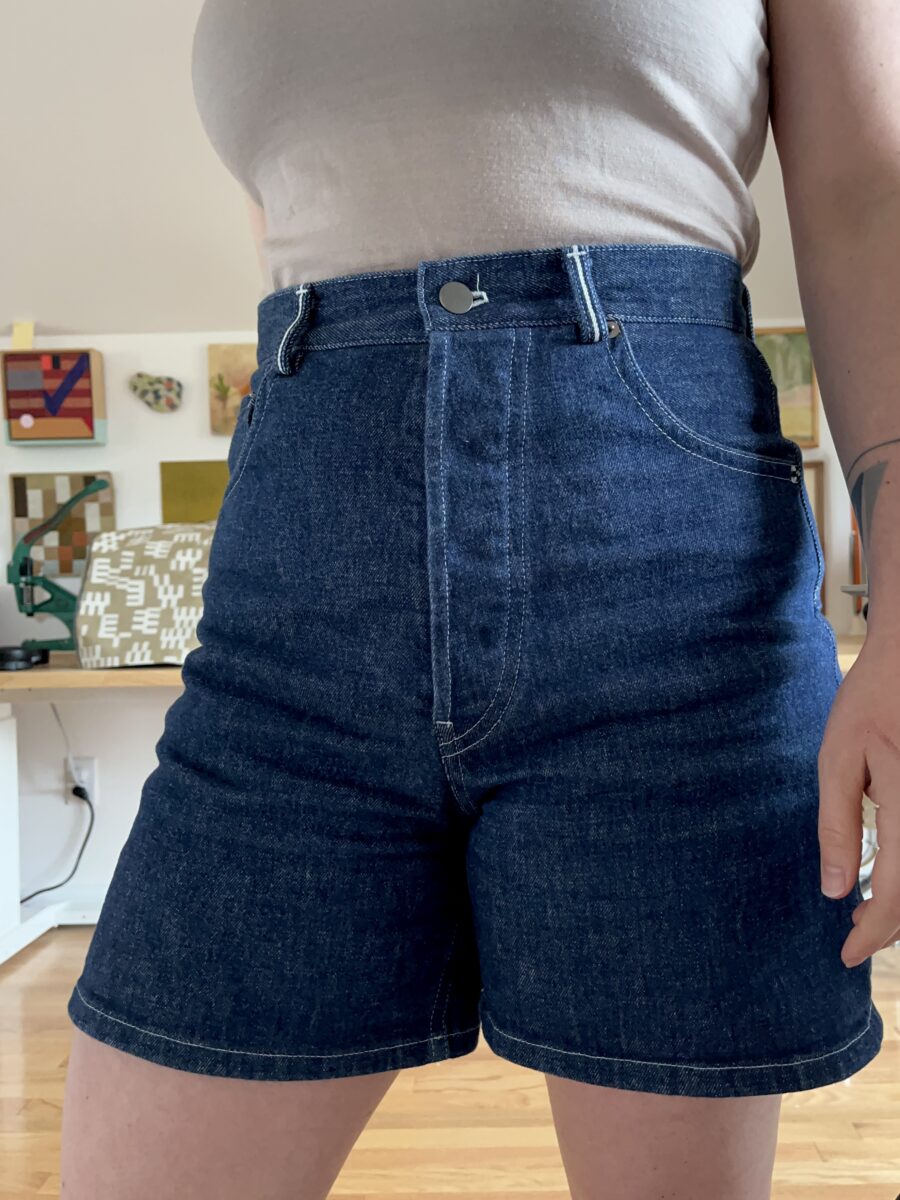
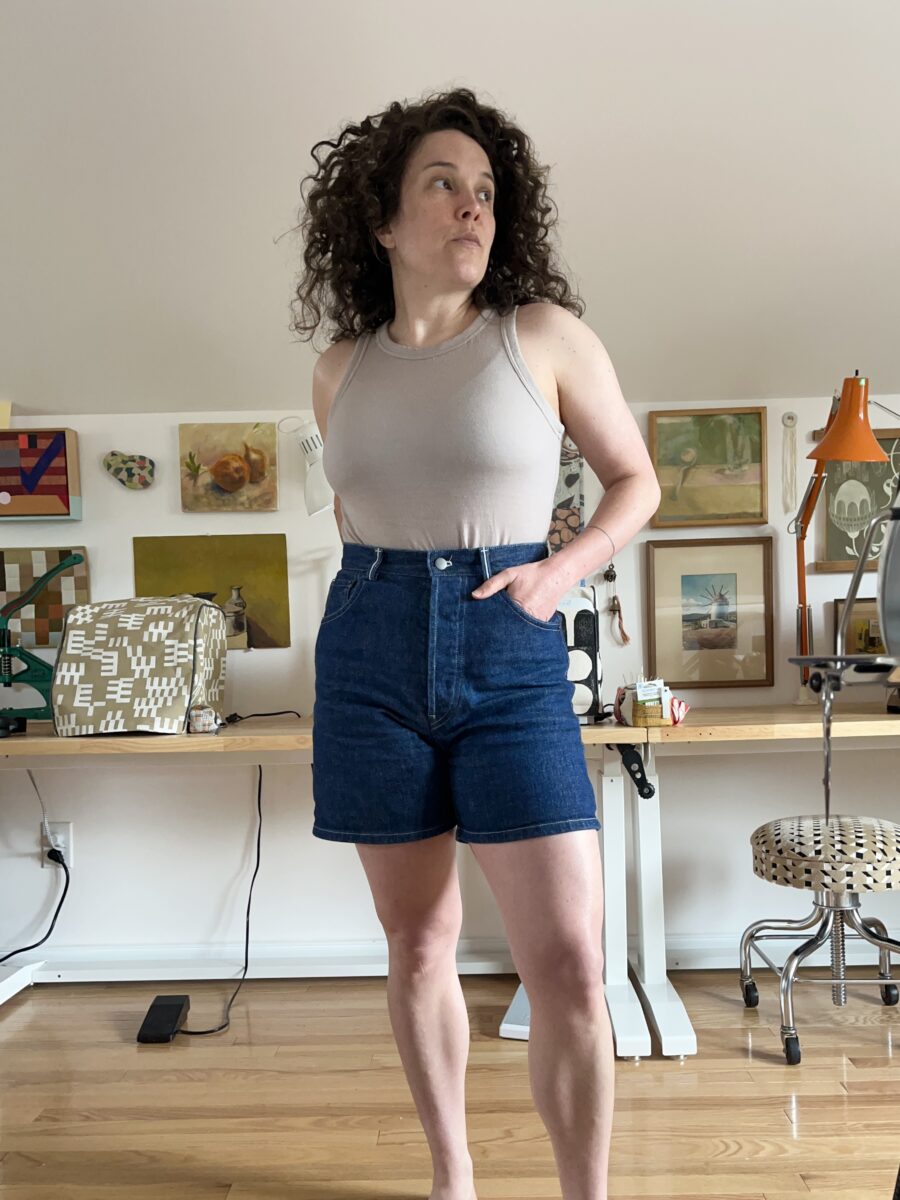
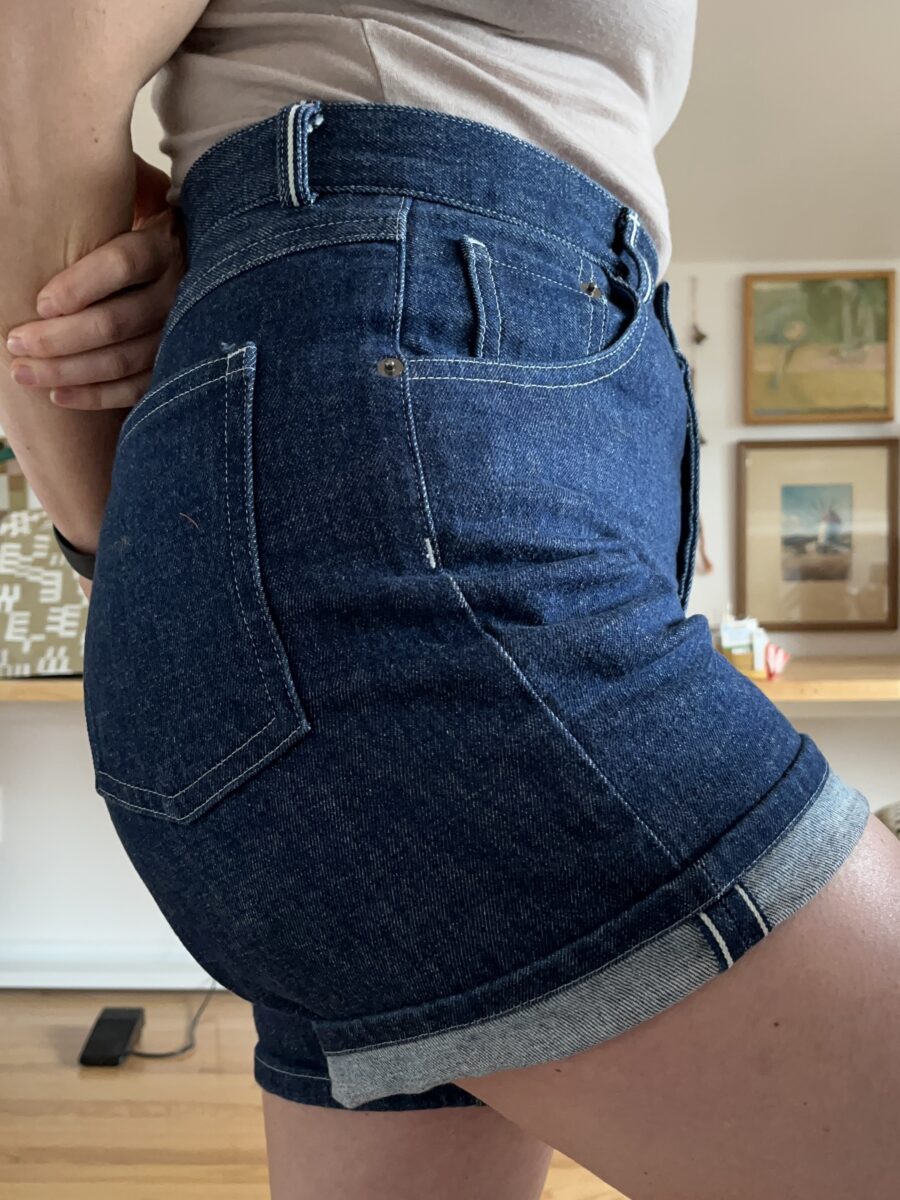
Helene Shorts

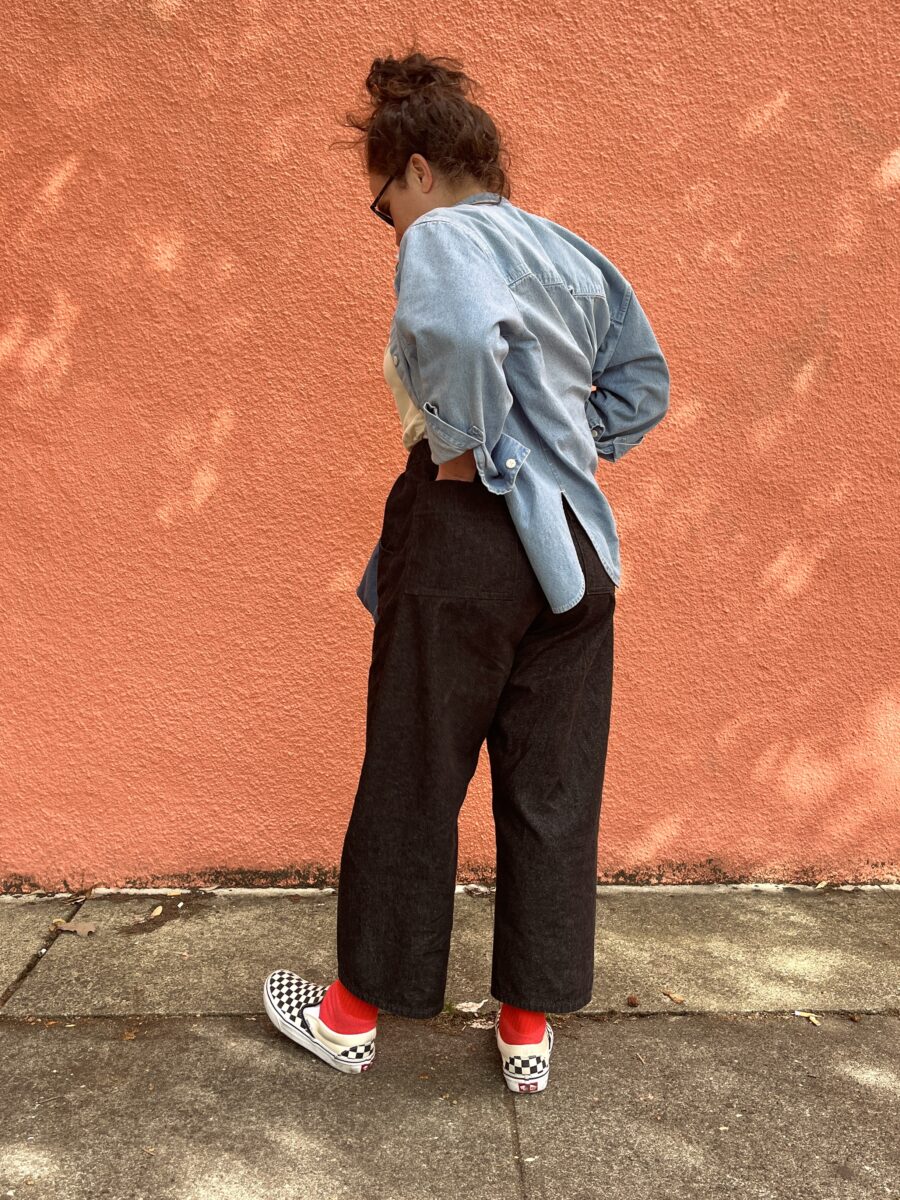
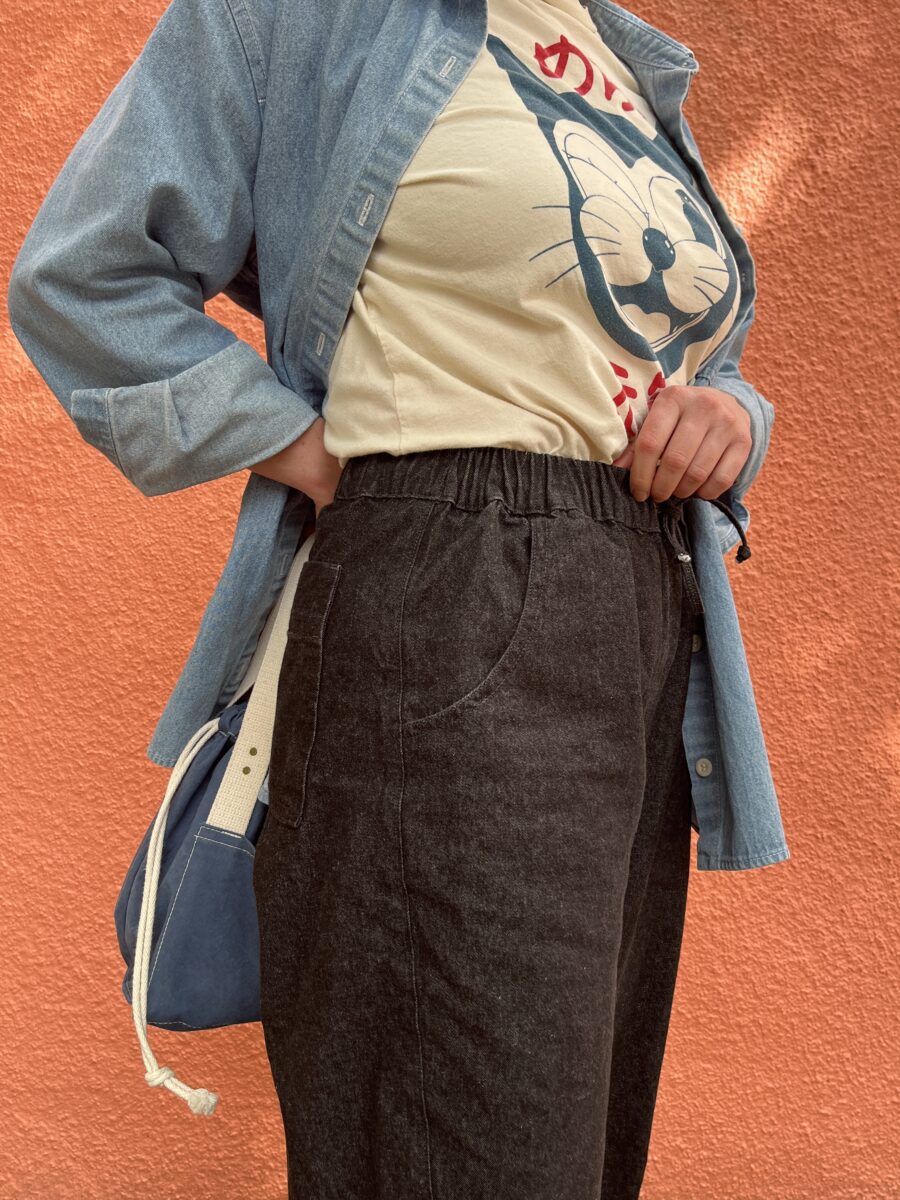
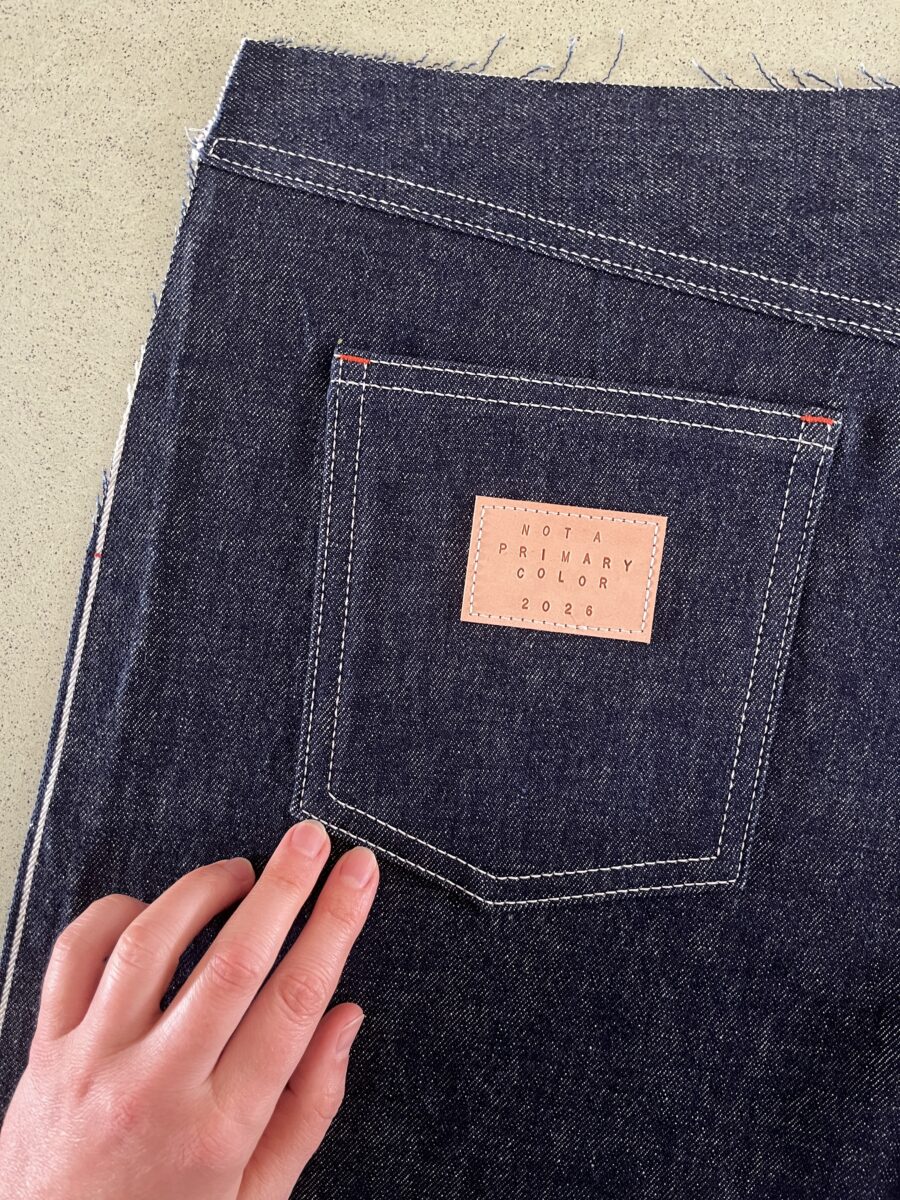
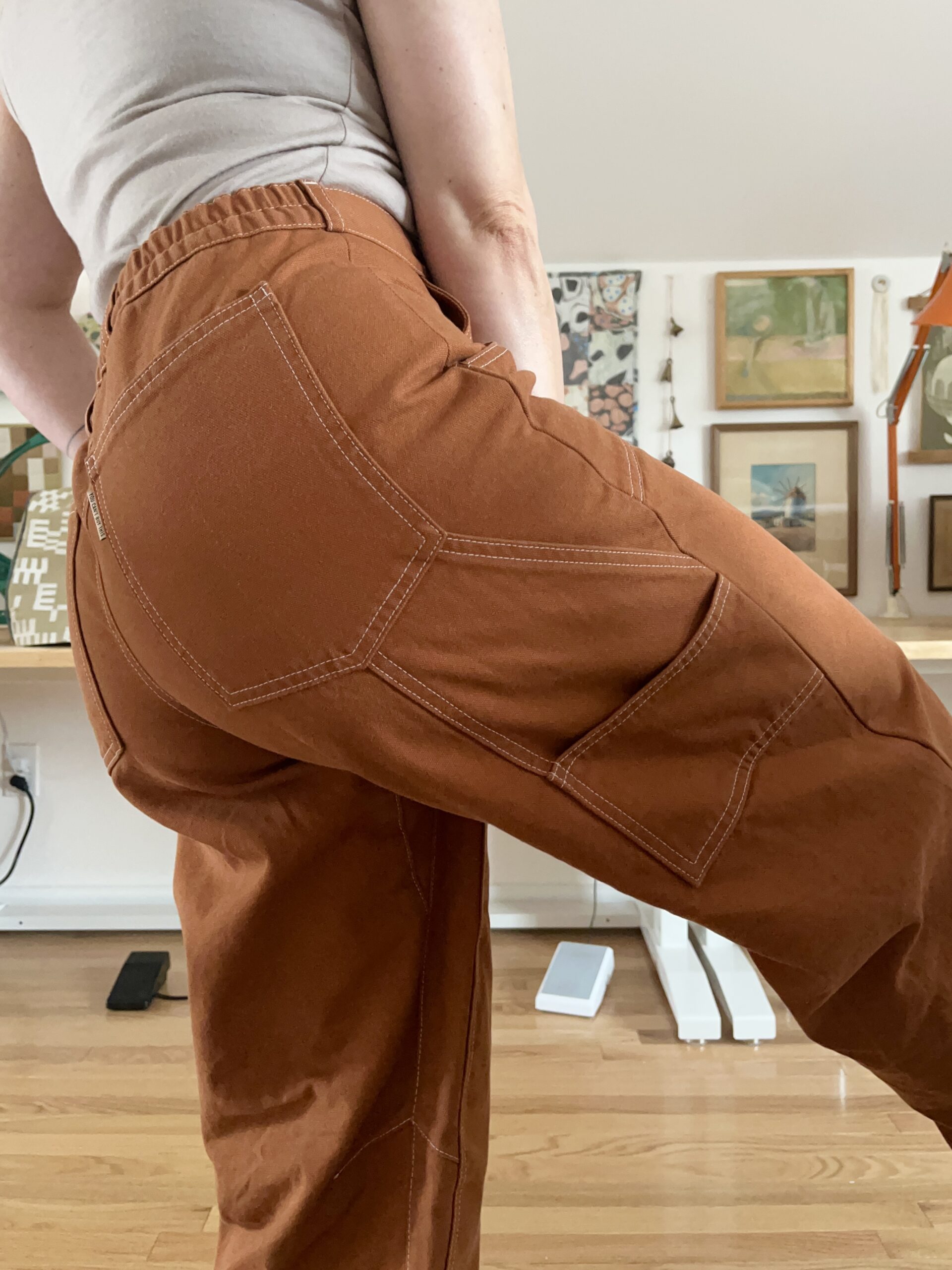
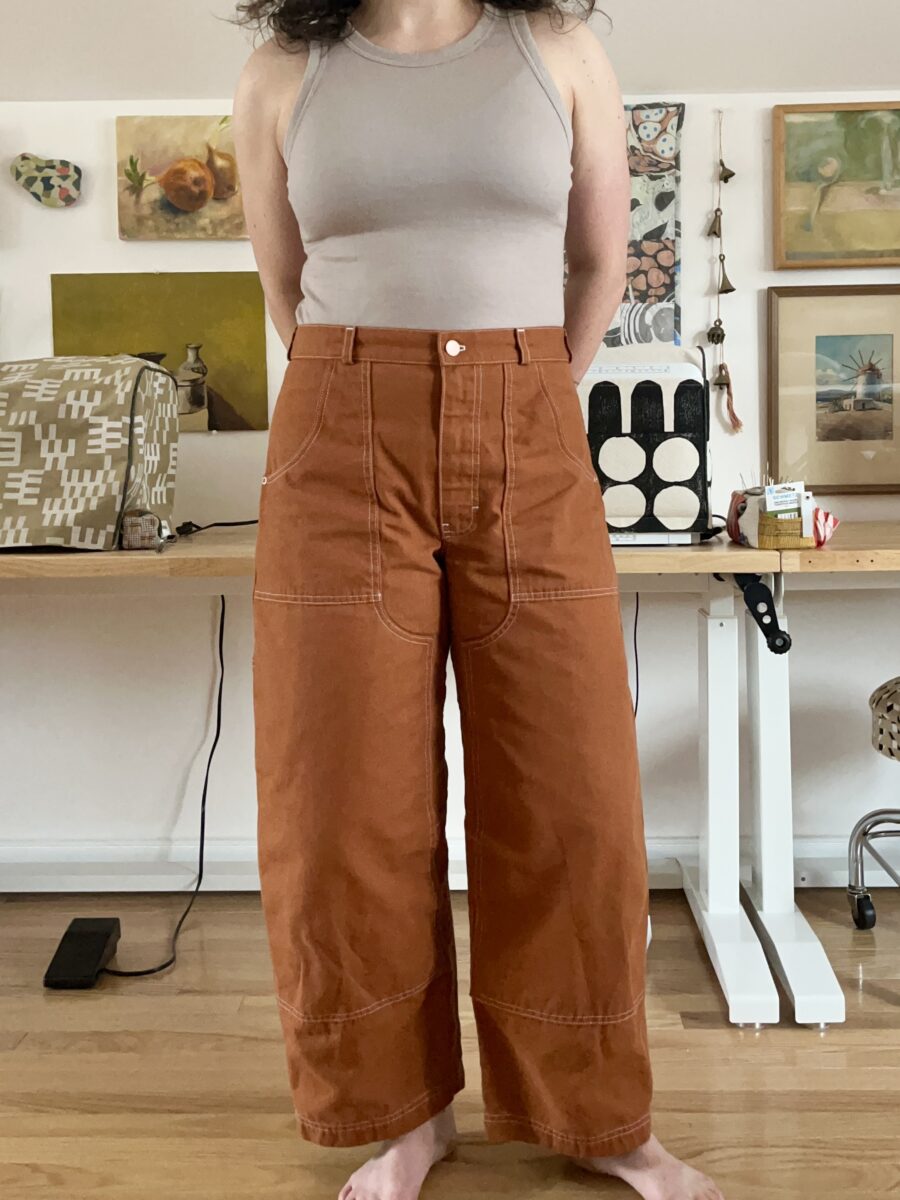
I’ve been in my head about sewing bottoms since my hysterectomy (and beginning weight training), but I finally said fuck it. I bought some 12 oz selvage denim from Salt Lake Sewciety and only after ordering realized it contained 1% spandex. Initially I was annoyed, but this might be my new favorite fiber combo for hard pants! It doesn’t sew quite as nicely as rigid denim, but the added comfort is worth it.

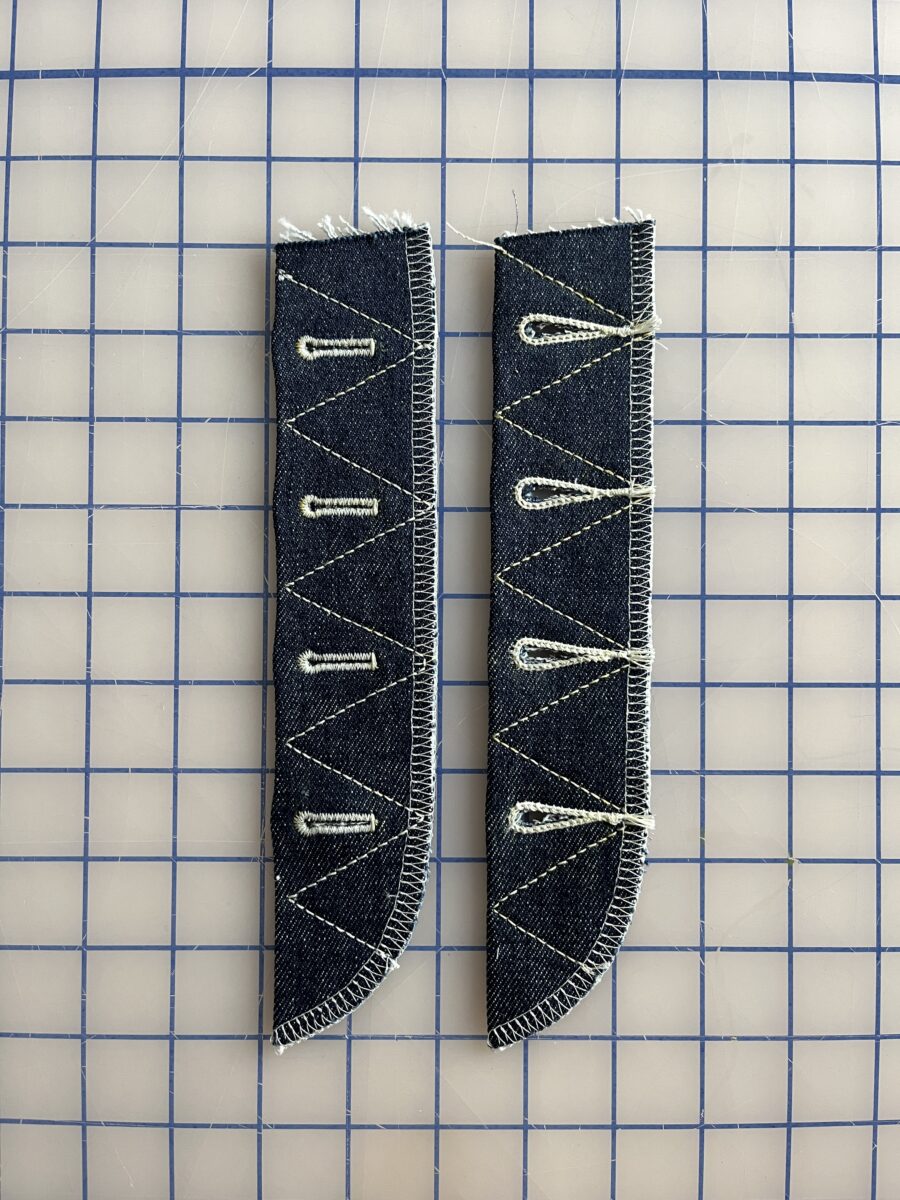
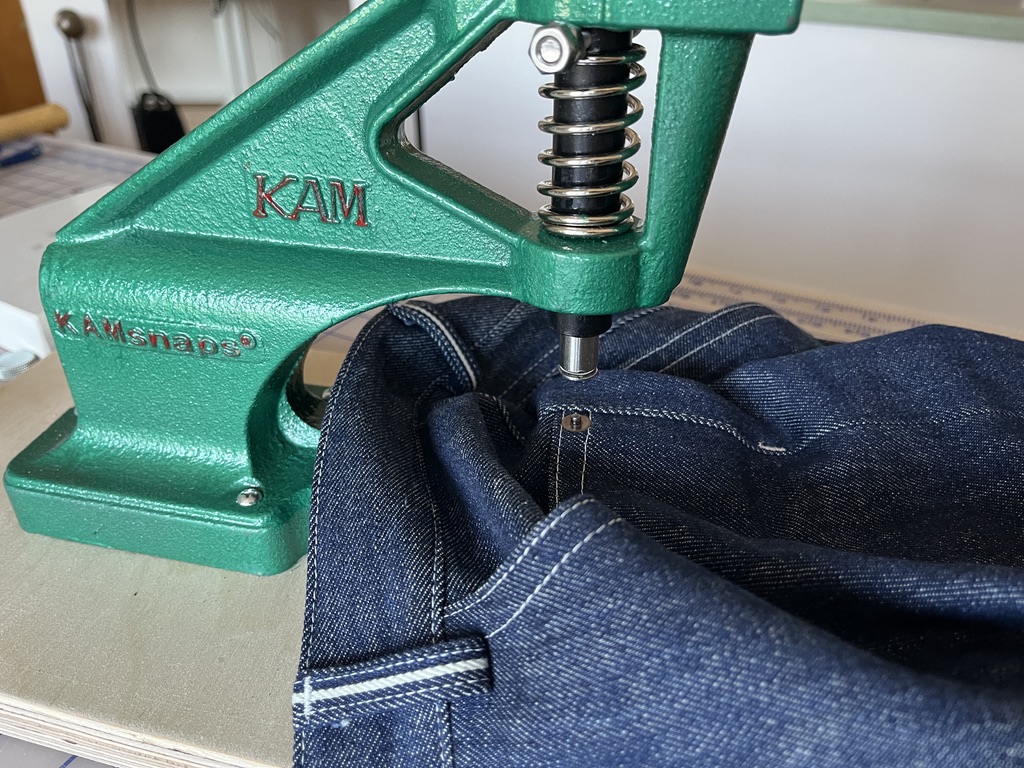
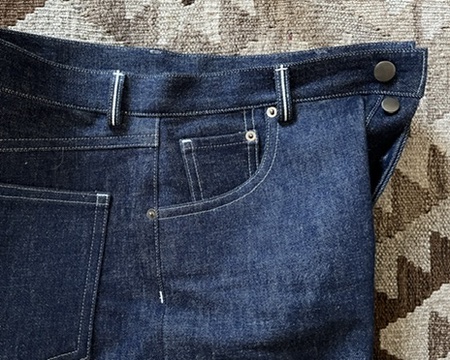
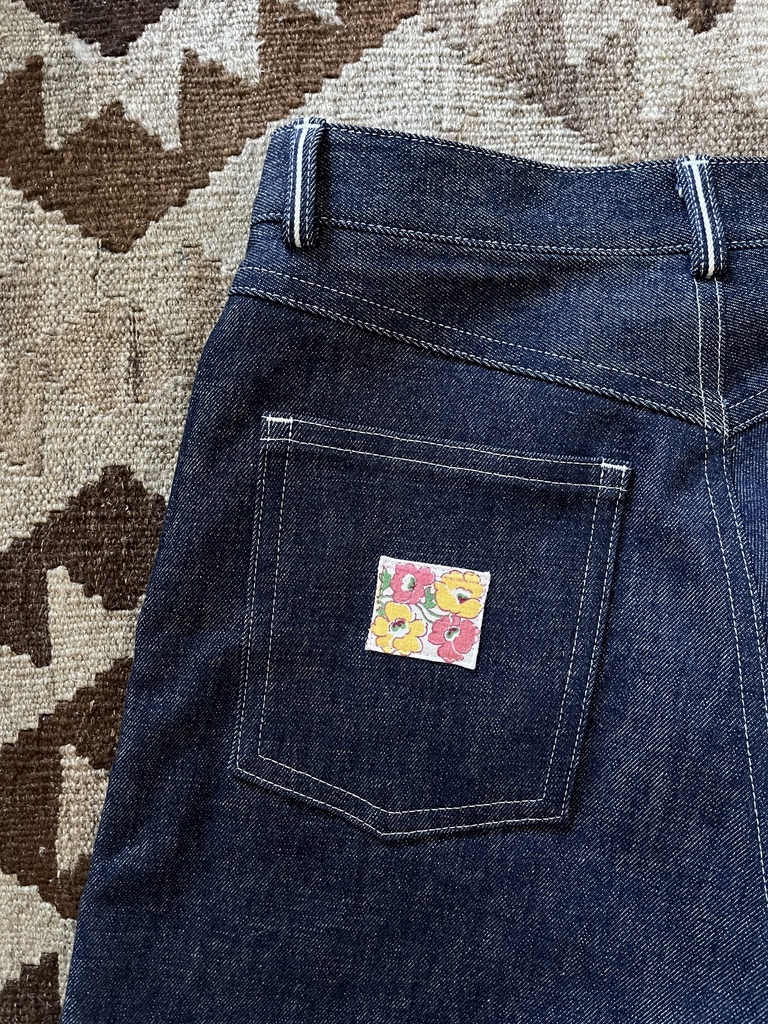
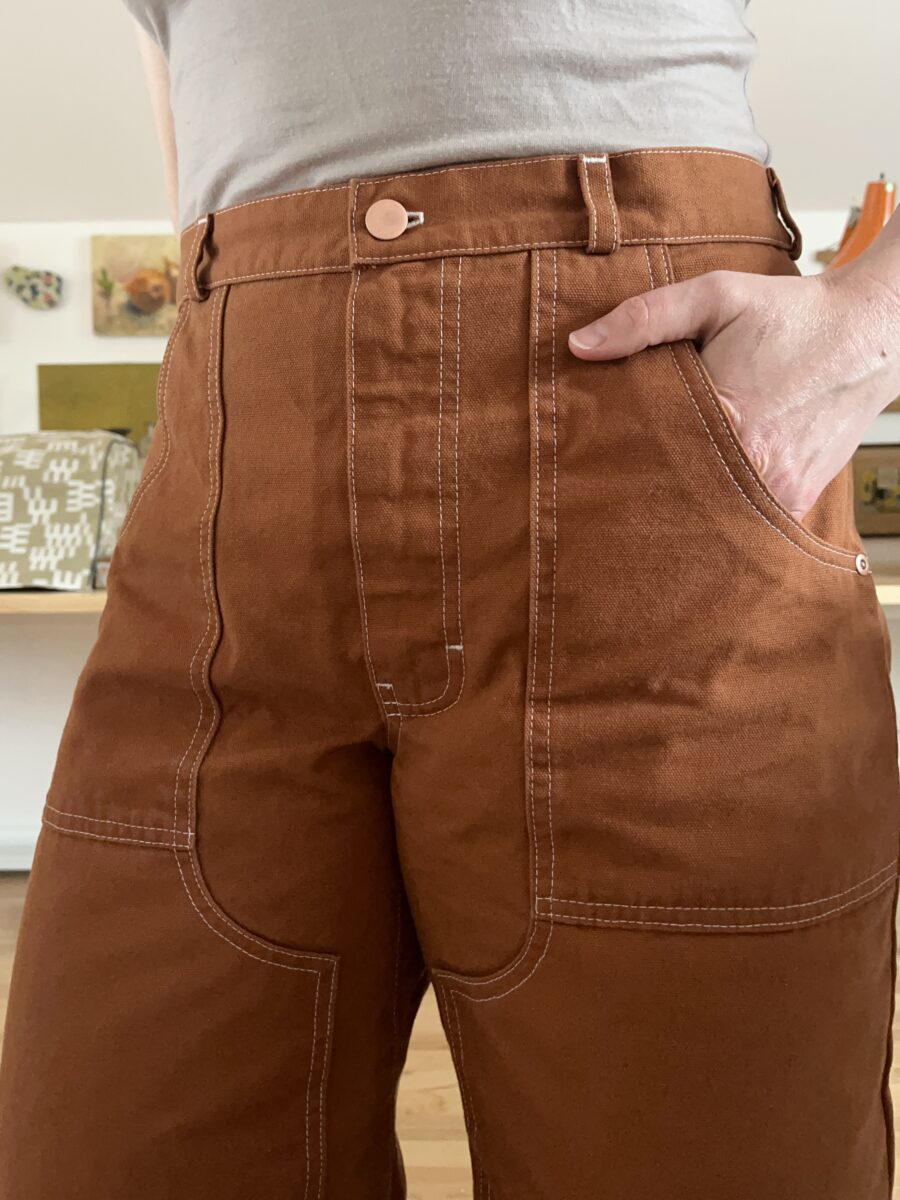
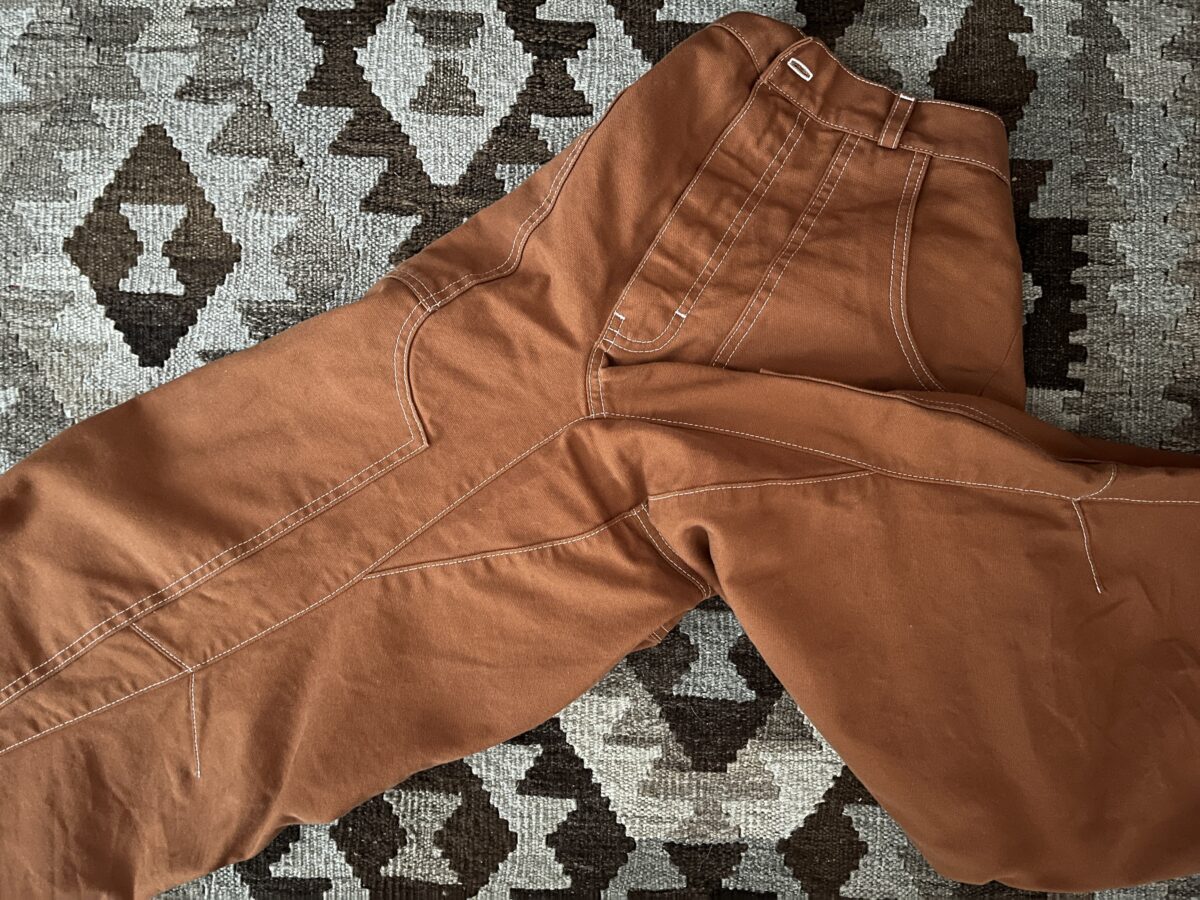
Partially inspired by my new table press, I decided to sew the button fly version. Setting hardware is so easy and consistent with this press. I did a hardware faux pas and mixed my metals since Grommet Mart shipped the wrong style of rivet (I don’t currently have a die for ring rivets). For the waistband I used one 17 mm tack button and four 14 mm tack buttons for the fly in antique bronze. Determined to fully finish them, I impatiently installed several nipple rivets in gunmetal. The color difference is barely noticeable and I hope they patina similarly. I also accidentally installed a pocket rivet in the side seam where it will do little to reinforce that pocket (pictured below).

The straight waistband was such a good place to use the selvage edge and there was just enough to also use it on the button loops and fly shield. Fableism’s plaid cottons are great as pocketing. Since they’re yarn dyed, there’s no obvious right and wrong side, so I don’t have to think about what will show on the inside of the pants. Plus the colors are so good.

The look of regular topstitching thread is my favorite, but I’ve been trying to be happy with Mara 70. It’s not as beefy, but it is way easier to sew with. This particular denim has kinda caused the topstitching to sink down into the weave after washing.

My Bernina has a bar tack program, but I think I’ve finally found my preferred zigzag settings (width 2.1, length 0.60). With a 80 or 90 jeans needle and regular poly thread, these bar tacks can even be sewn on thick belt loops.

When I first put these on, I was overwhelmed by the crotch depth. It’s SO HIGH but after biking in them and wearing them all day, I’ve decided they’re perfect. There’s some lower crotch folds that happen as the denim bags out with wear, but not having to readjust constantly while biking means I probably won’t reduce the height on my next pair.

I’d like to use the straight leg version of this pattern to dupe the Daughter Judy jeans I have that no longer fit. Might even use the same fabric for it!

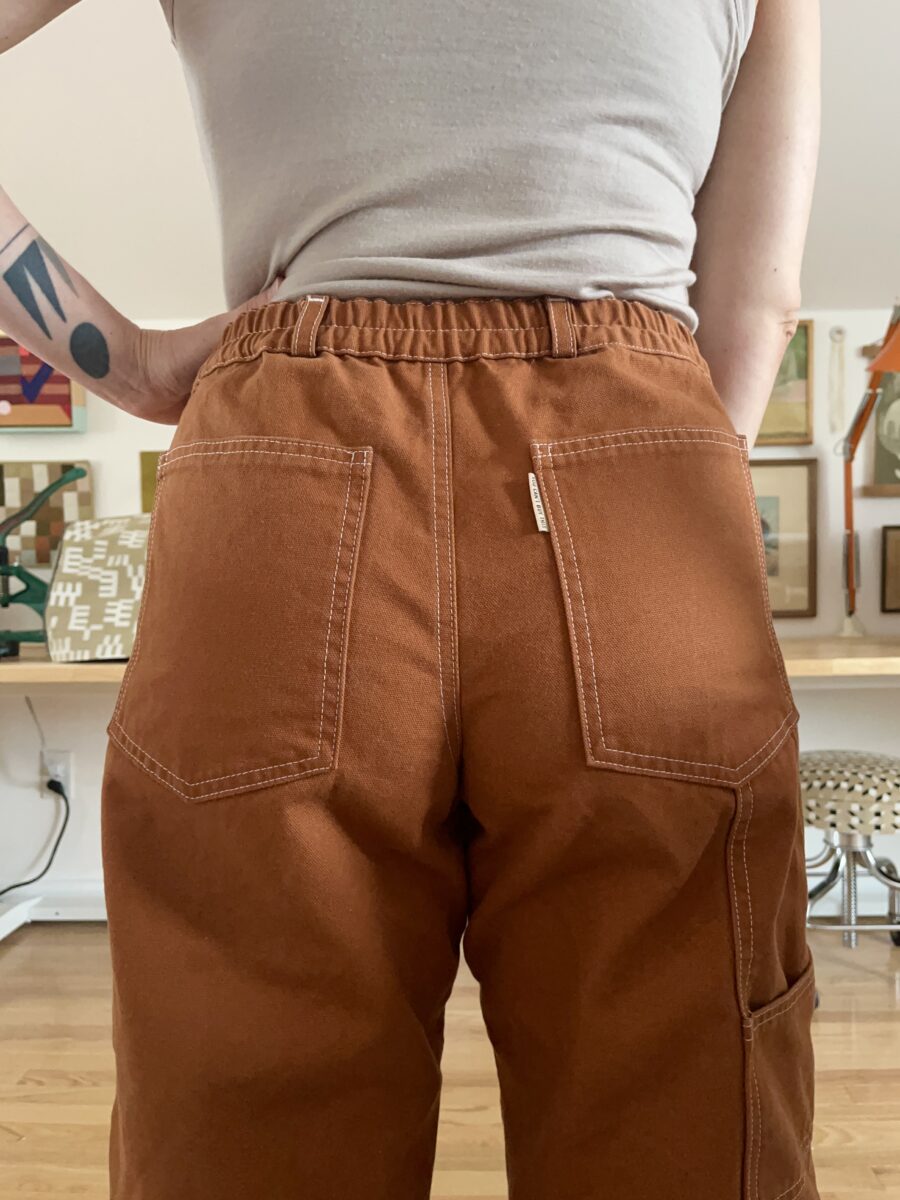
Cedar Pants

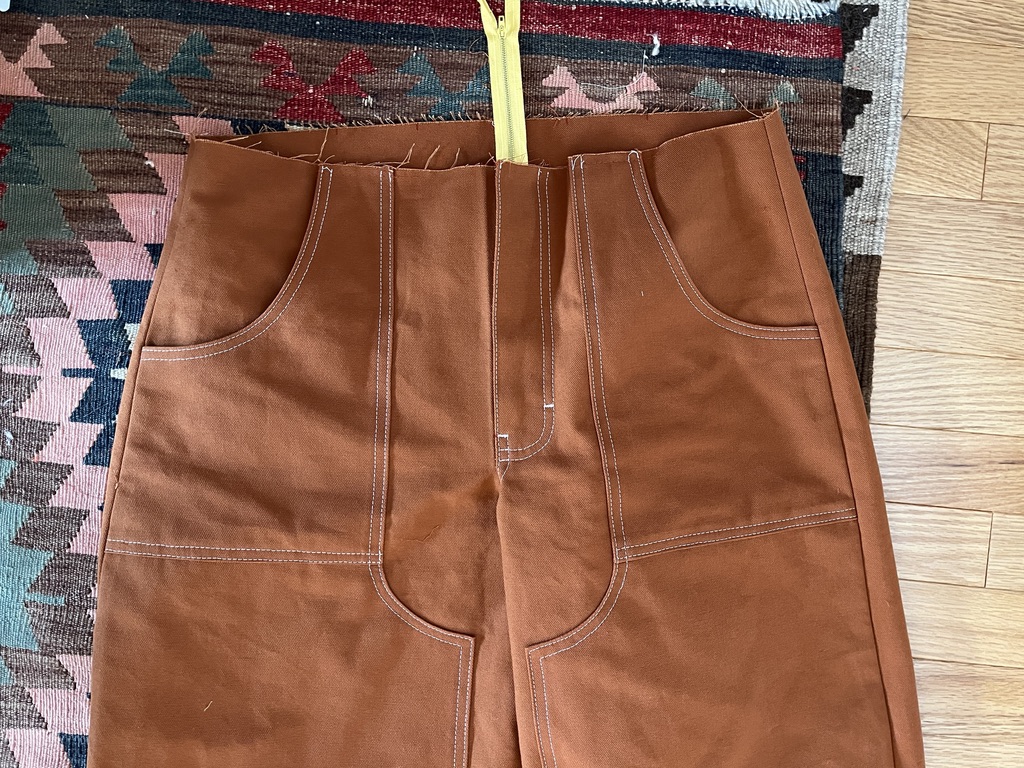
Encouraged by my Helene success, I immediately jumped into another bottoms project. I added an additional ½” to the side seams after reading some review stating that the hips were tight. I’m glad I did. I printed a size 10 when I probably should have instead done some grading to at least a 12. Anyway that extra ½” saved me!

The fly construction is really easy, however, next time I plan to clip first and then finish the seam allowances. The instructions say to use a 7″ zipper for the size I chose, but that was a lot shorter than the opening. Instead I cut down a vintage 12″ metal zip. The zipper stop was a real challenge to remove and reattach so I dropped / lost it multiple times before successfully reinstalling it.

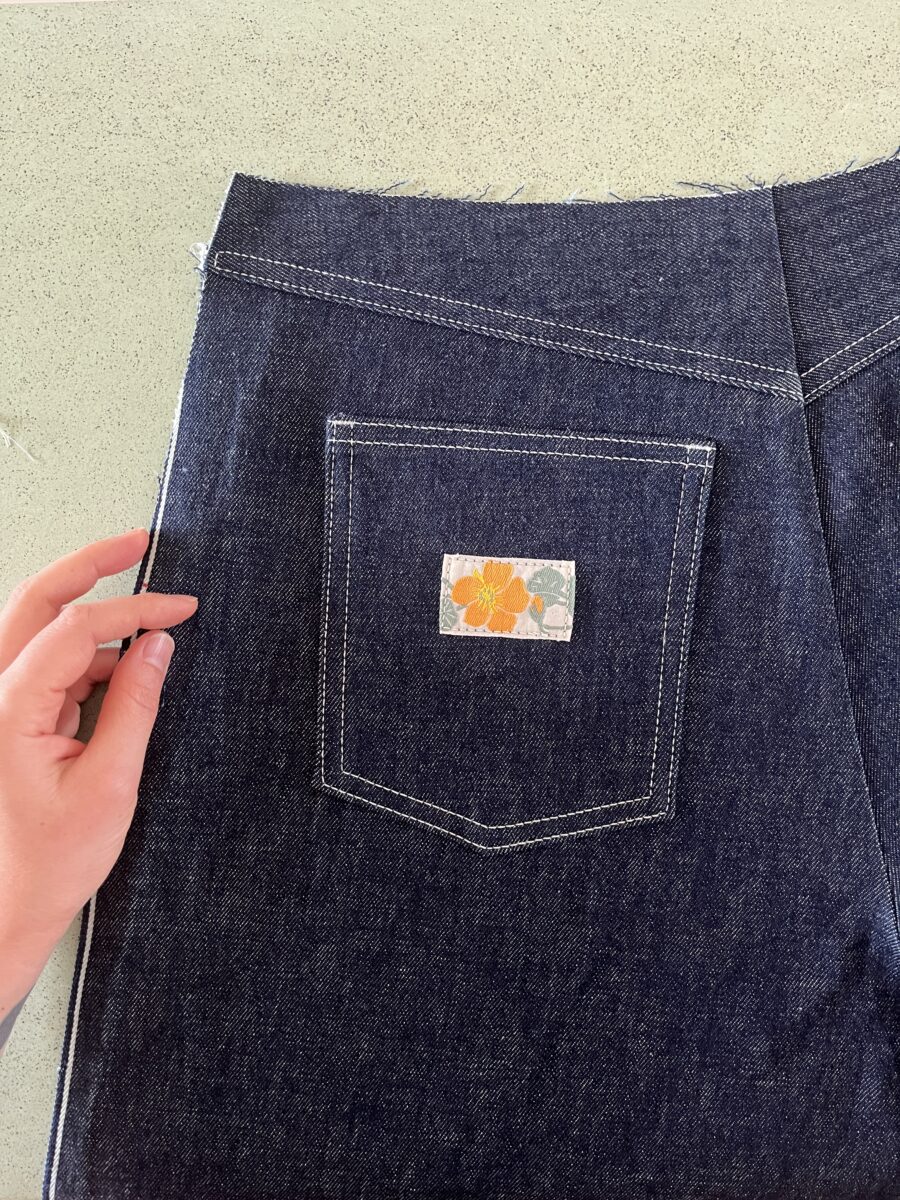
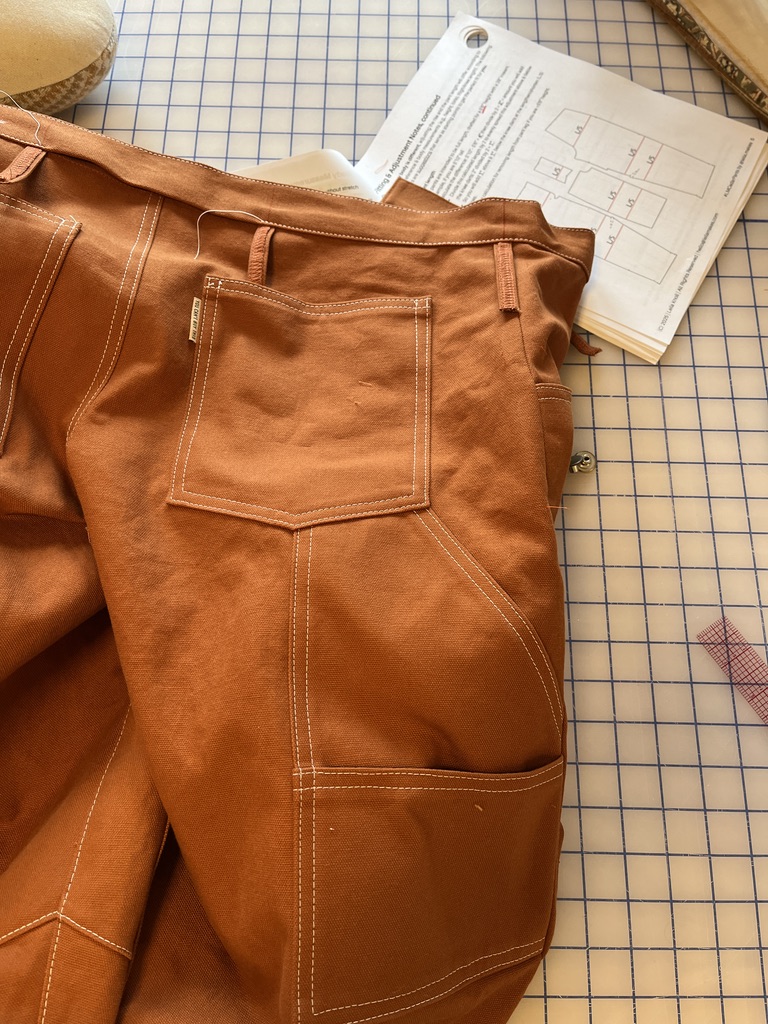
I know the pattern is all about the matching front and back patch pockets, but I wanted a different look. Plus Big Sur canvas is 9.6 oz meaning that side seam intersection would be super bulky. Instead I opted for a traditional back pocket and aligned the top of the cargo-esque pockets with bottom angled edge. I fully lucked out on back pocket placement. I took no measurements and just thought the placement looked good on the flat back piece. A wild choice when multiple rows of topstitching is involved.

The pattern doesn’t include pattern pieces for the bits that need interfacing, which I don’t appreciate. Cutting and fusing interfacing is already a hard step for me to complete and having to guess at the shape made it extra annoying. Ultimately the waistband interfacing was super wrong since I’d adjusted the width of the pants.

The crotch shape only just works for me. I find the booty gobble to be uncomfortable, so I think I could benefit from some crotch scooping. I think the only reason I’m not ripping these pants off is because of the gusset, which moves the bulk away from sensitive areas. The real test will be a bike ride.

I shortened the length by 2″, but think I’d benefit from removing another 1-2″. A little cropped is my preferred length, even if it means my ankles may get chilly.

I stopped reading the instructions towards the end of construction. I like to attach waistbands to the inside first and then the fold needing to be topstitched down is visible, ultimately eliminating the possibility of missing sections. Two belt loops were added to the back waistband in order to hide my backstitching. The elastic could have been cut a little shorter, but it’s a great fit for waist fluctuations.

Ideas for the next pair are to 1) shorten the legs more, 2) combine the front patch pocket with knee patch since I don’t think that seam is necessary, 3) scoop out that back rise, 4) use some lighter weight indigo cotton ripstop.

Sometimes you just gotta make a stuffed animal.

1 Comment

Sardine Pillows

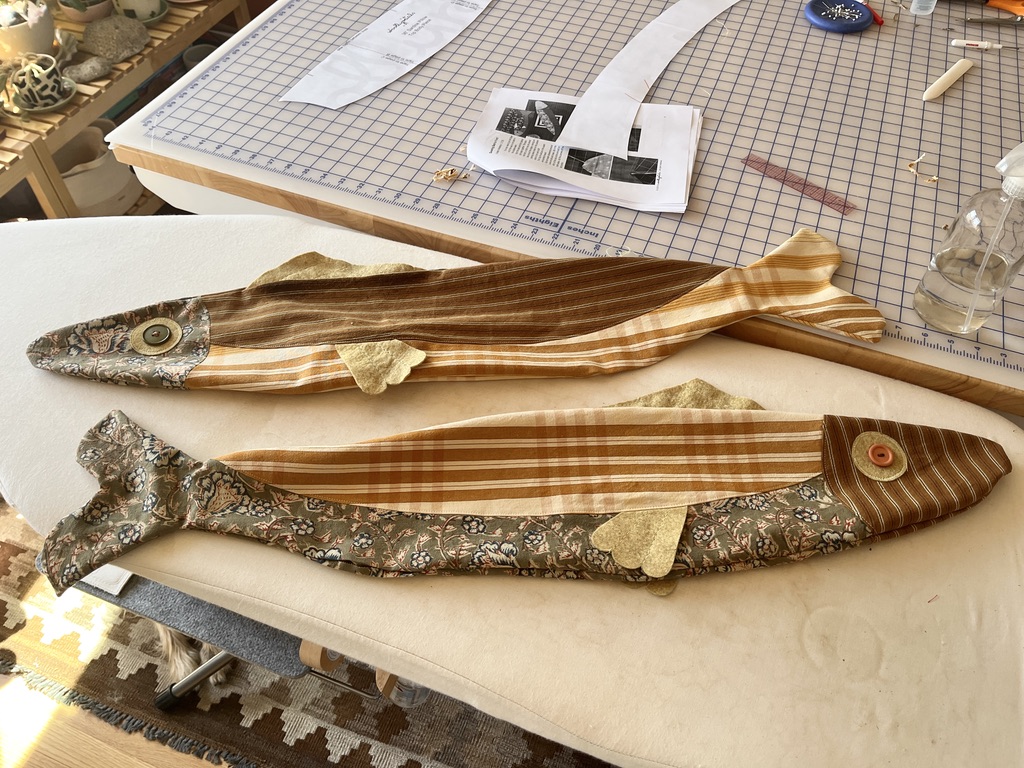
I had a big case of the sads (how can you not) and spent a disgusting amount of time scrolling last Saturday. I woke up the next morning craving an immersive sewing project and landed on the Sardine Pillow Pattern by Wooly Petals. Why?

  1. Fun end product.
  2. Scrap buster.
  3. Simple sew with room to play.
  4. No fitting : )

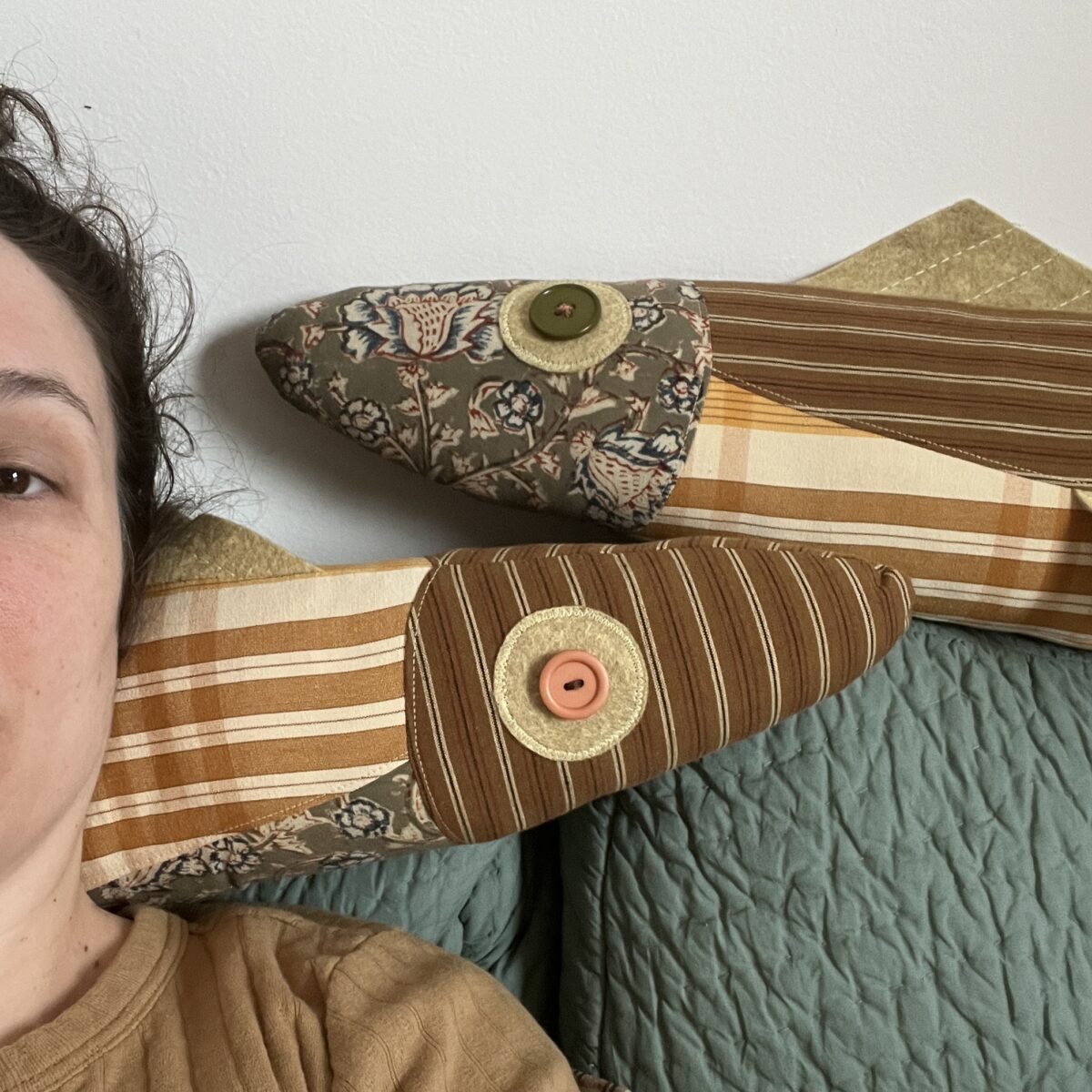
The only changes I made were to use felt for the fins, buttons for the pupils, and I topstitched the curved seams.

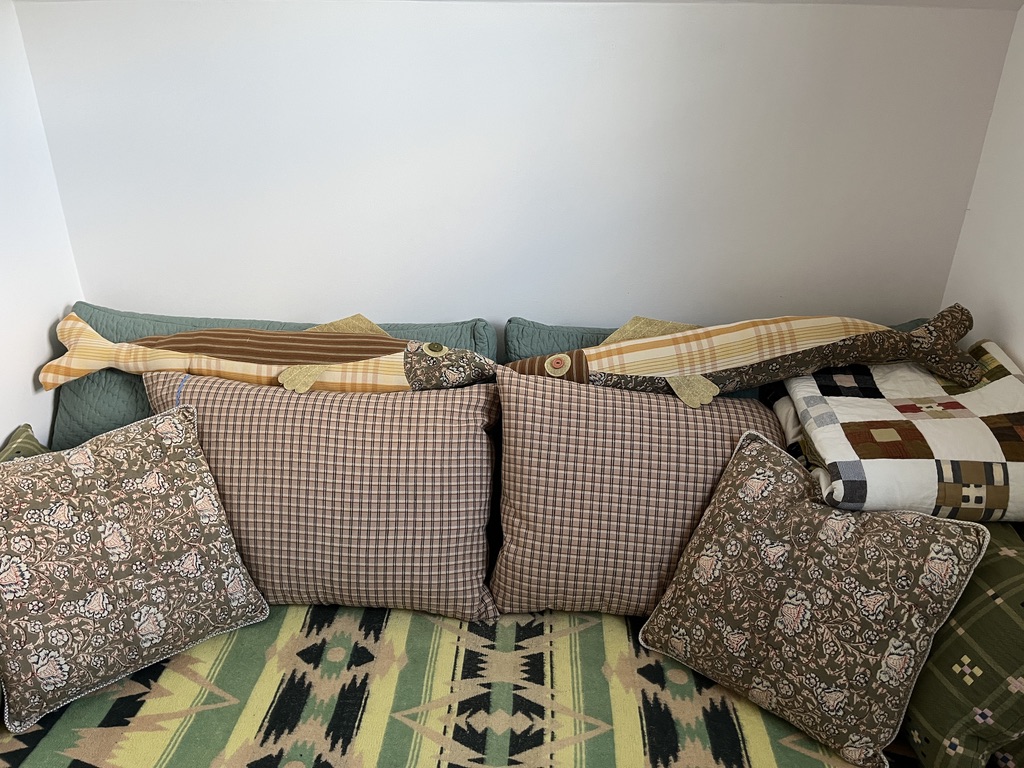
They are whimsical additions to the knitting nook as the fabrics coordinate with the other pillows and they support my neck.

Vintage Sleeve Board

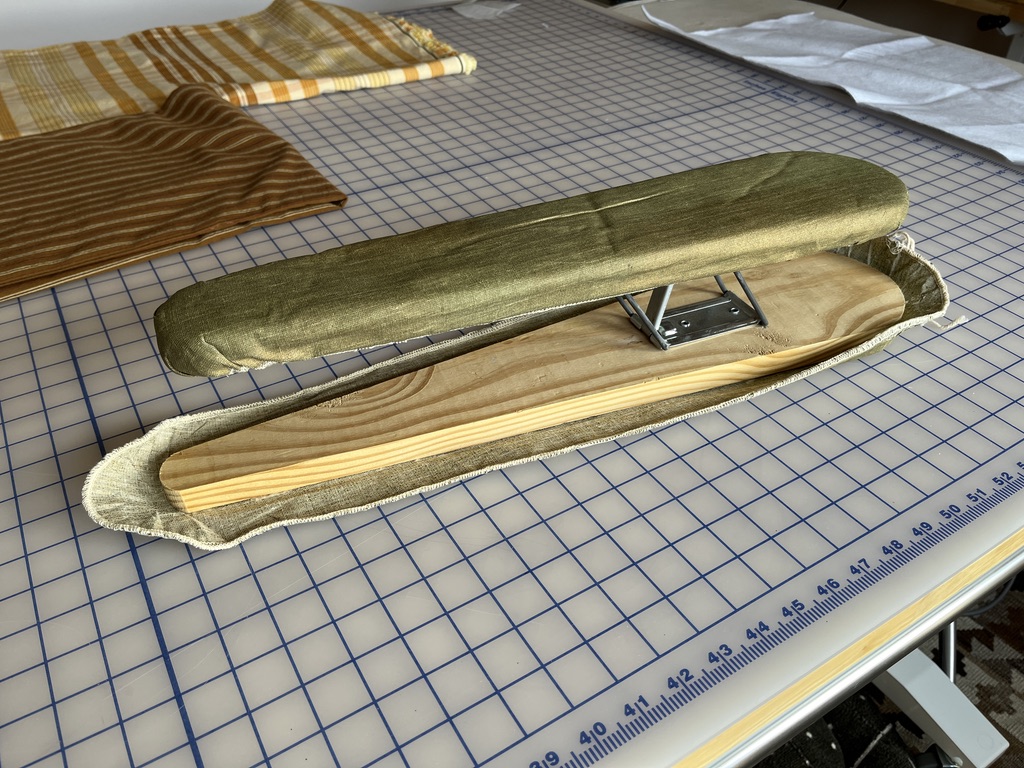
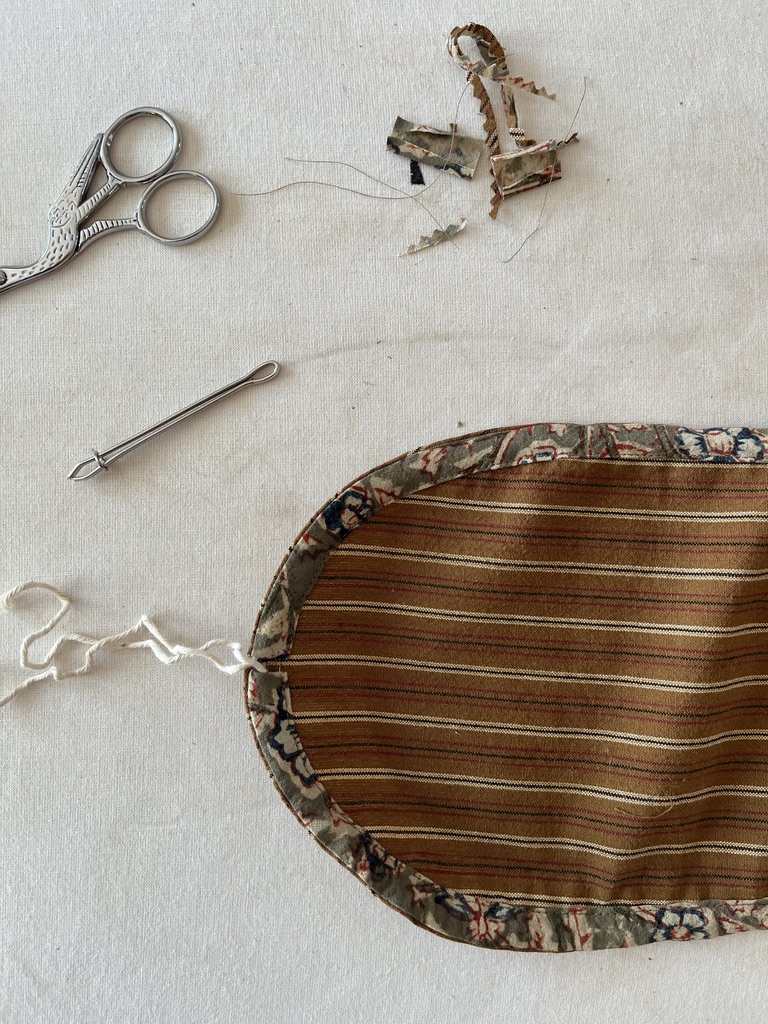
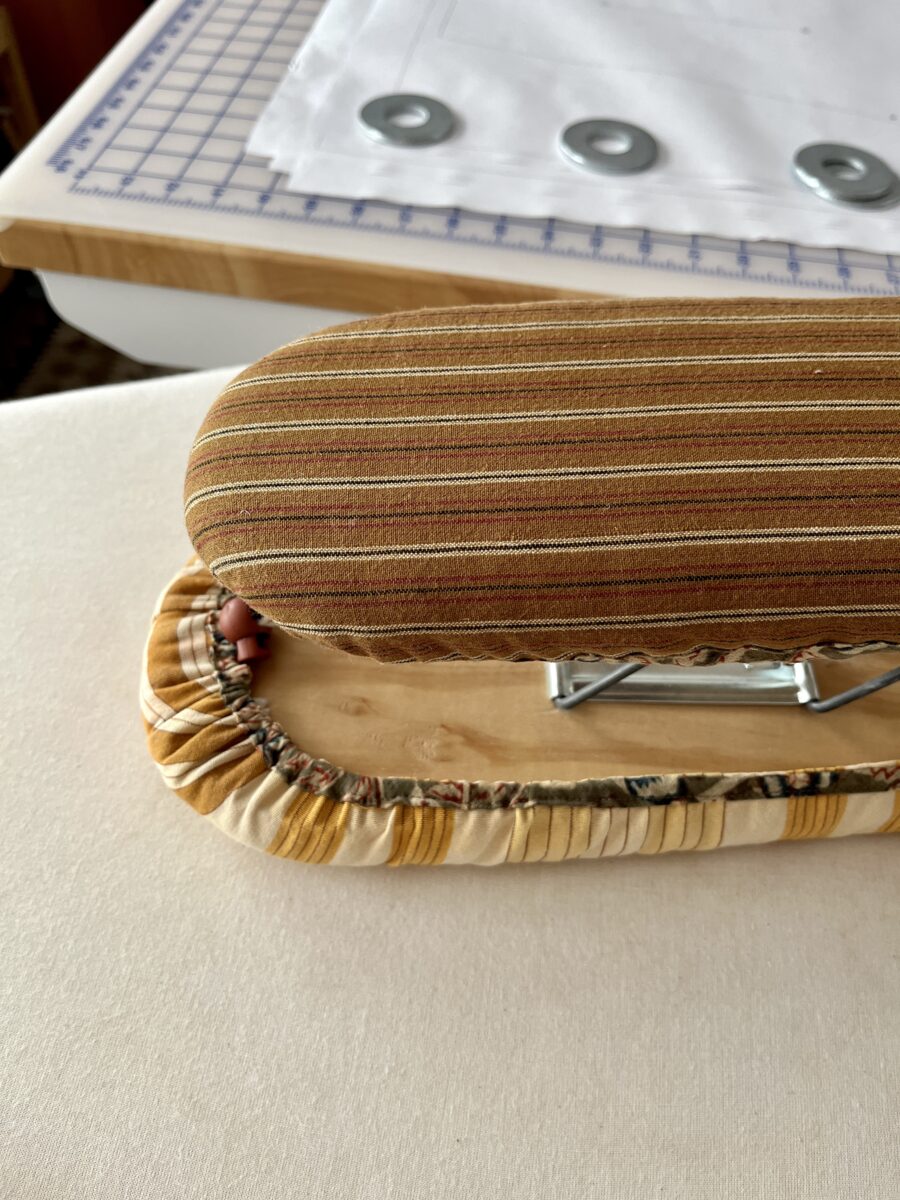
I bought this crusty old sleeve board on Etsy and re-covered it with some fabric I planned to use in the knitting nook. This combo of fabric is actually where I got the idea for the Sardines.

I can’t pull it as tight as the original cover, but I think it’s a good addition to my pressing tools.

Stockholm Slipover V-neck

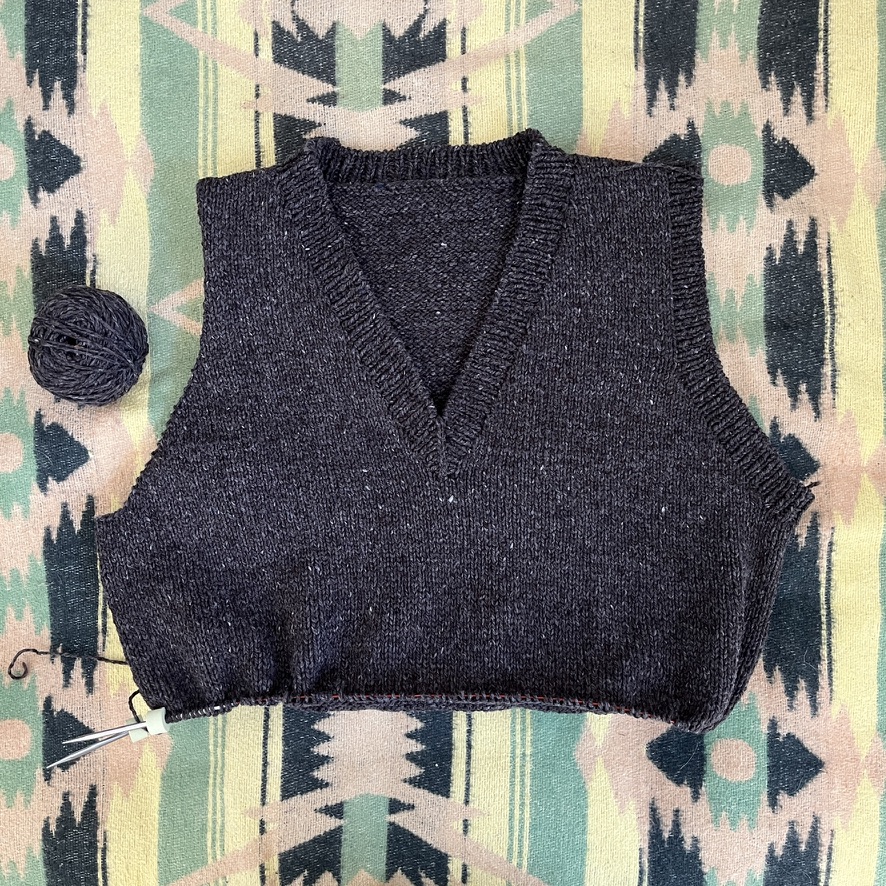
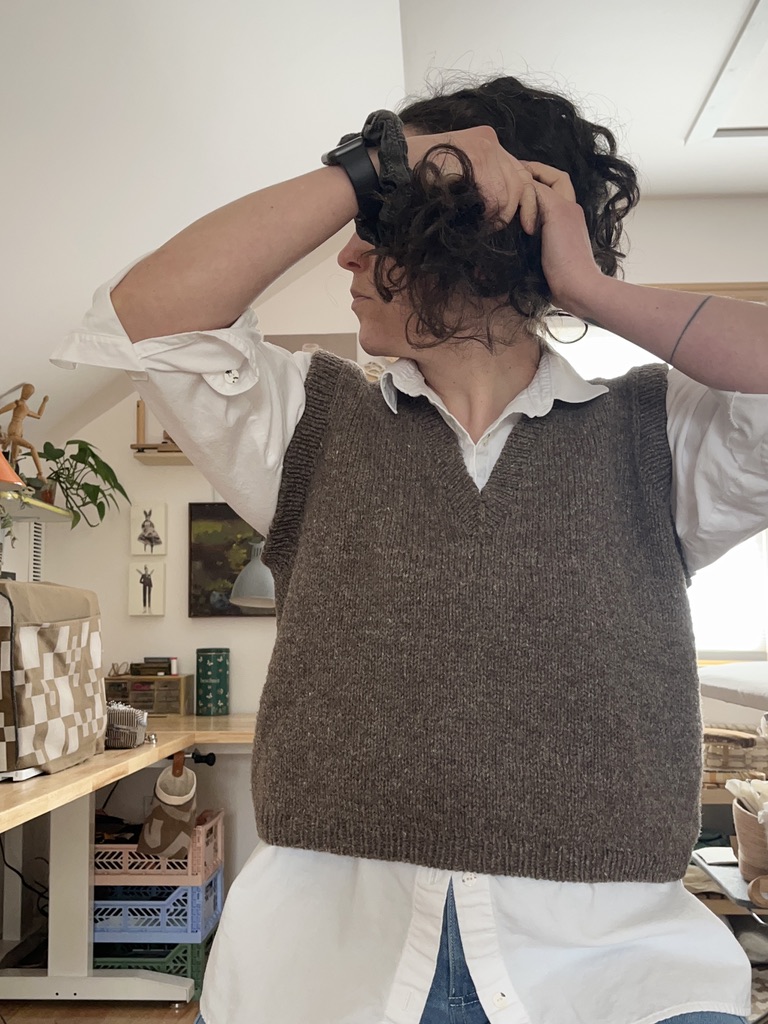
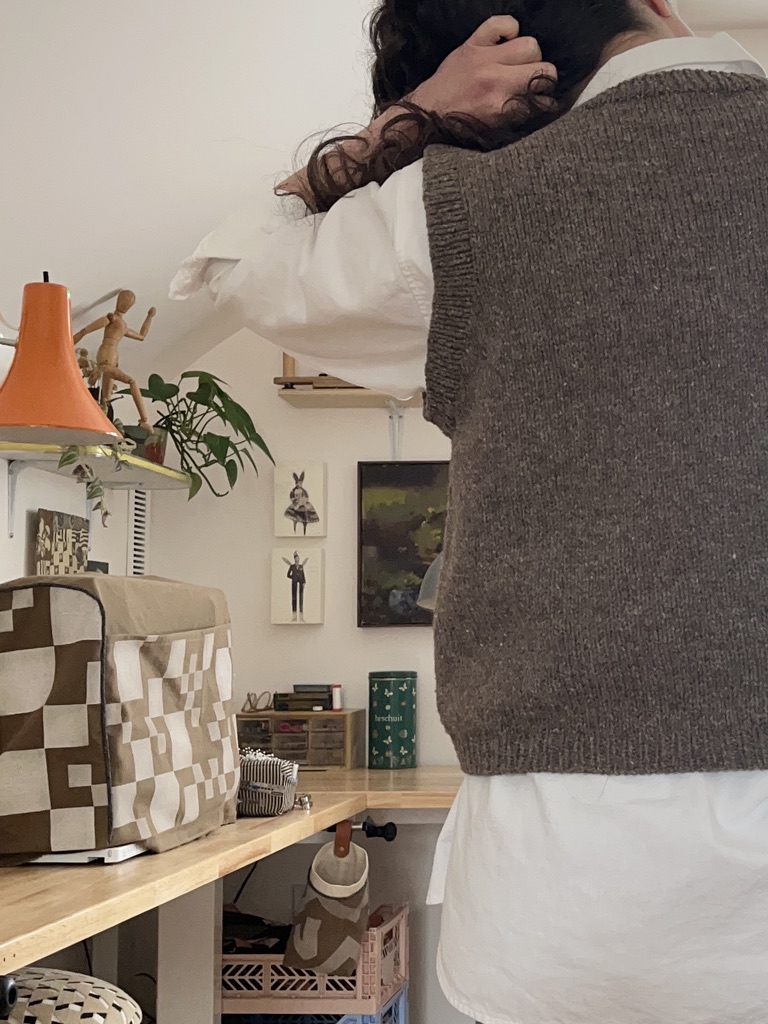
I finished my first vest project and had to knit it twice. My sleeveless projects seem to be cursed. The first attempt involved running out of yarn, a discontinued yarn, at an unfortunate length. After scouring the internet and pleading on Ravley, I gave up and bought a different yarn all together.

Overall, pretty pleased with it, however, the armhole ribbing is kinda floppy despite being knit on tinier needles and a pretty tight bind off. I did also buy enough yardage of another yarn that’s very similar to the original color, but the motivation to knit it a third time is low.

Louise Cardigan

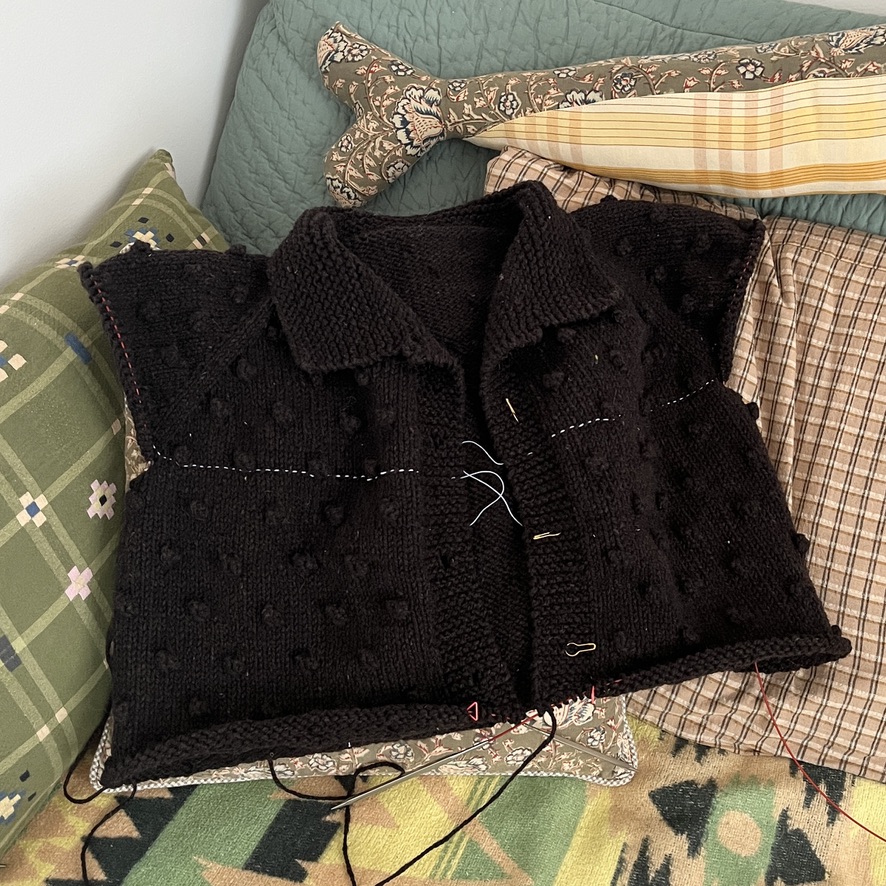
I AM SO EXCITED ABOUT THIS CARDIGAN. I used German short rows instead of the instructed Japanese short rows. I’m also planning to knit the body and sleeve hems in garter stitch to match the collar and placket.

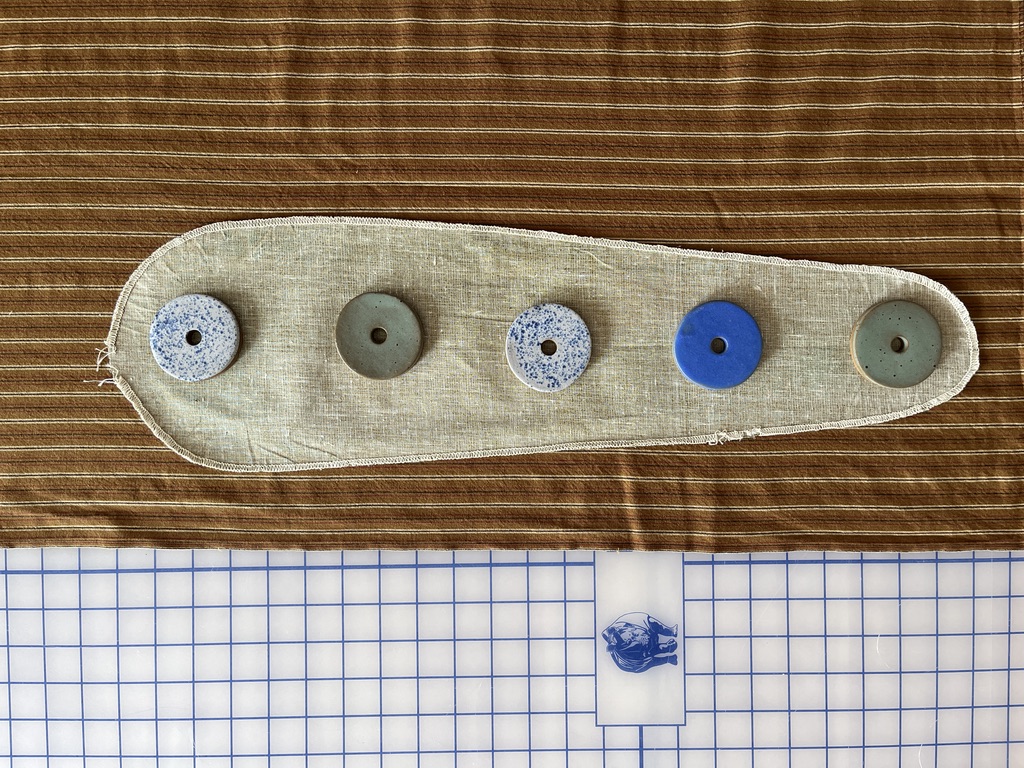
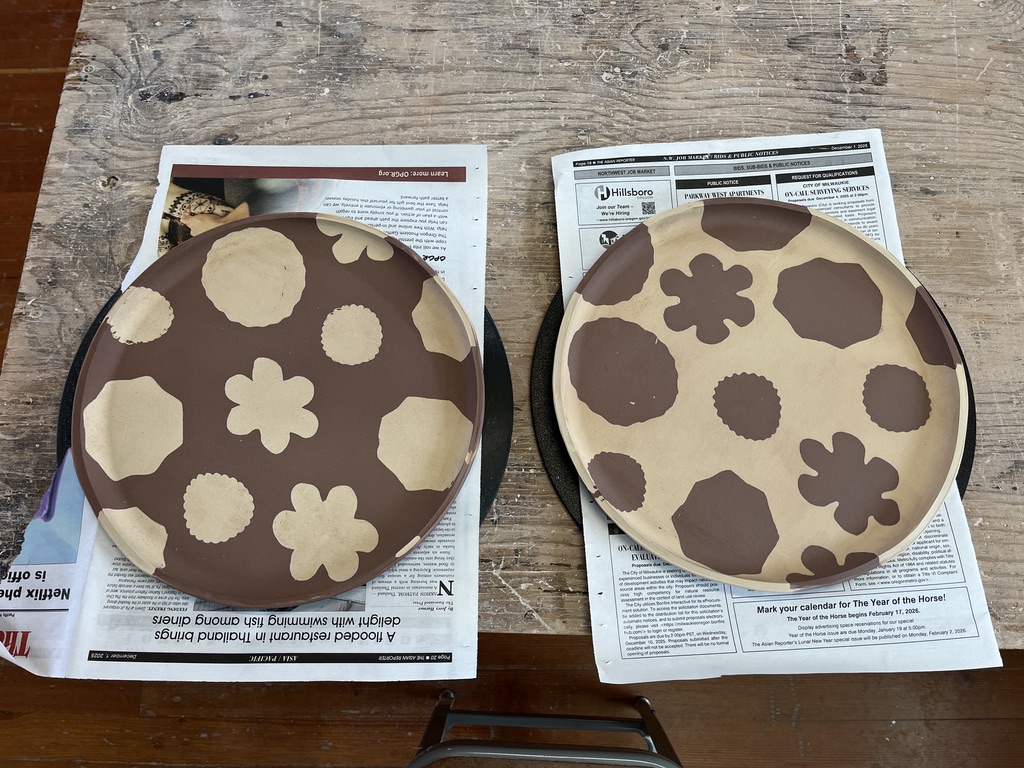
Some Big Plates, Small Buttons

These have made it through the bisque firing, so hopefully there will be no cracks!

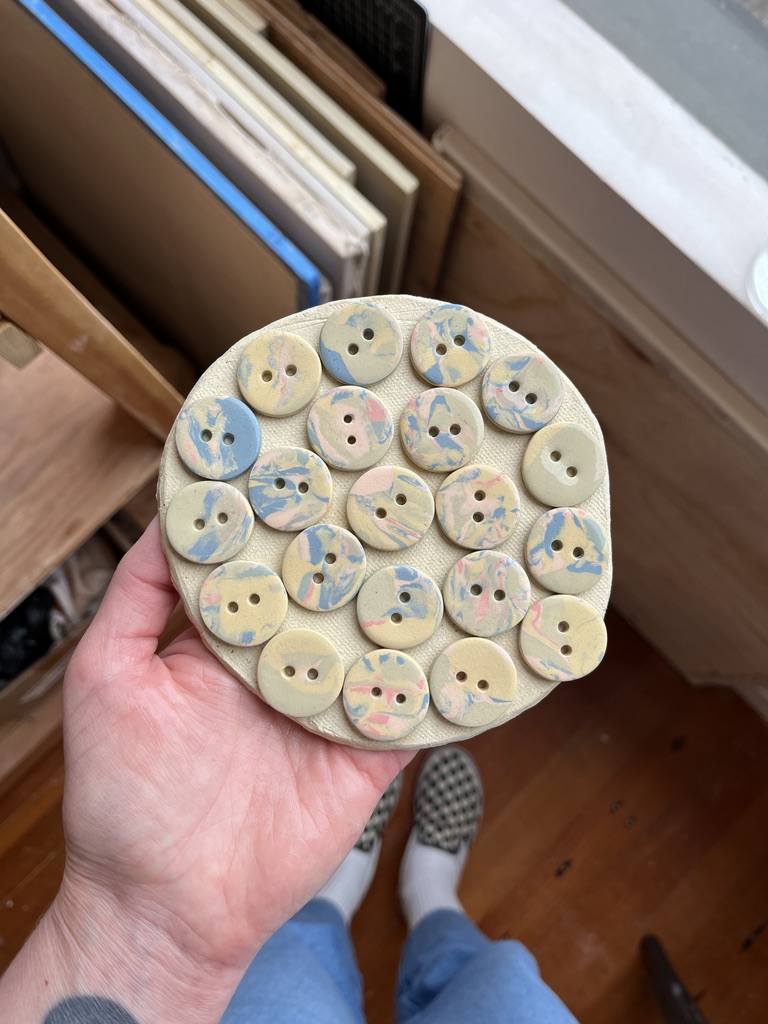
And here are some buttons that I just glazed today. Planning to use them on my Louise cardigan or these brown buttons.

Fixing a disappointment

1 Comment

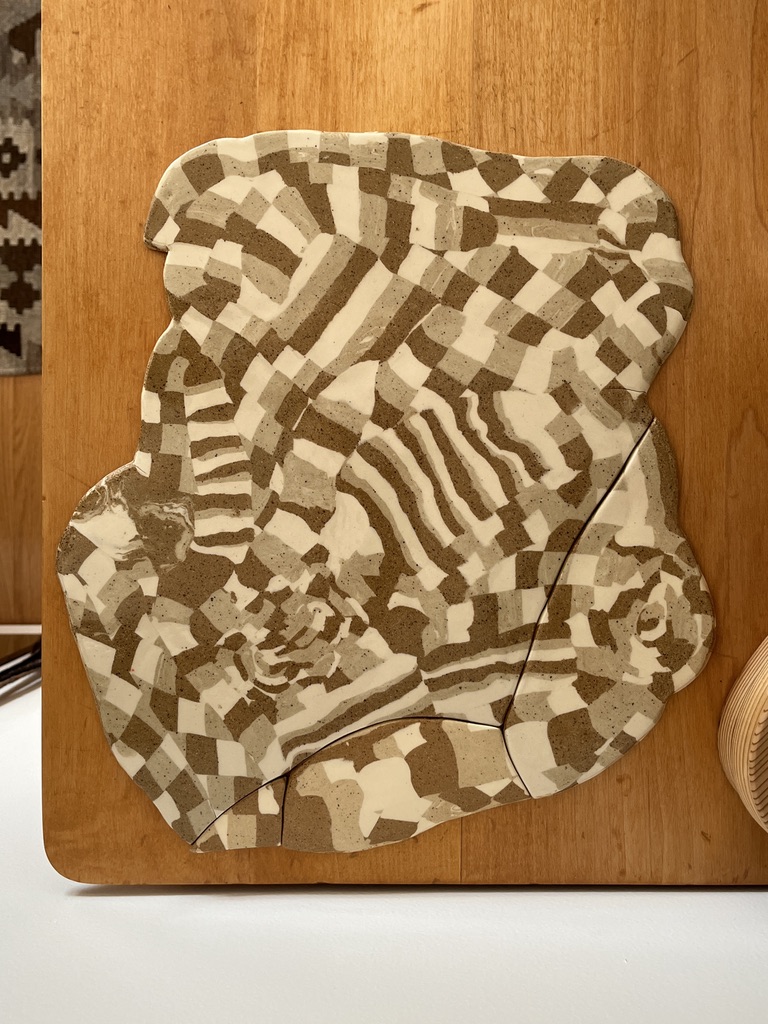
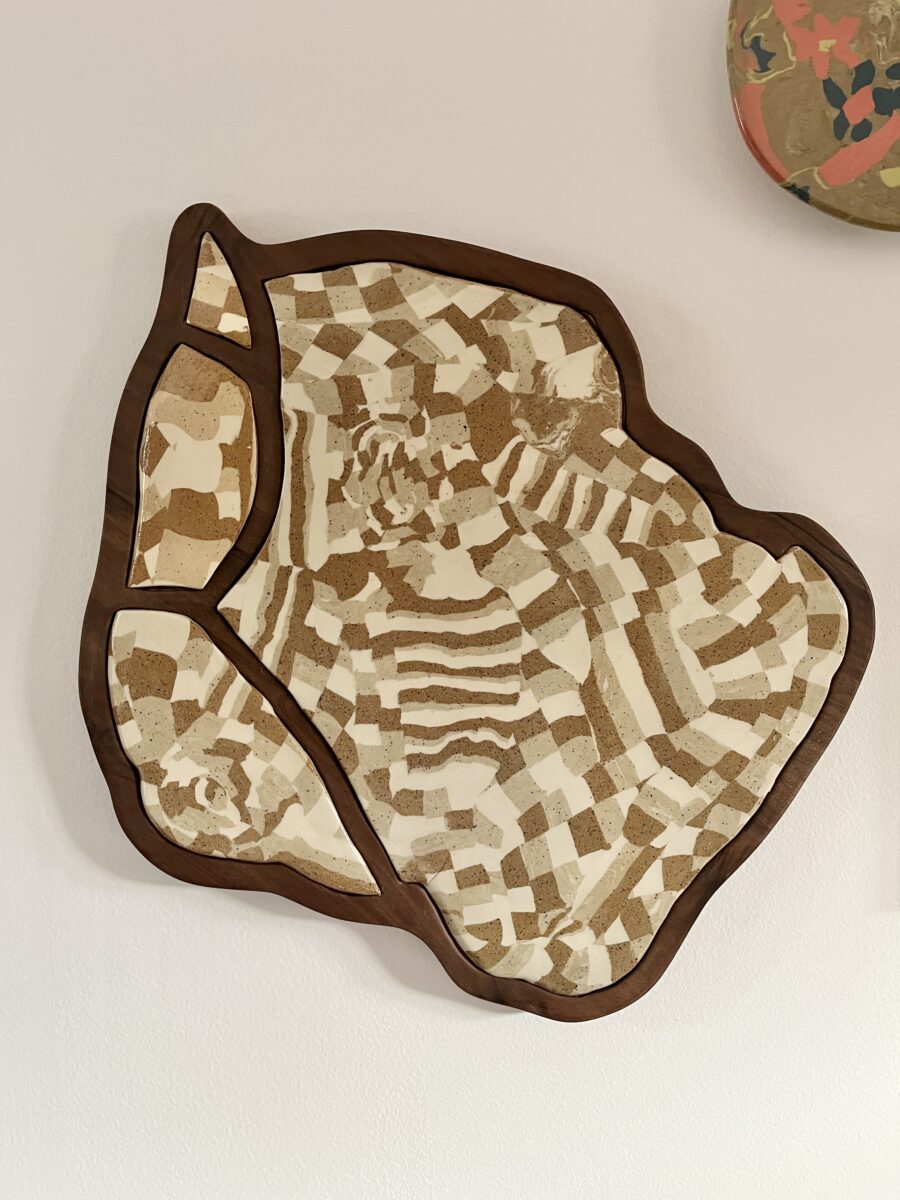
I made this ceramic wall hanging and broke it before bisque firing. I decided to go through with firing it anyway, believing it salvageable.

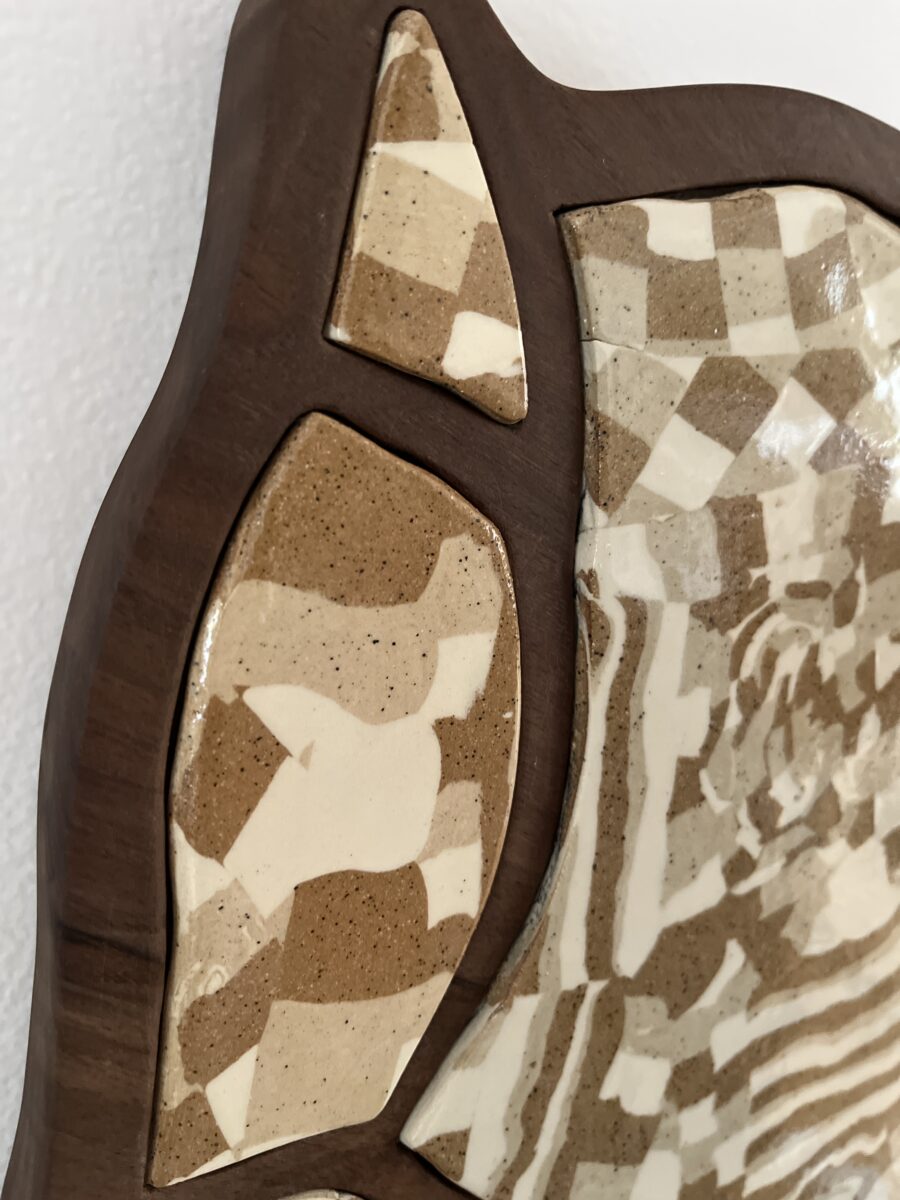
Ceramic and wood are beautiful together so I decided a wood base was the solution. I chose walnut for a nice contrast.

I definitely need more practice using a plunge router, but think this wall hanging turned out maybe better than the original idea.

UPHOLSTERY!

I’ve always been interested in upholstery. It’s such an impressive set of skills and is super helpful if you buy secondhand furniture.

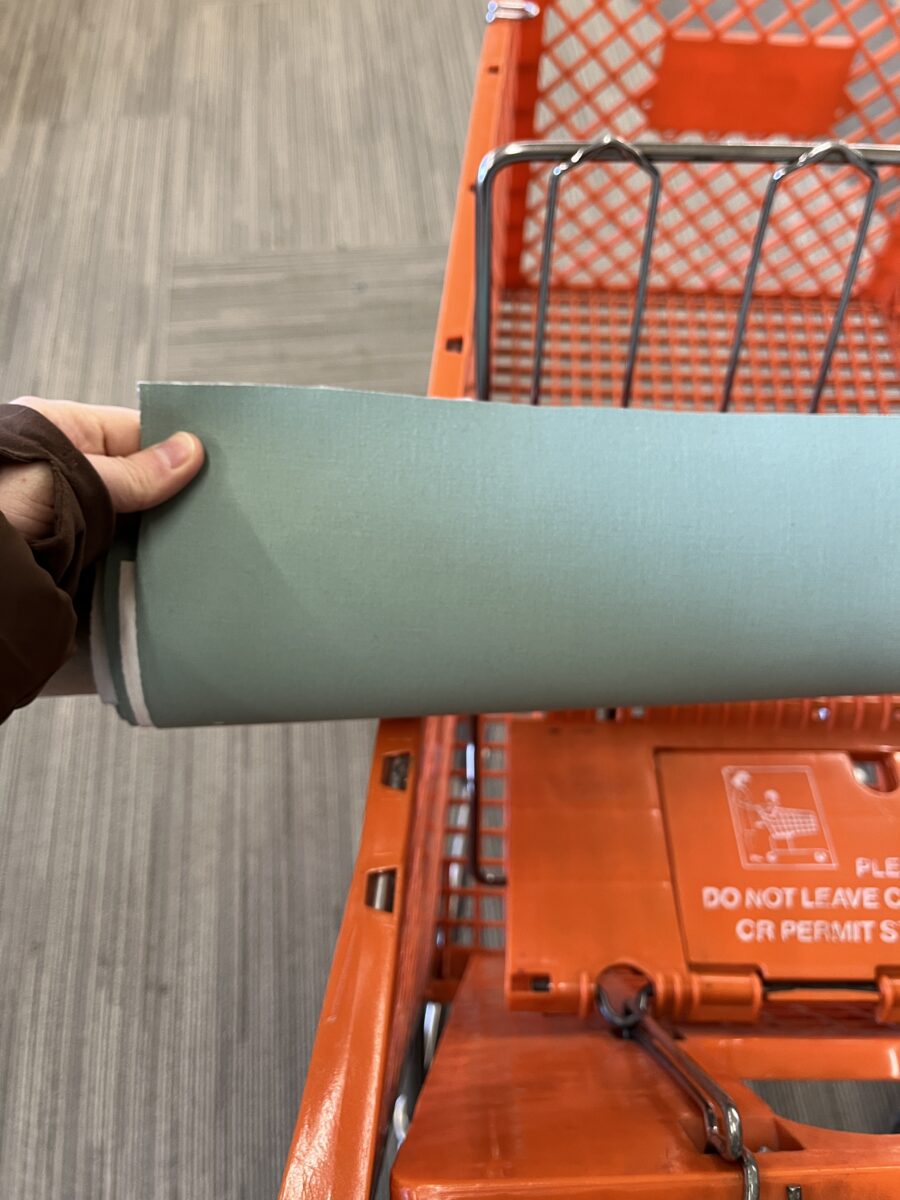
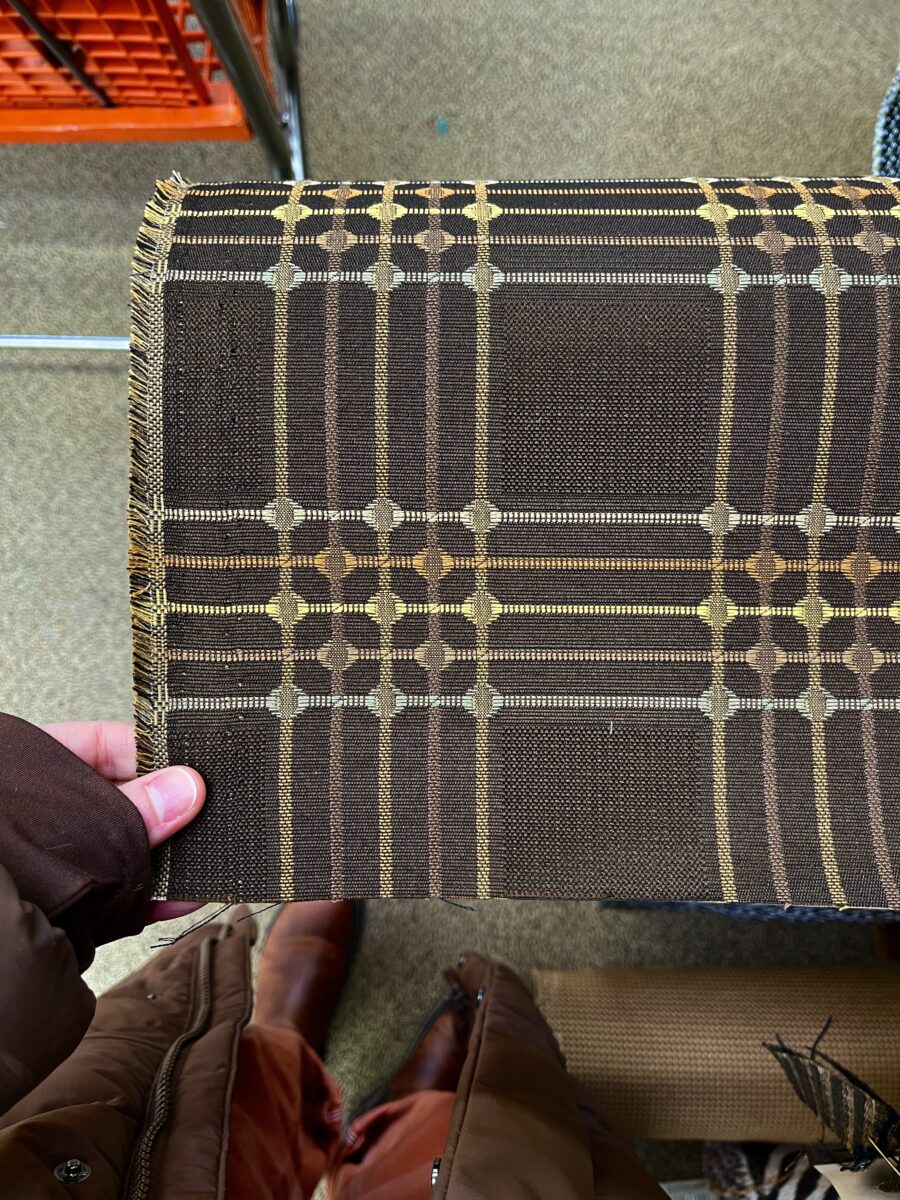
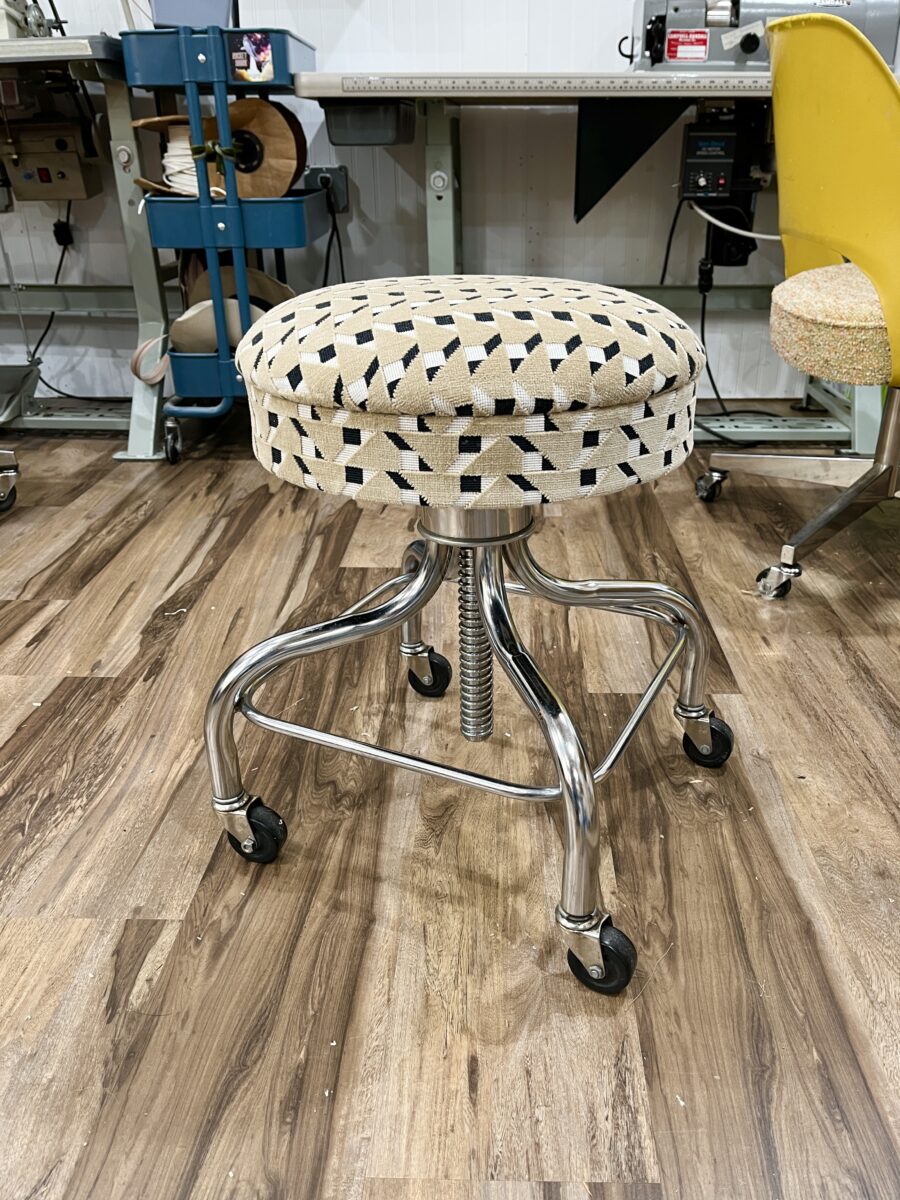
I finally decided to take a class from Atelier Douce France because my “new” sewing stool desperately needed to be reupholstered. I actually liked the color of the vinyl, so I attempted to find a similar fabric at Mill End. I briefly entertained using this mid-century modern-esque design, but felt a solid color would be easier to manage.

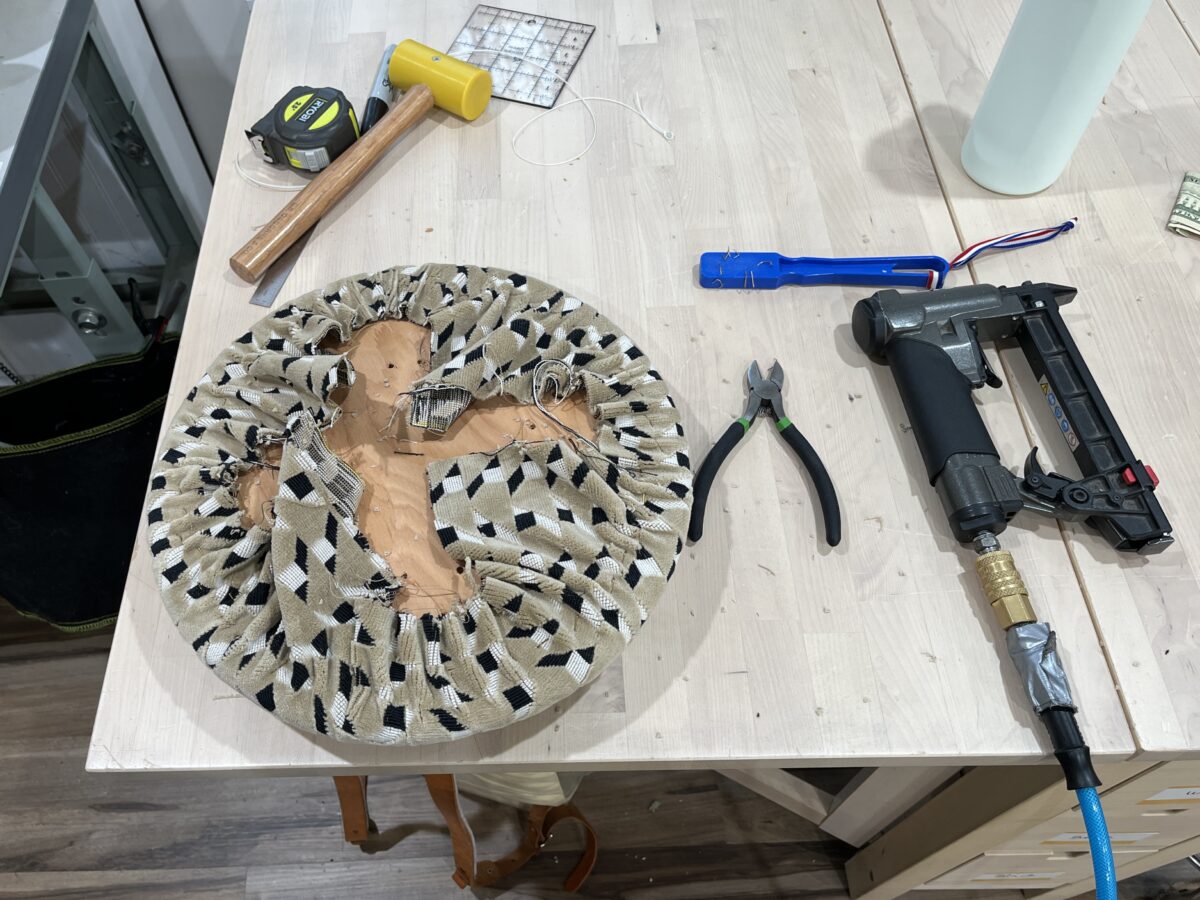
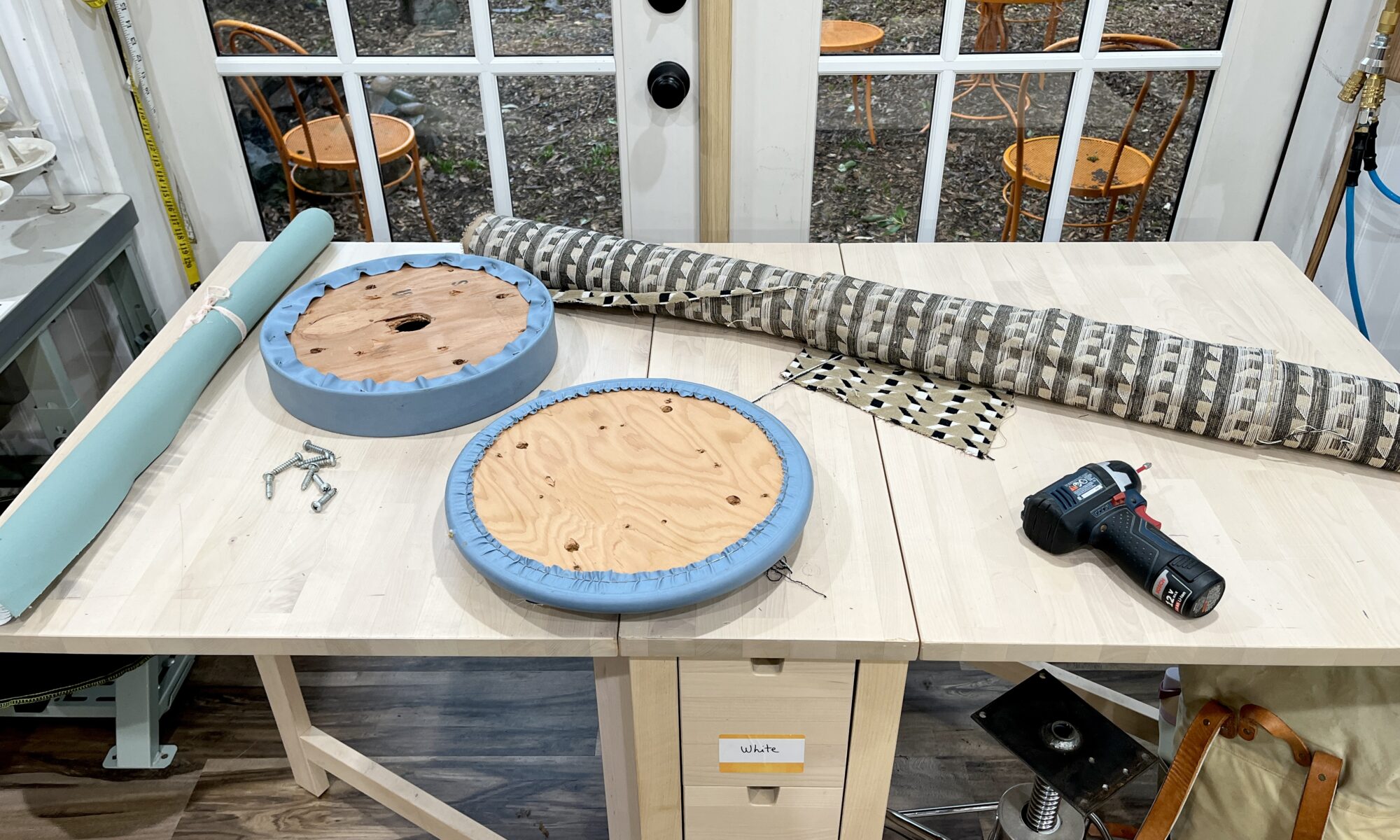
The first step in the process was to unscrew the sections from the base and remove all the staples.

Unfortunately, the fabric I chose was deemed too stiff to work with in this workshop, so Anne let me purchase a yard of this fun geometric fabric that I thought would coordinate with my sewing machine covers. It’s by Pierre Frey and is described as:

… [a] geometric pattern [that] plays on contrasts of color and black and white, in a particularly dense cotton velvet quality, combining cut and épinglé velvet. This graphic and playful carved cotton velvet revisits a work by the Russian constructivist artist Lyubov Popova from the early 20th century.

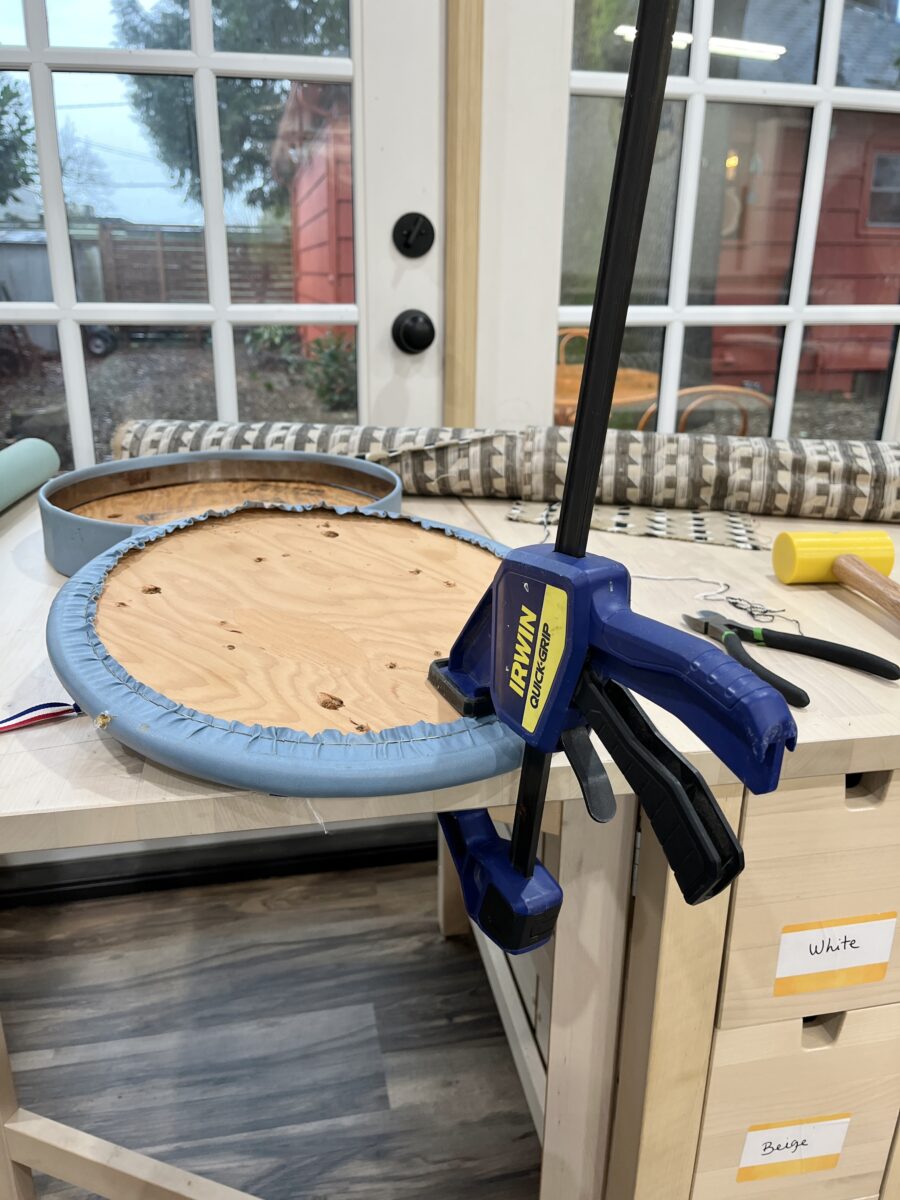
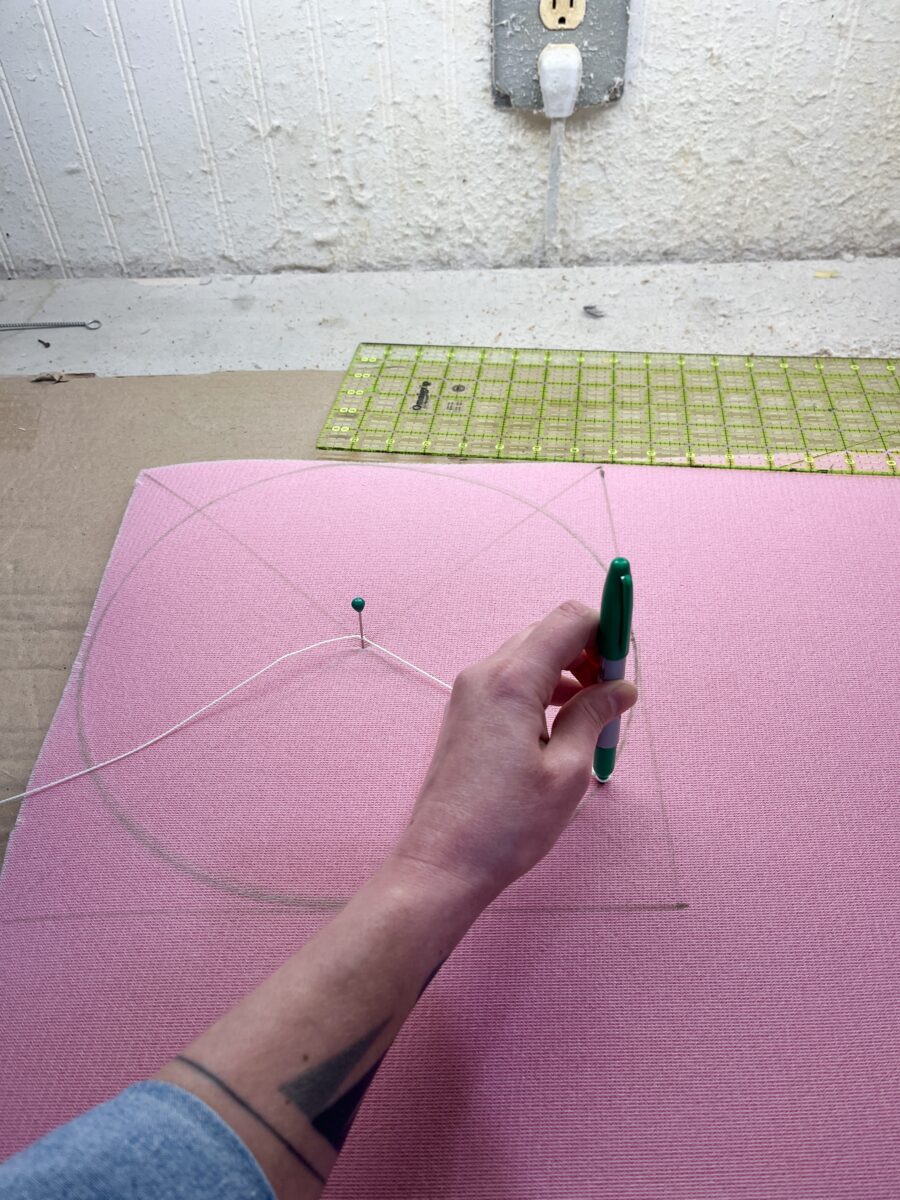
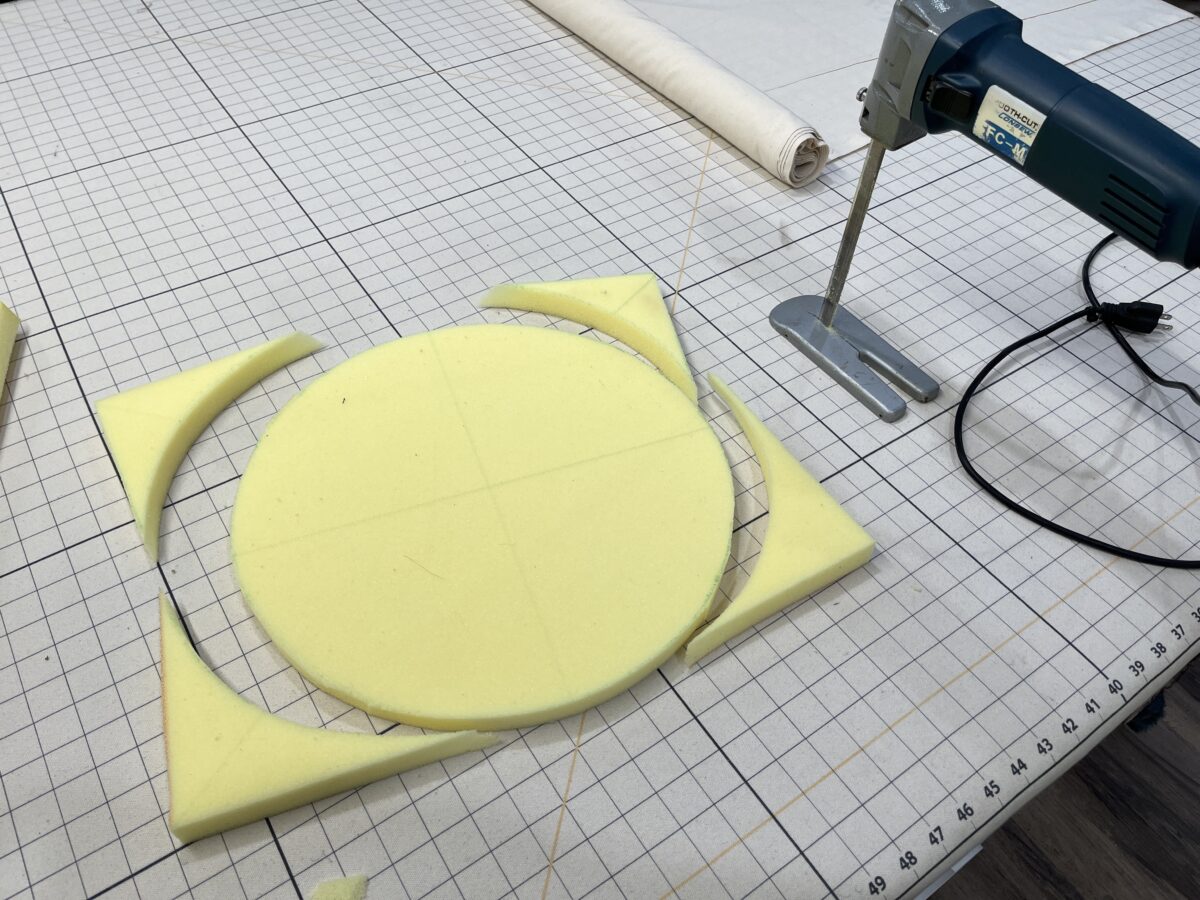
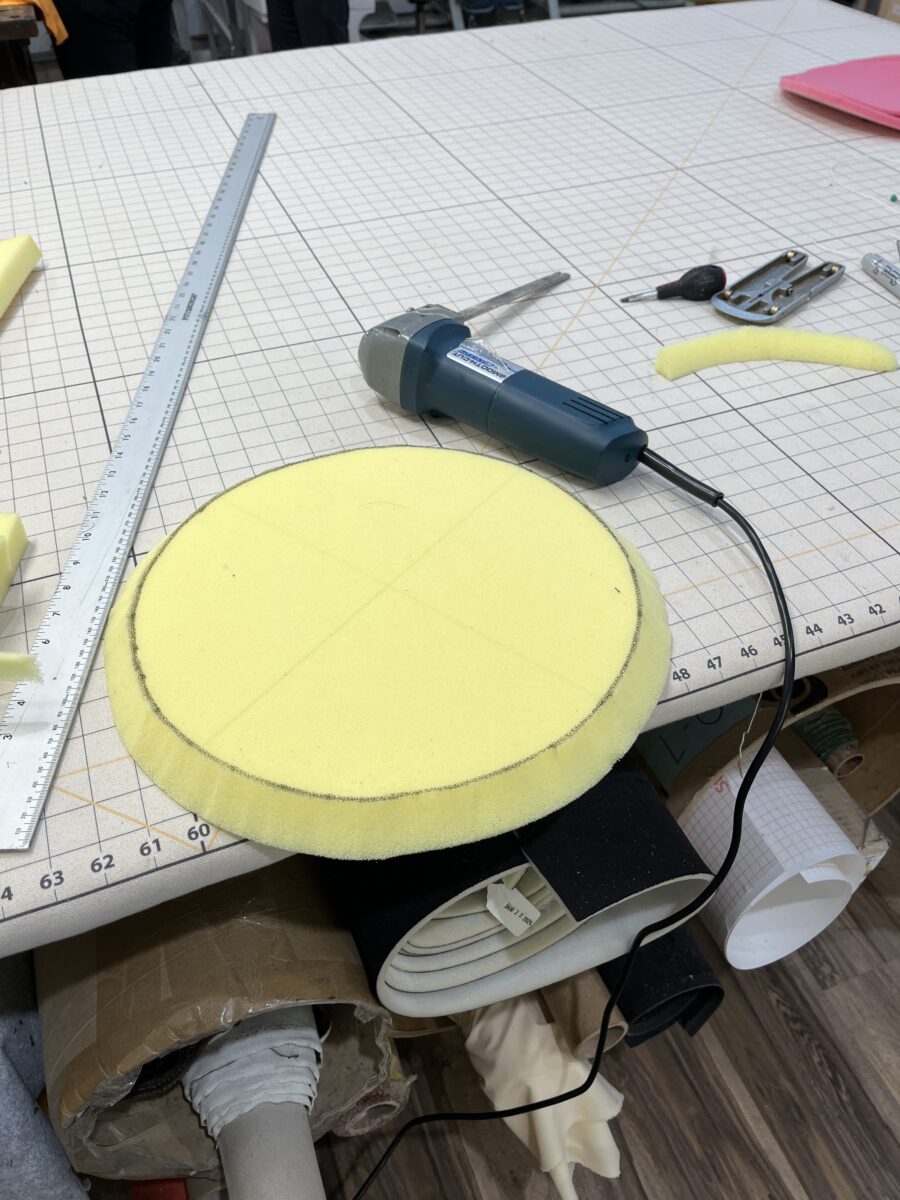
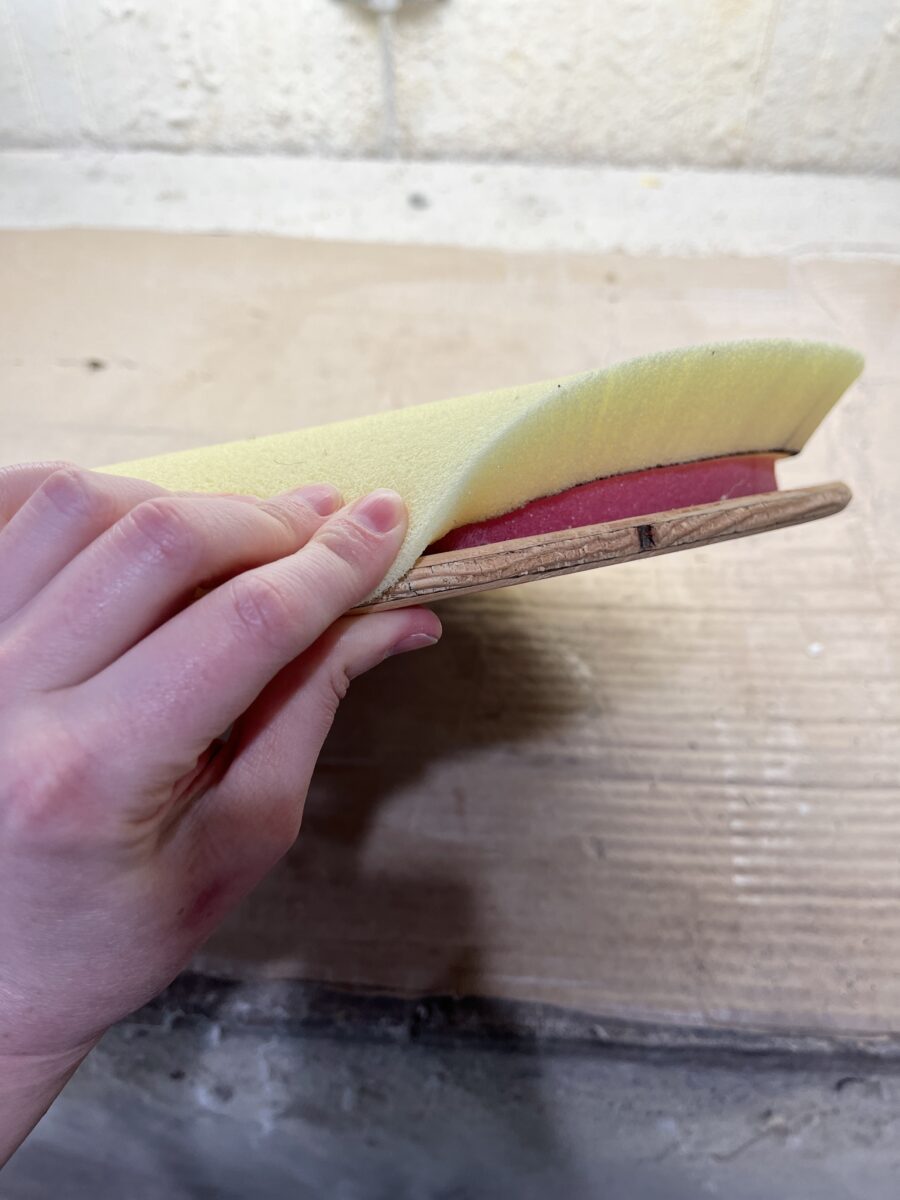
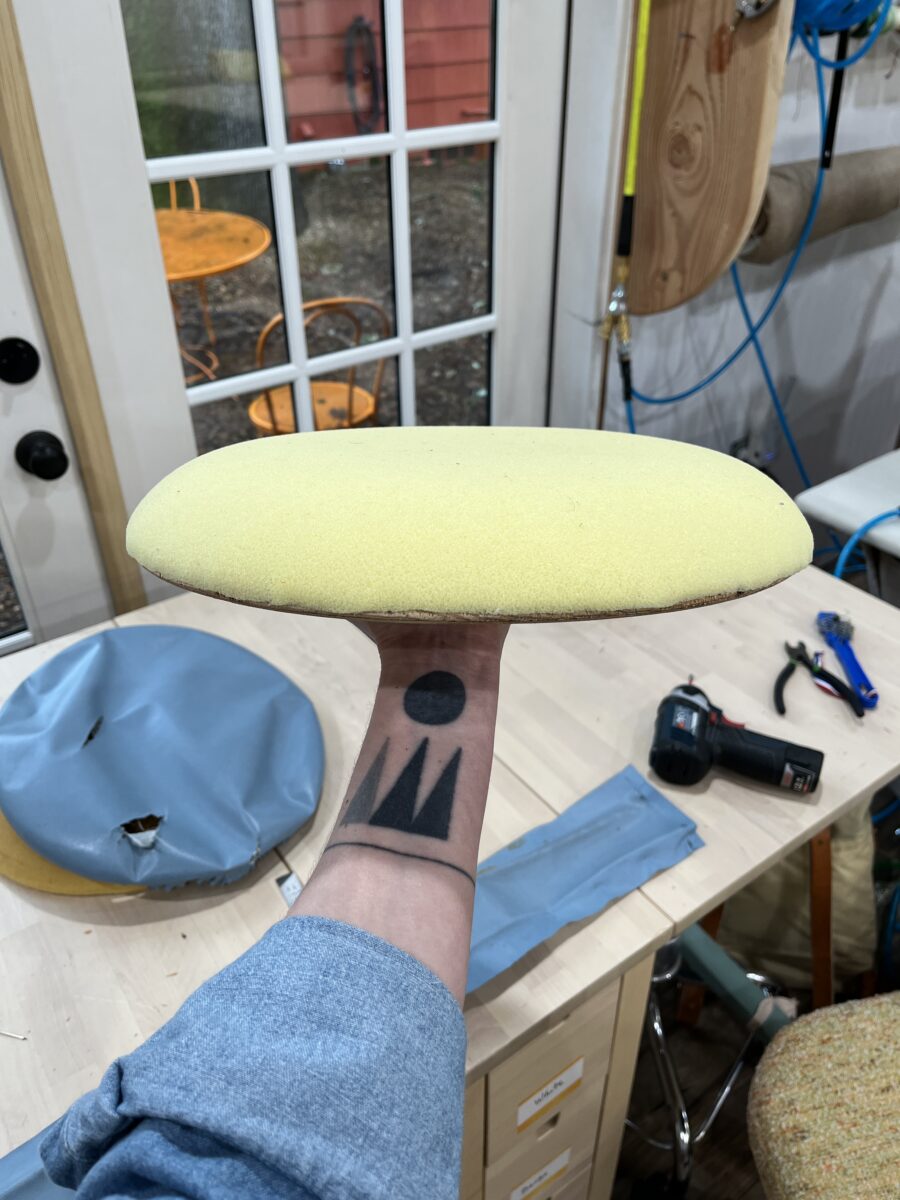
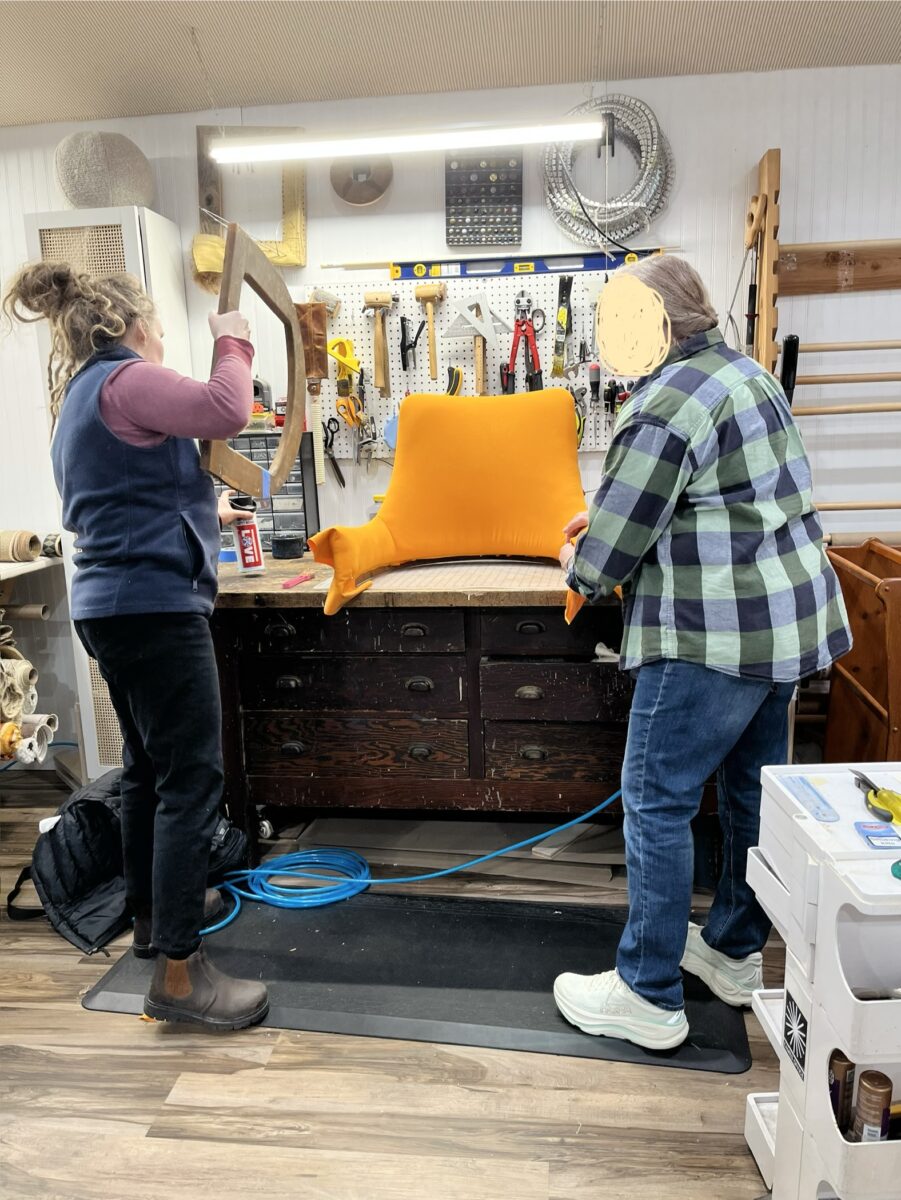
Next, I cut three layers of foam to create the crown of the seat. I knew foam cutters were awesome, but finally getting to use one was super exciting. I also needed to bevel the edge of the topmost piece of foam.

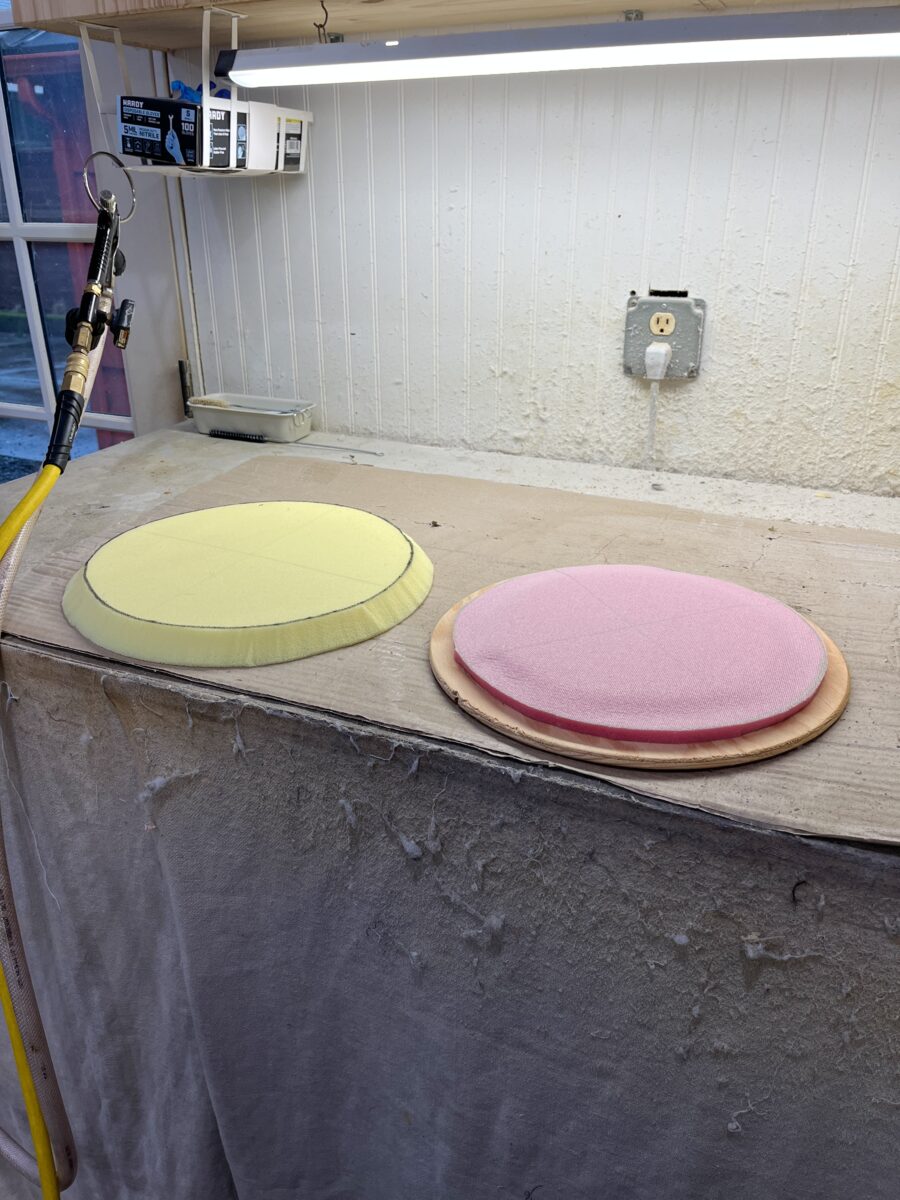
Once all the foam was cut, I got to use the gravity fed glue sprayer to secure the foam layers together and to the plywood base. The bevel let me create this perfect mushroom cap.

The studio space was so nice and the other participants were working on some intense projects! Before the workshop, I didn’t realize that a multi-session project was an option. It definitely is, which is awesome! The class size is limited to four people and Anne circulates to each person throughout the day to demonstrate. It’s an incredible learning environment and Anne is so knowledgeable, kind, and fun.

After prepping the foam, I could then start stapling the fabric. Pneumatic staple guns are so cool!!! First I put in a bunch of temporary staples, which are just shot at an angle making them easier to remove. After checking the tension and the fabric’s pattern, final staples are added and the excess fabric is trimmed away.

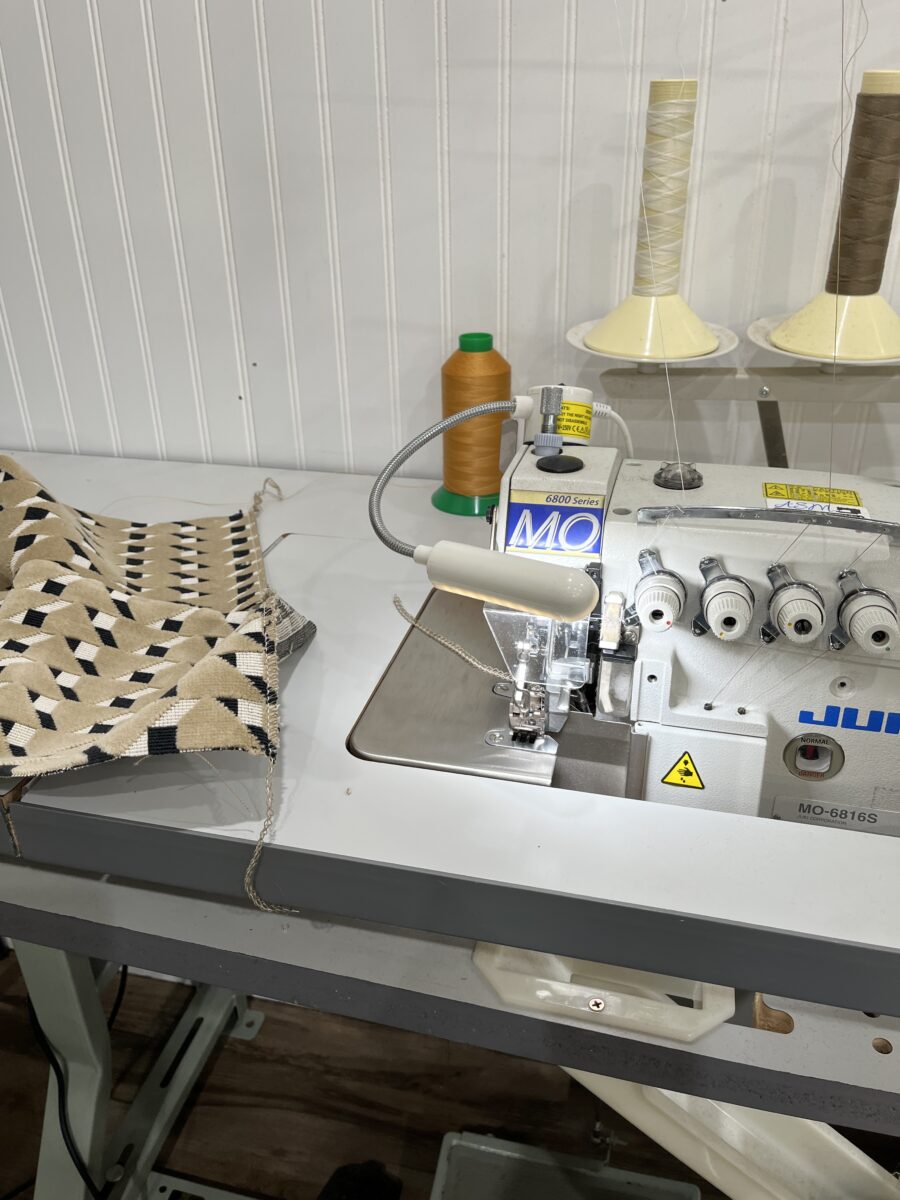
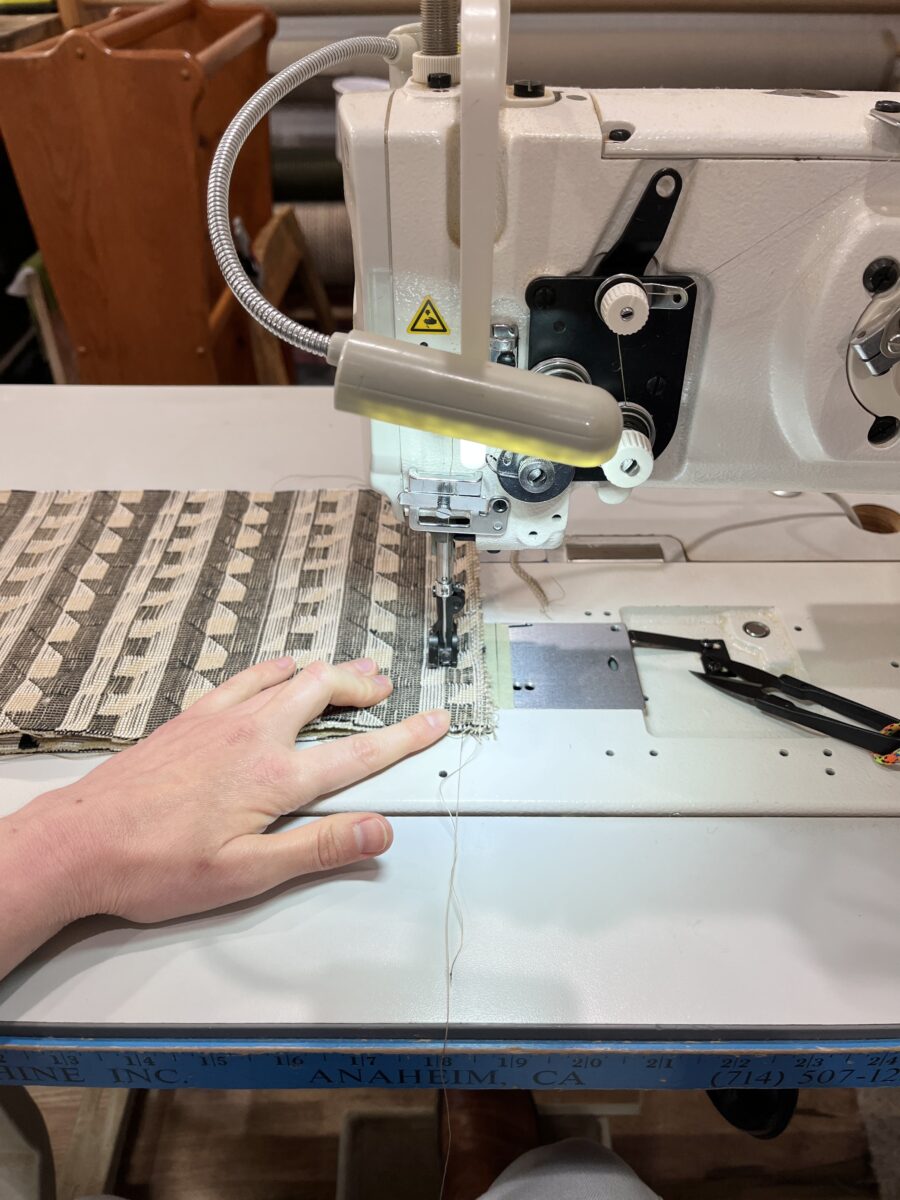
Holy crap, industrial machines. Seriously, this studio’s set up was SO NICE. I only got to sew one seam and finish the edges, but wow… do I need industrial machines?!

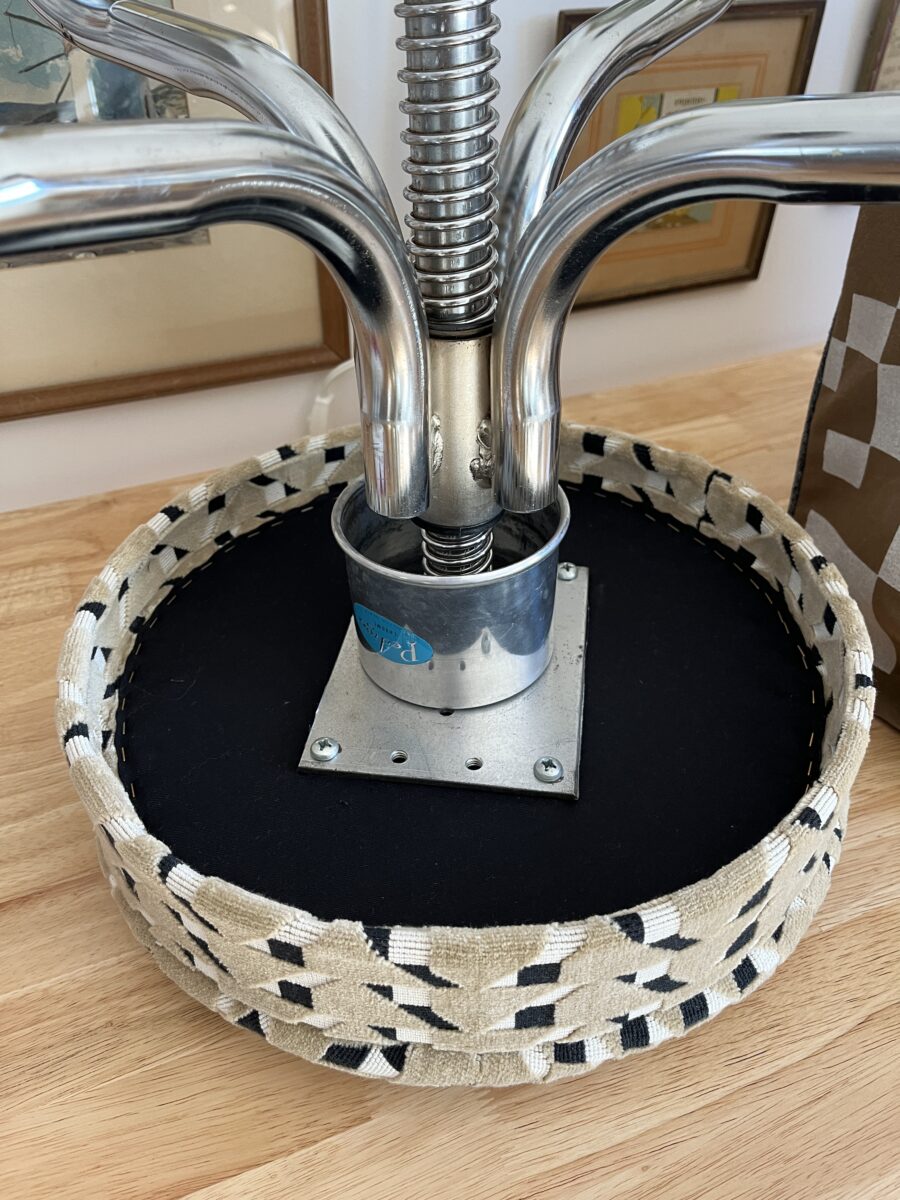
The original vinyl was held in place by a metal circle that pinched it in place underneath the the rim . The new fabric was too thick for that to work, but now there’s a fancy dust cover on the bottom that hides the plywood, plus the fabric wraps the whole way around the metal rim.

I wrapped up probably an hour and half before the workshop was supposed to end because my stool was one of the simpler pieces. I am definitely going to do more projects with Anne! I want to redo my dining room chairs (4), my computer chair, and maybe even the BIG project of my grandparents’ old recliner and foot stool.

Moving Coat by Beaton Studio | Matchy Matchy Quilted Puffer

1 Comment

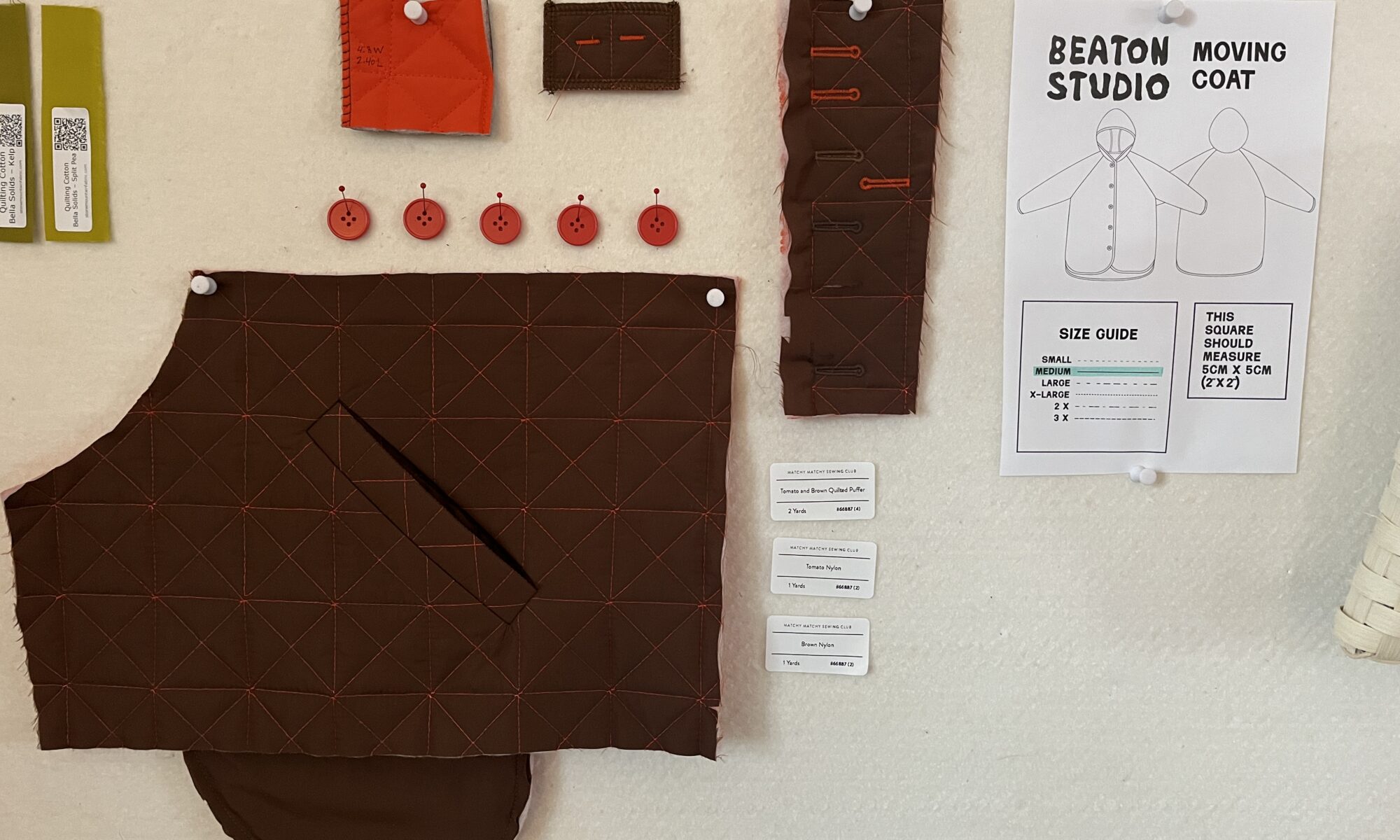
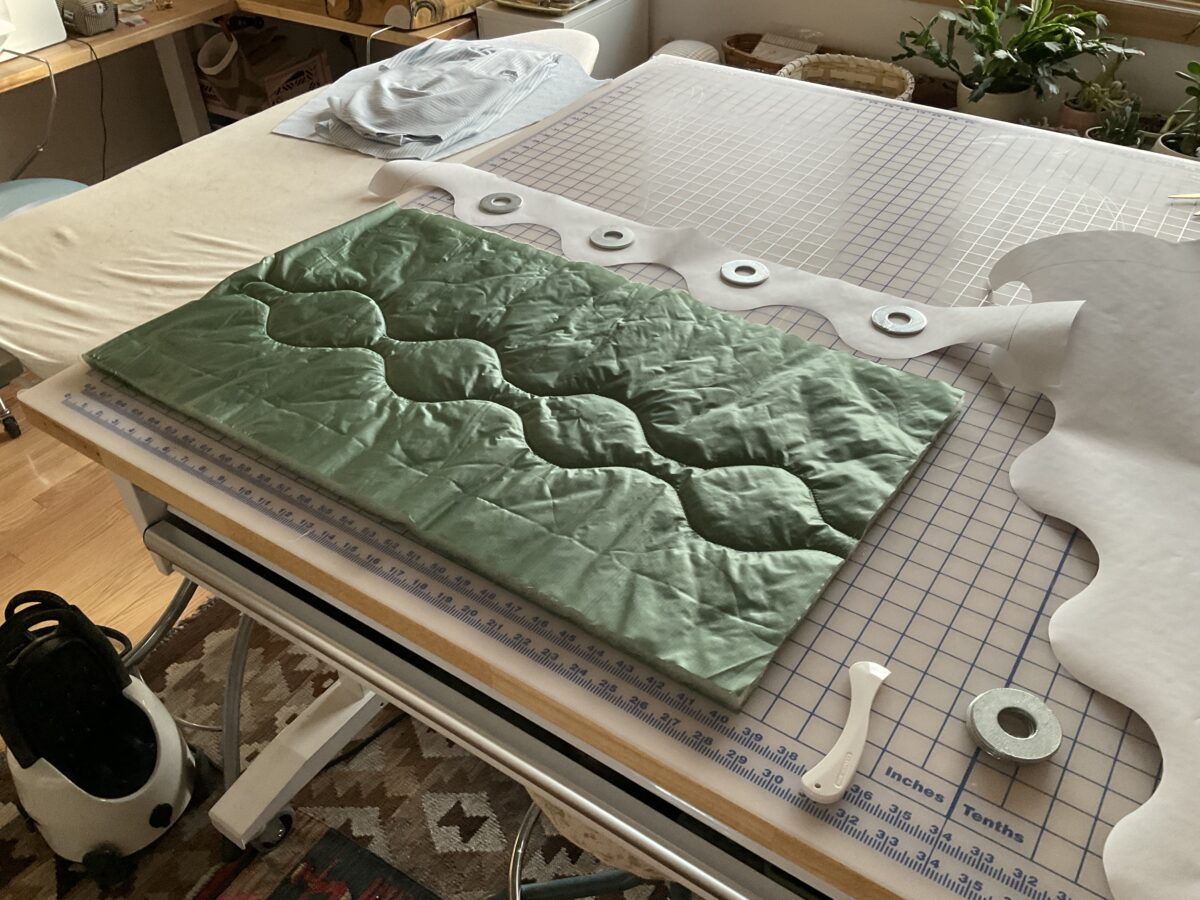
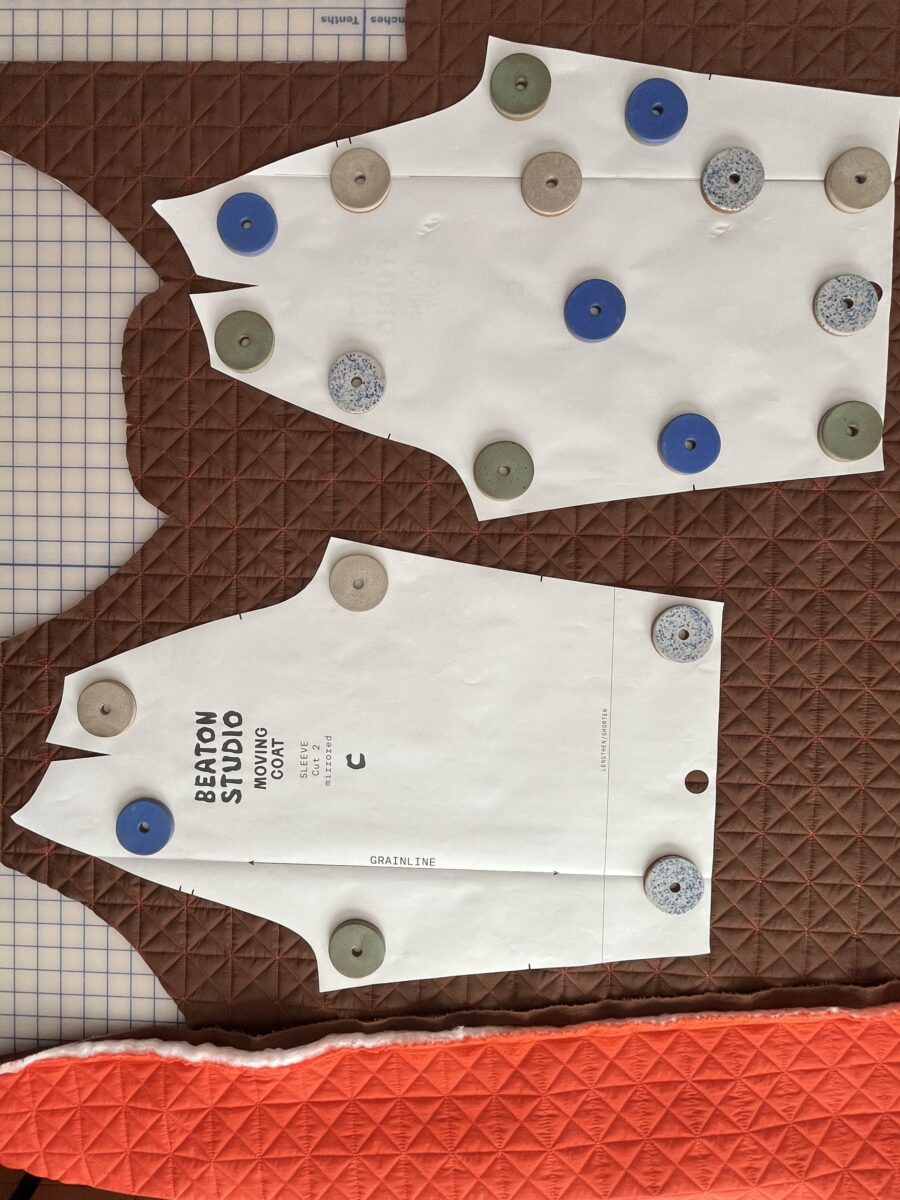
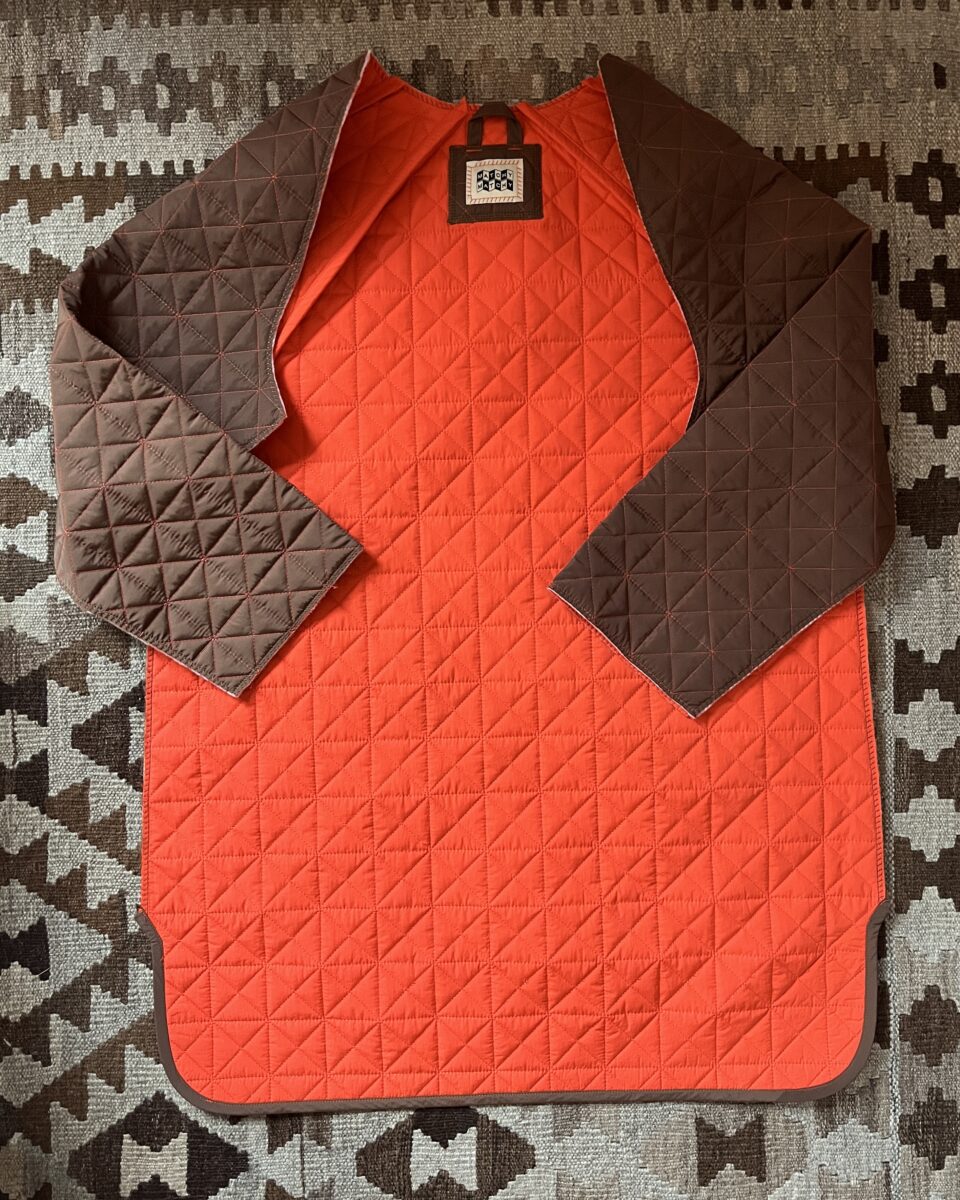
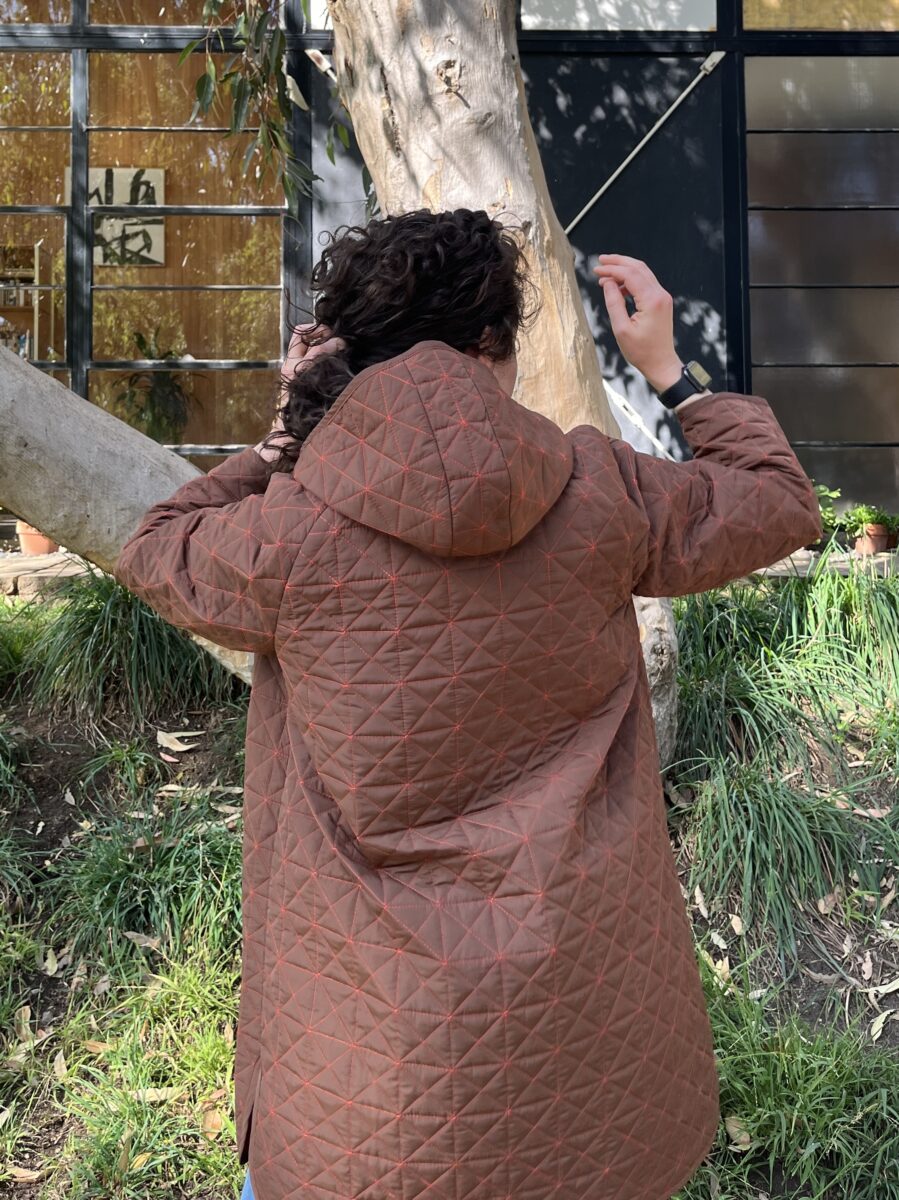
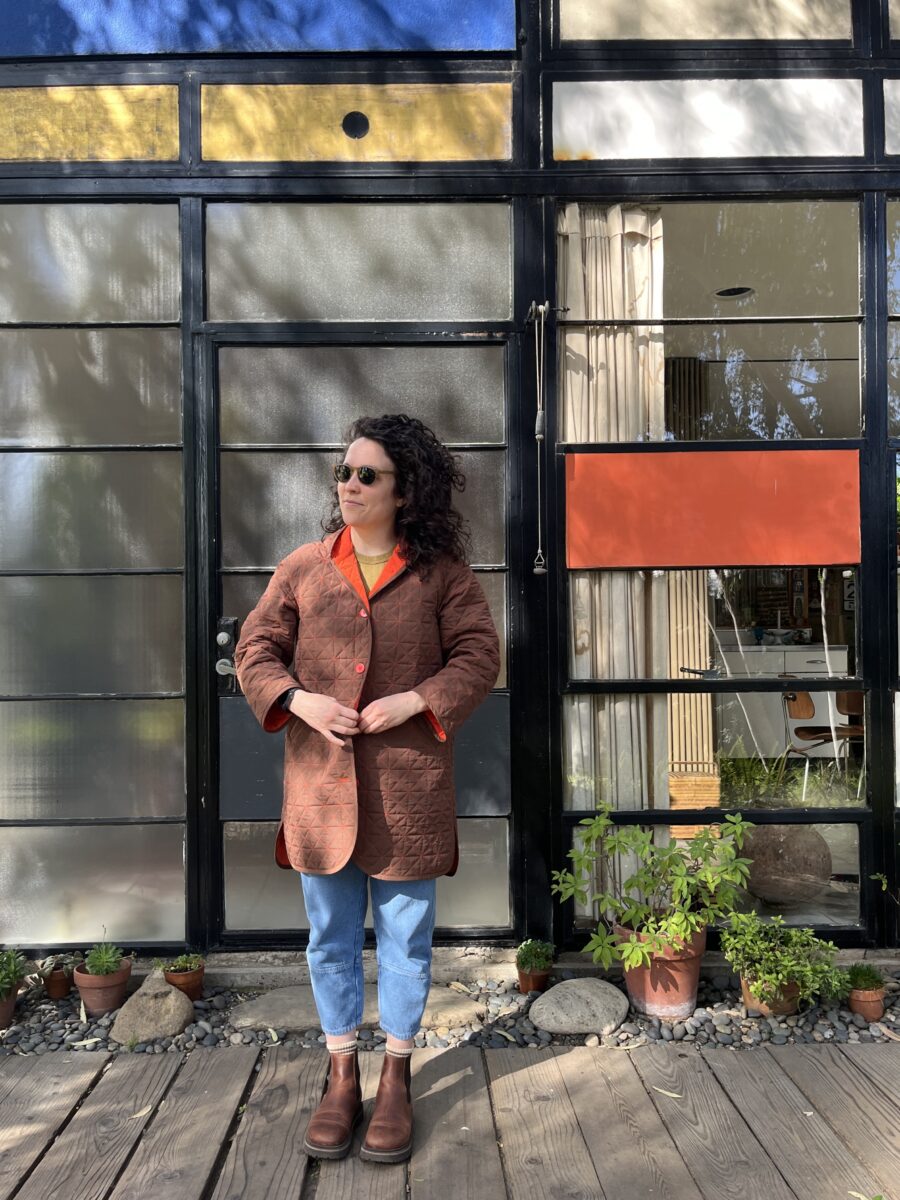
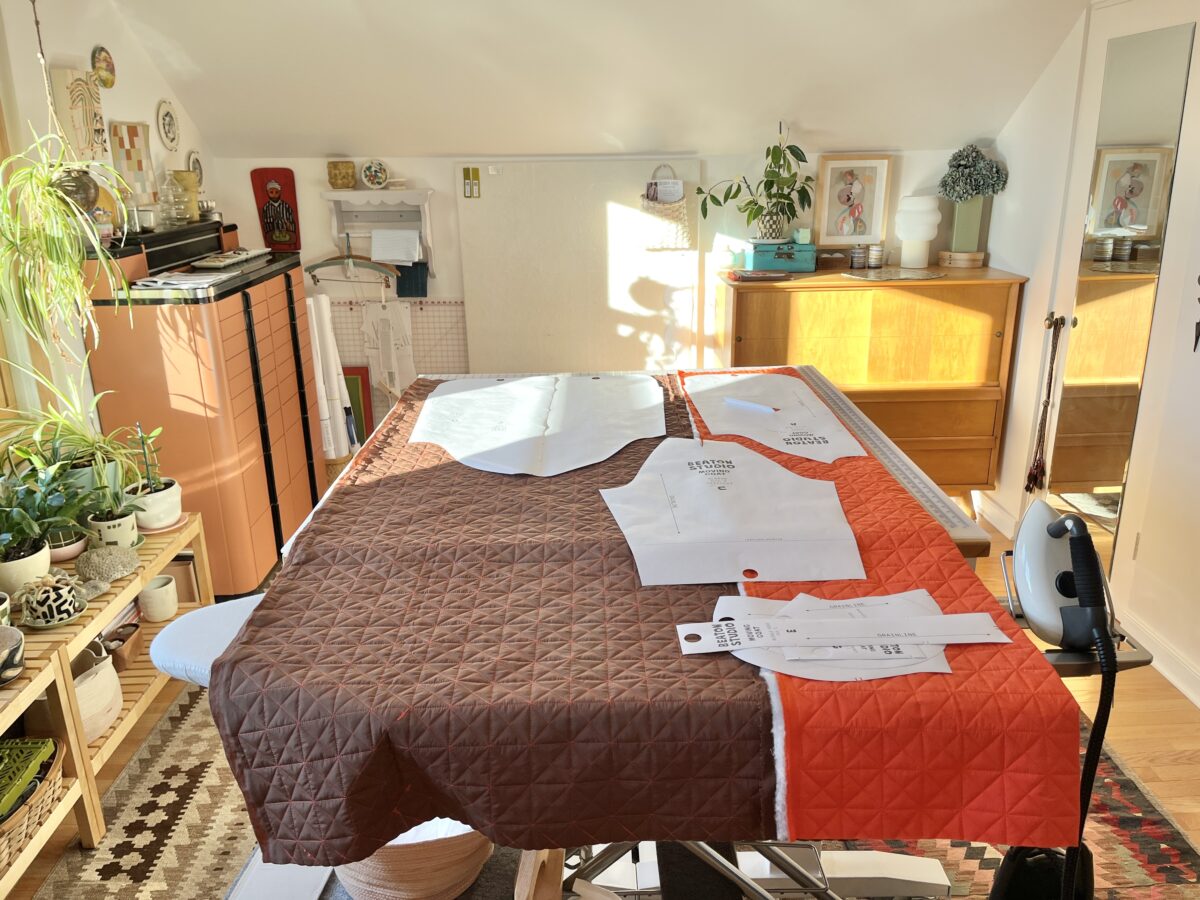
It’s been a minute since I’ve been this excited about a sewing project. I was already planning to make a nylon quilted coat using this pattern, and then Matchy Matchy released a batch of pre-quilted fabrics in excellent color combos, plus matching nylon fabric for binding.

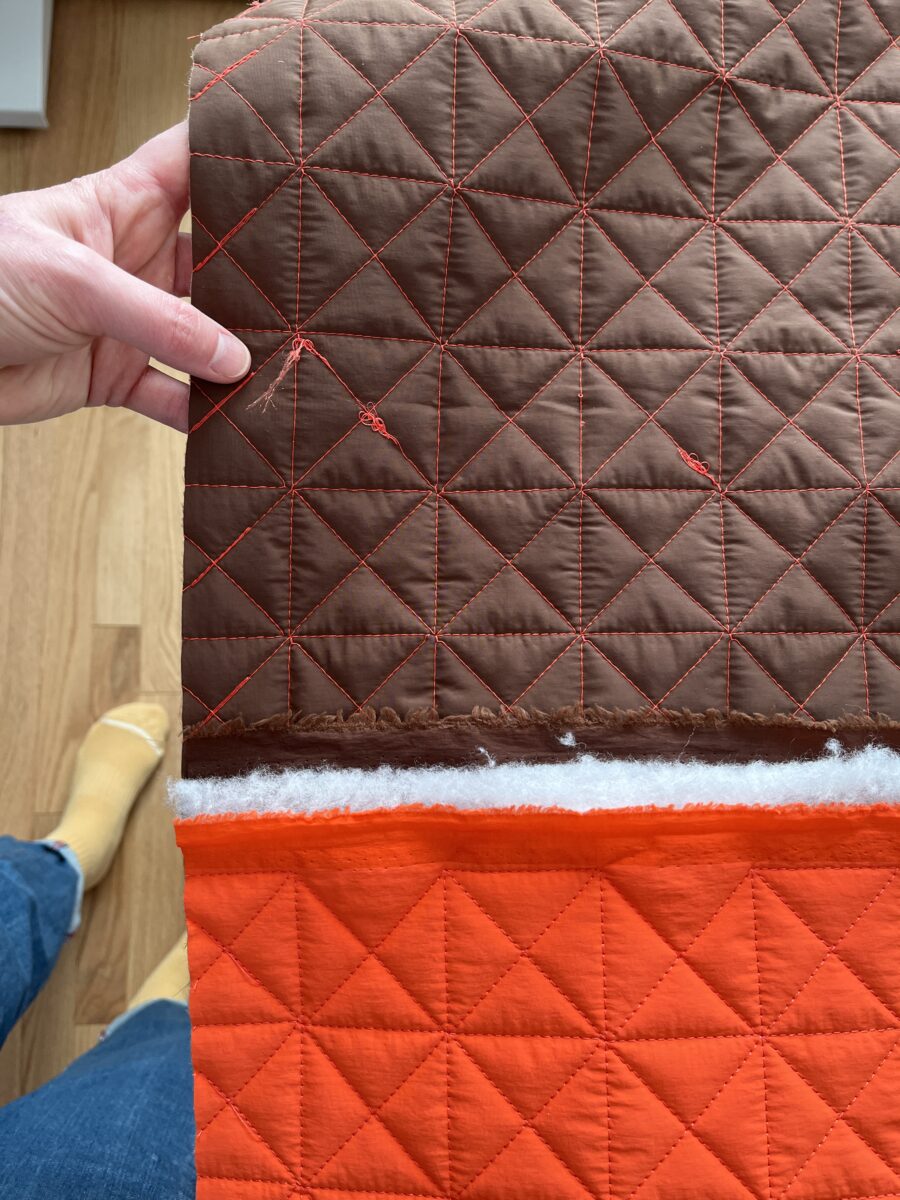
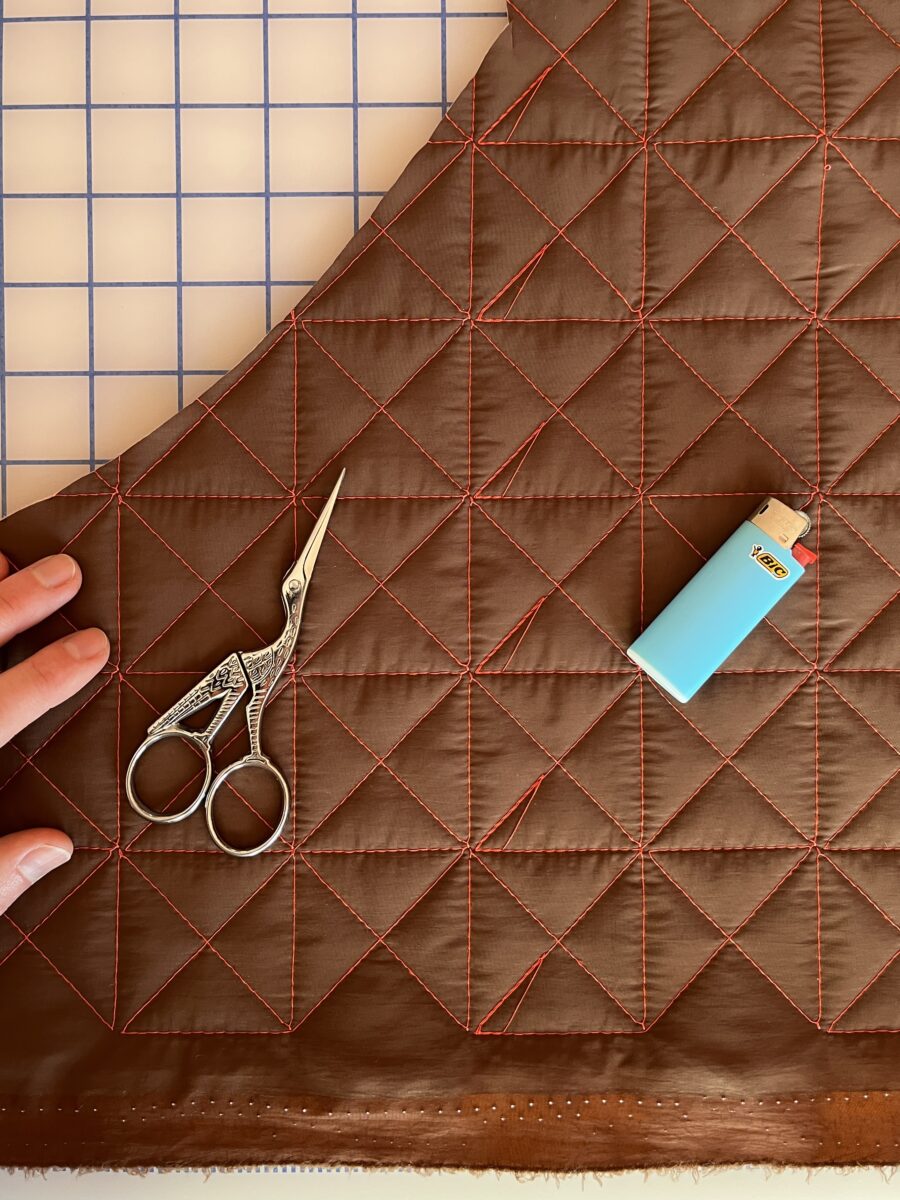
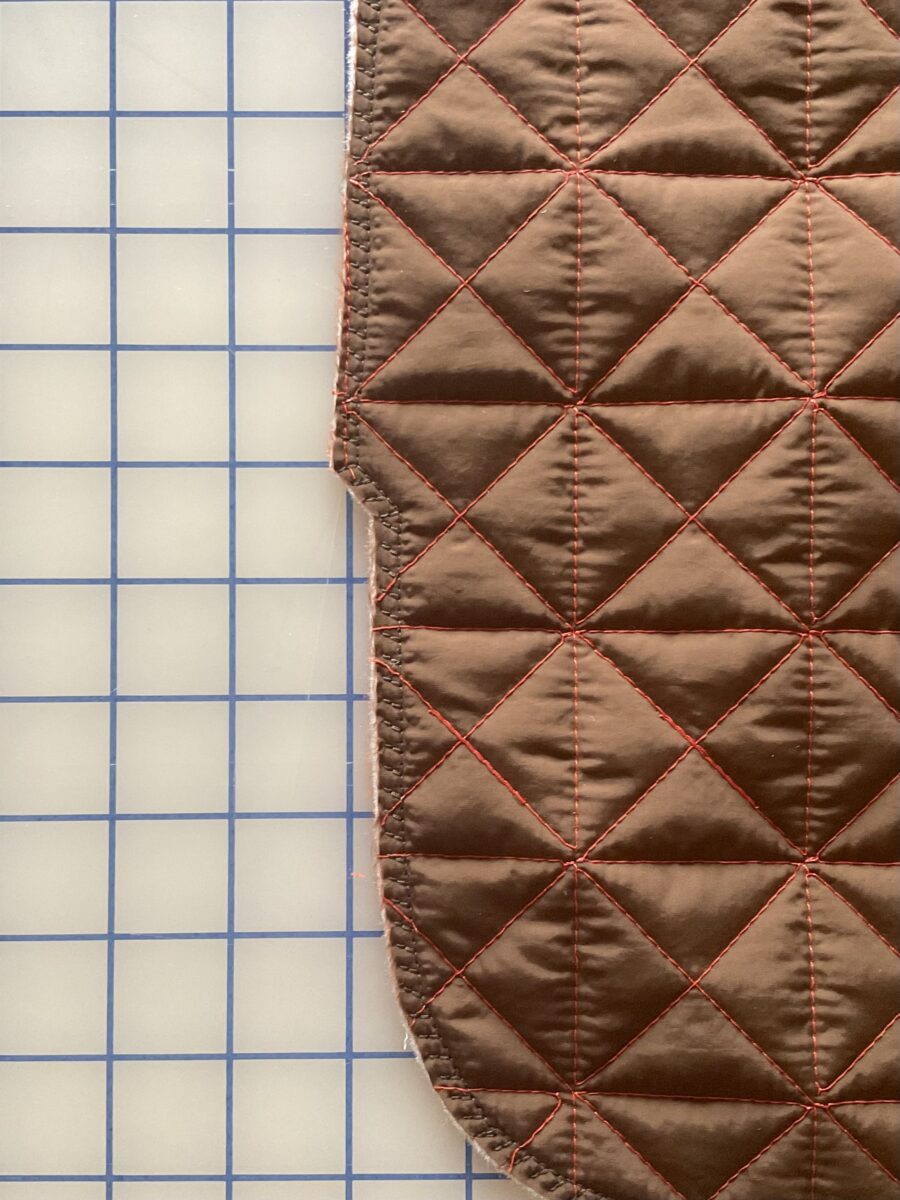
Pre-quilted fabric comes with risks and this one was no exception. The first kinda bummer part was that the brown was clearly the wrong side of the fabric – the stitch quality is just inferior. And then there are the issues of thread nests, skipped stitches, and thread tails. Thread tails are just clipped and burned and the other issues are hopefully just avoided during cutting. If you want perfect quilted lines, you gotta stitch them yourself.
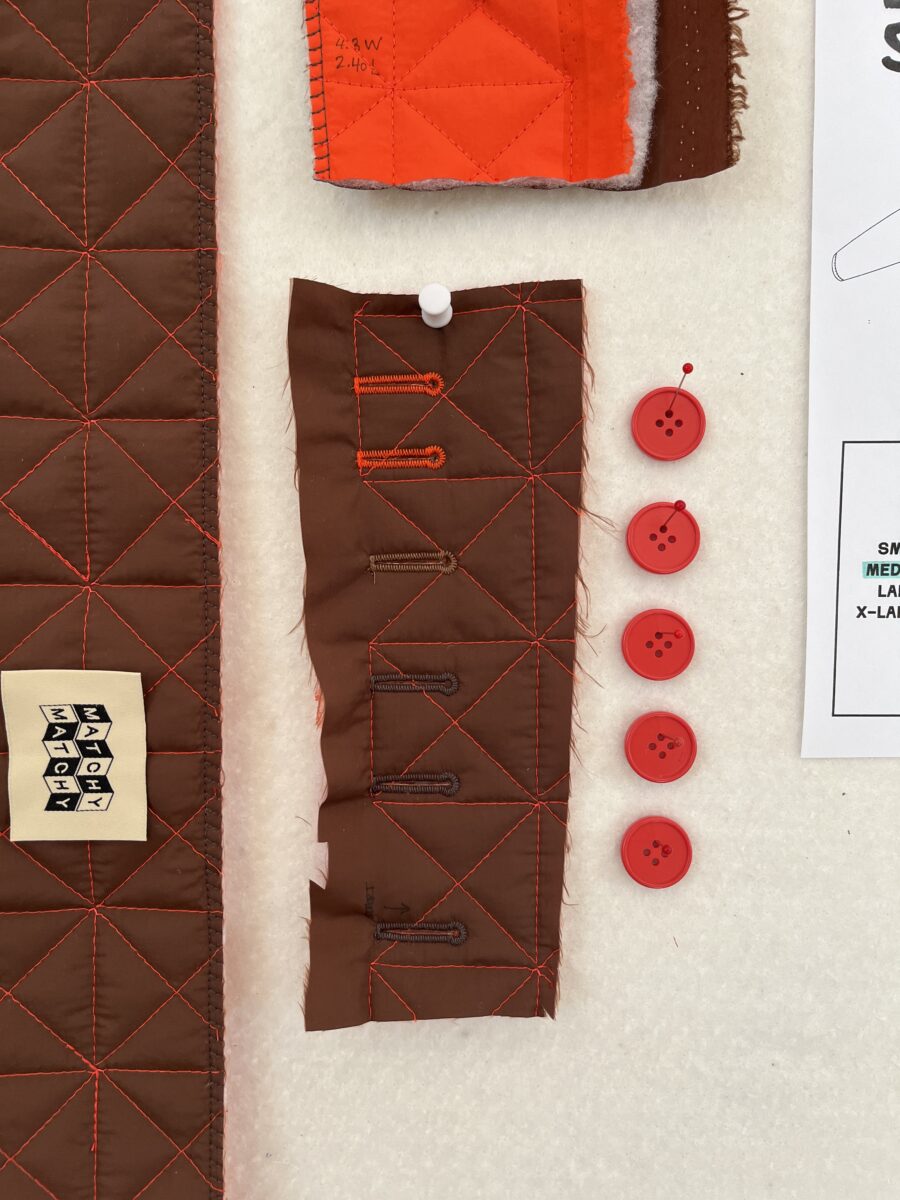
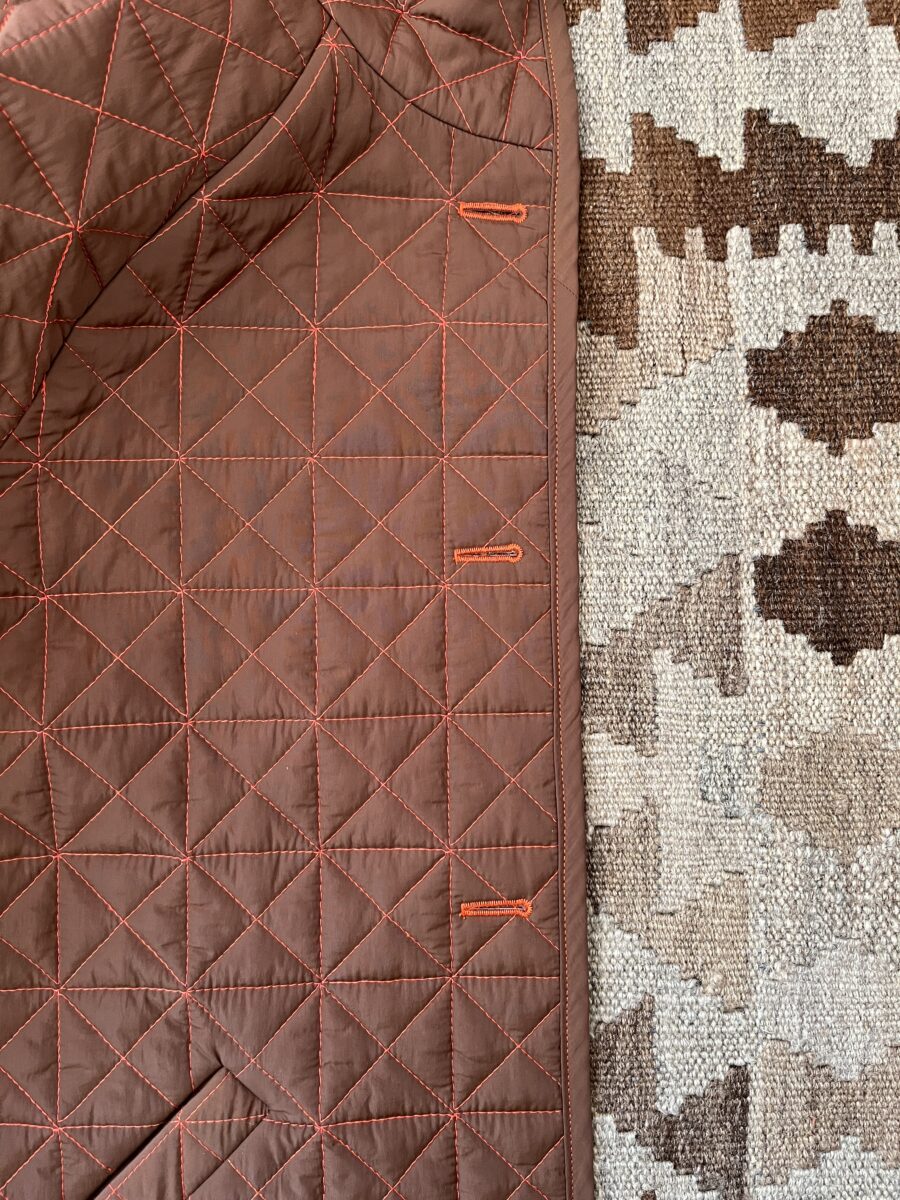
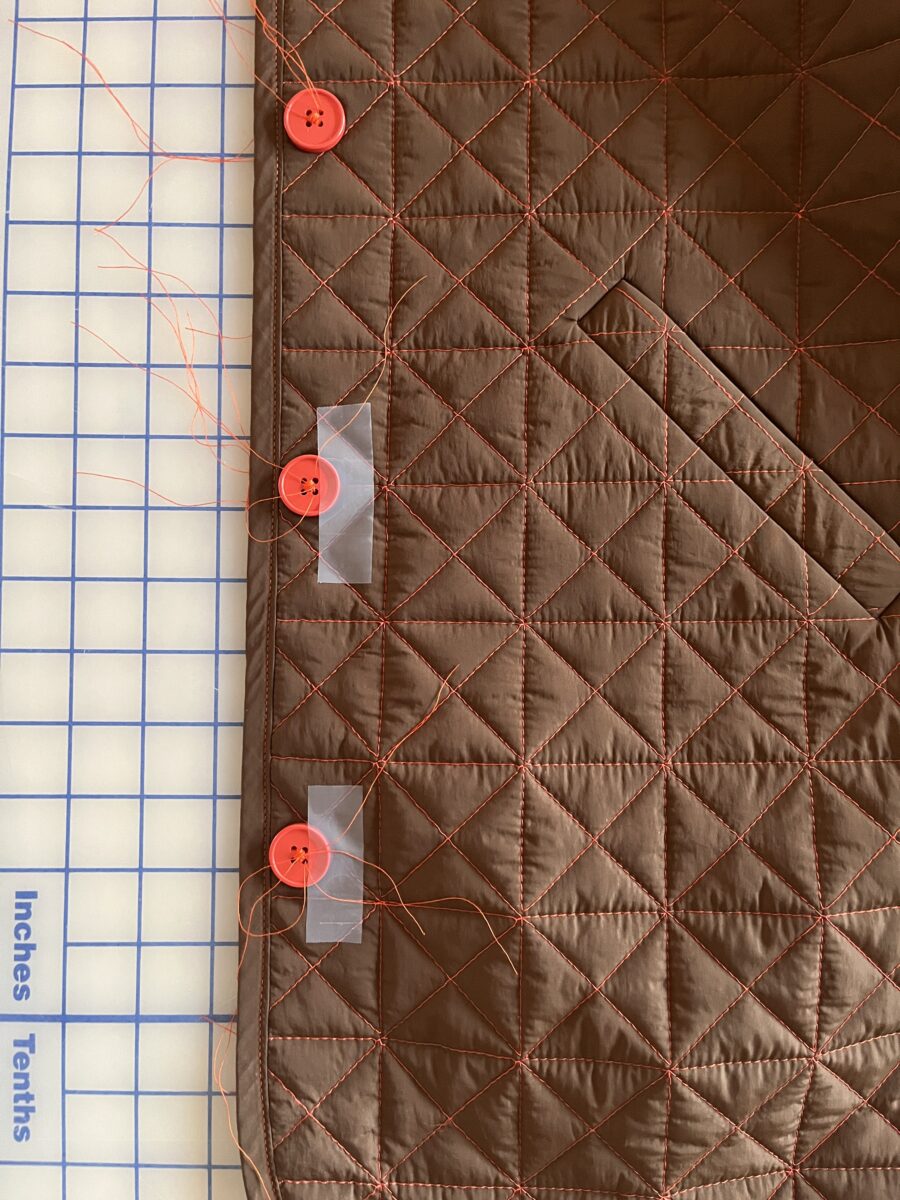
Before doing anything with the fronts, I decided I wanted to have keyhole buttonholes on this project. Because my automatic buttonhole foot loves to get stuck on anything, I installed the buttonholes before sewing the fronts to any other pieces and definitely before binding the front the edge. I was surprised to learn that this nylon fabric is a pretty forgiving – I tested unpicking a buttonhole on some scrap fabric and it looked almost untouched.

After the buttonholes were installed, I made a test welt pocket since the construction was new to me. The test pocket came out really clean but then I didn’t immediately construct the pockets on the fronts and kinda forgot everything I learned during the test. I didn’t attempt to pattern match the welt on the test, but I should have! I got close on the real deal, but they’re off a bit. Sure, I could have scooted the welt over, but I was more concerned about the pocket placement being even on both sides of the coat.

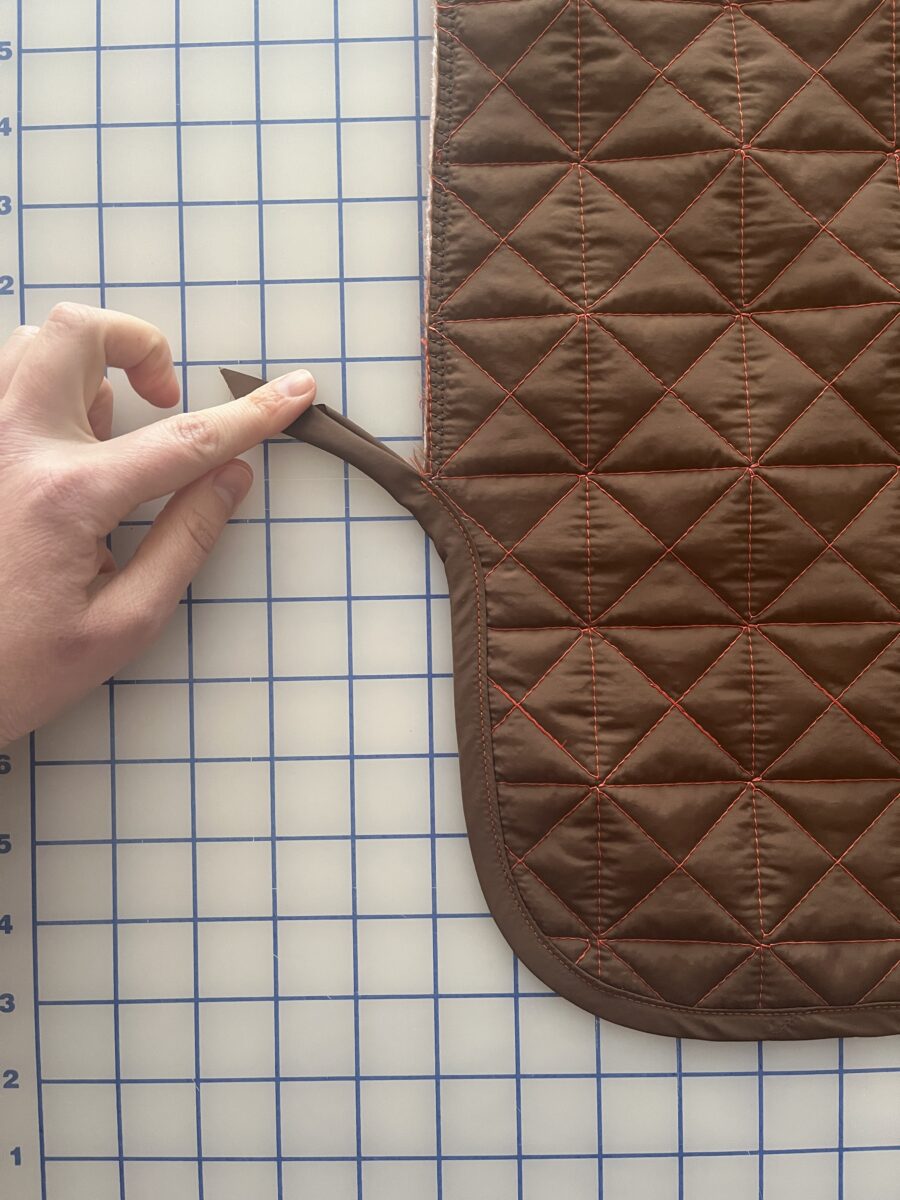
Before actually sewing the welt pockets, I worked on finishing the back bottom with bias and sewing the sleeve darts. The nylon binding is a lot easier to sew than I thought it would be.

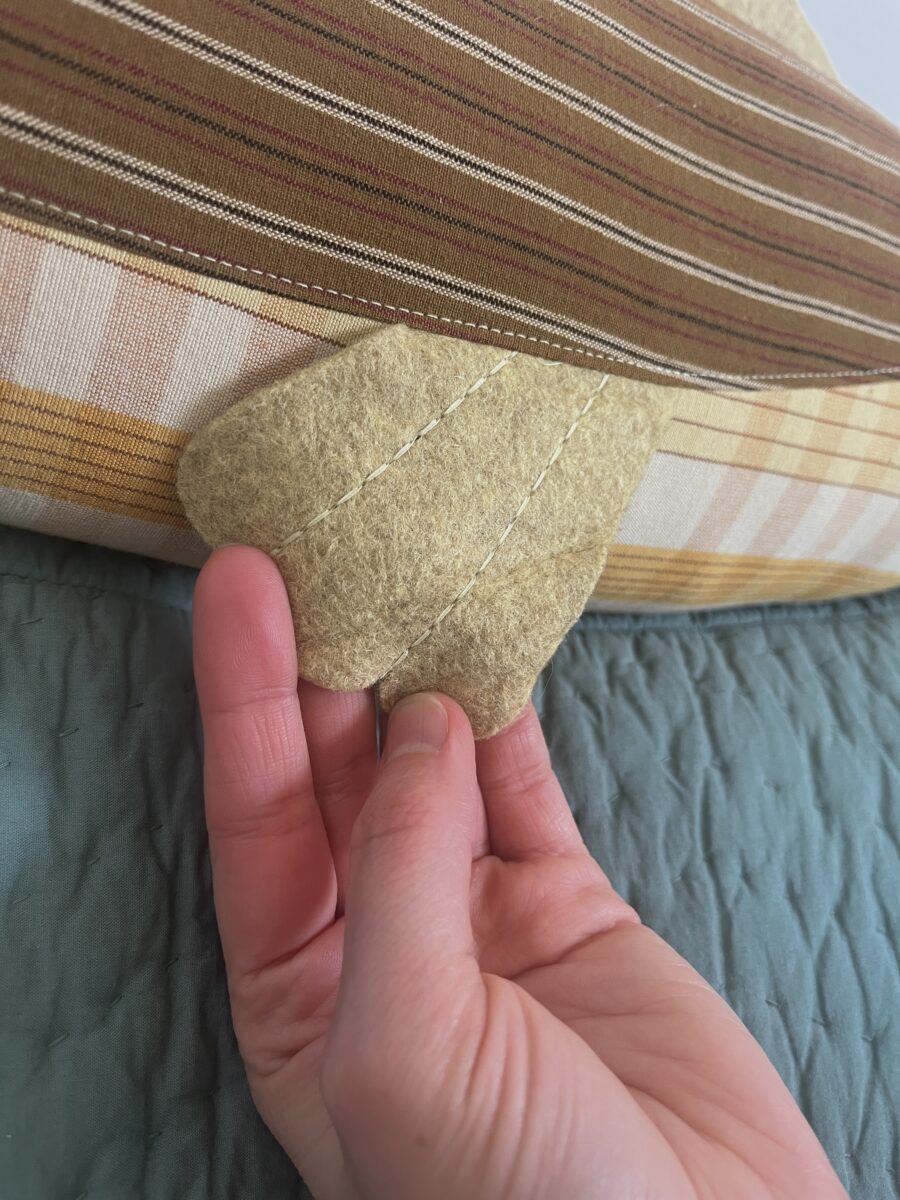
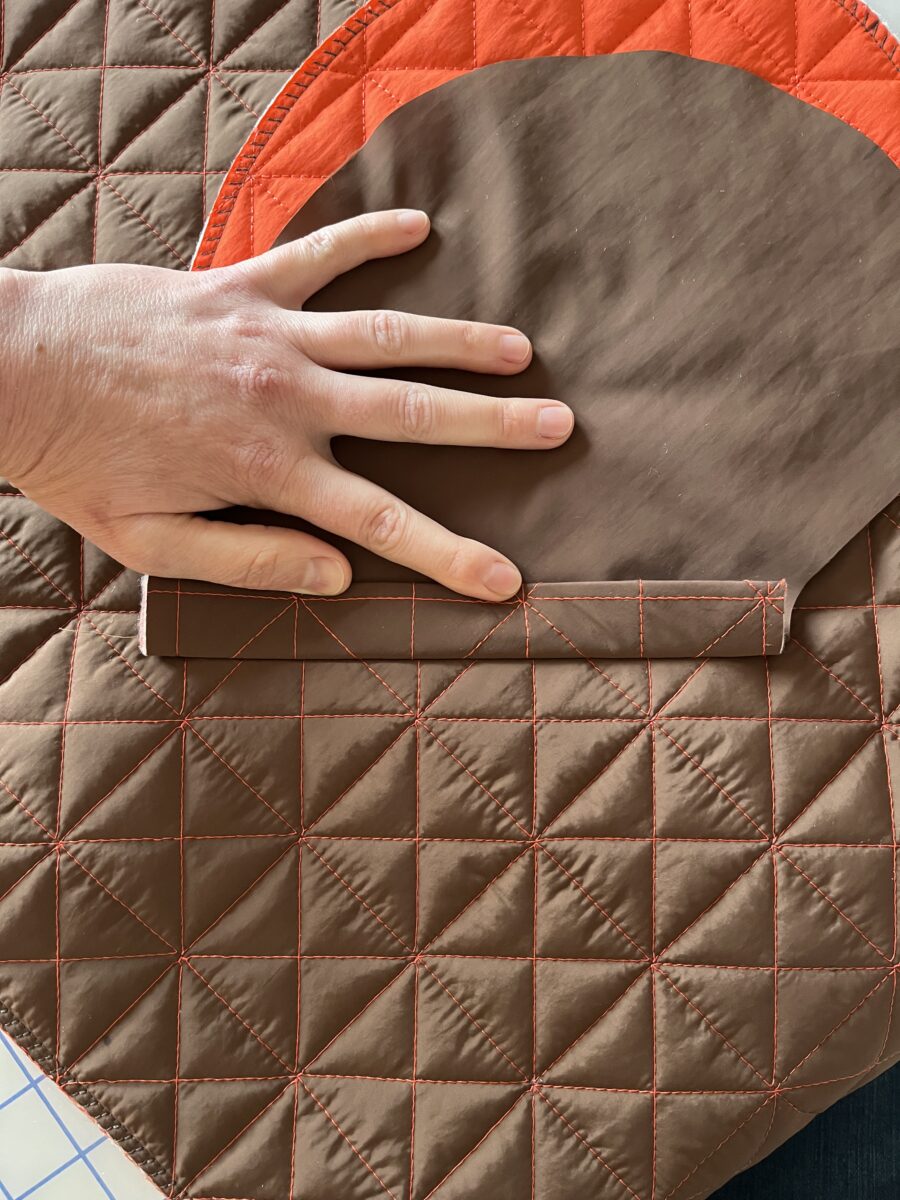
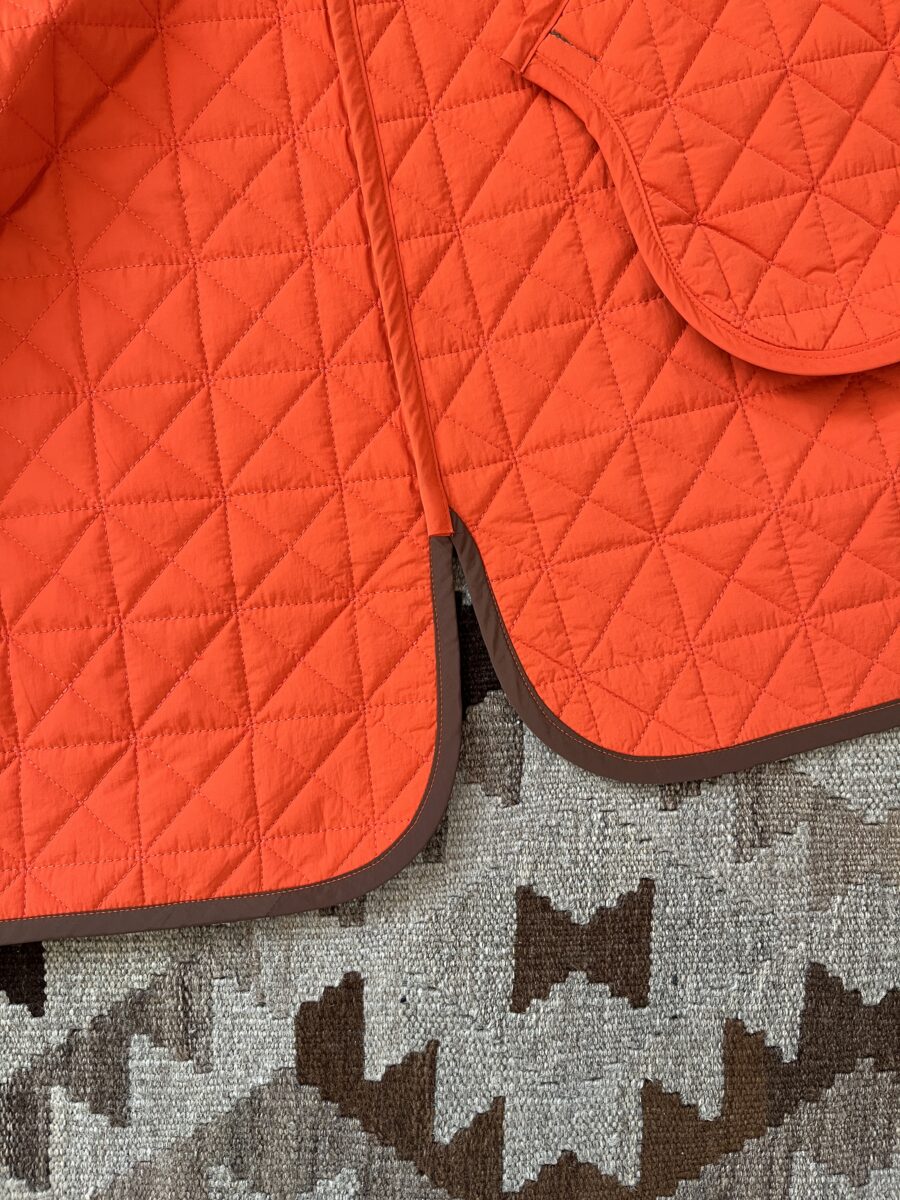
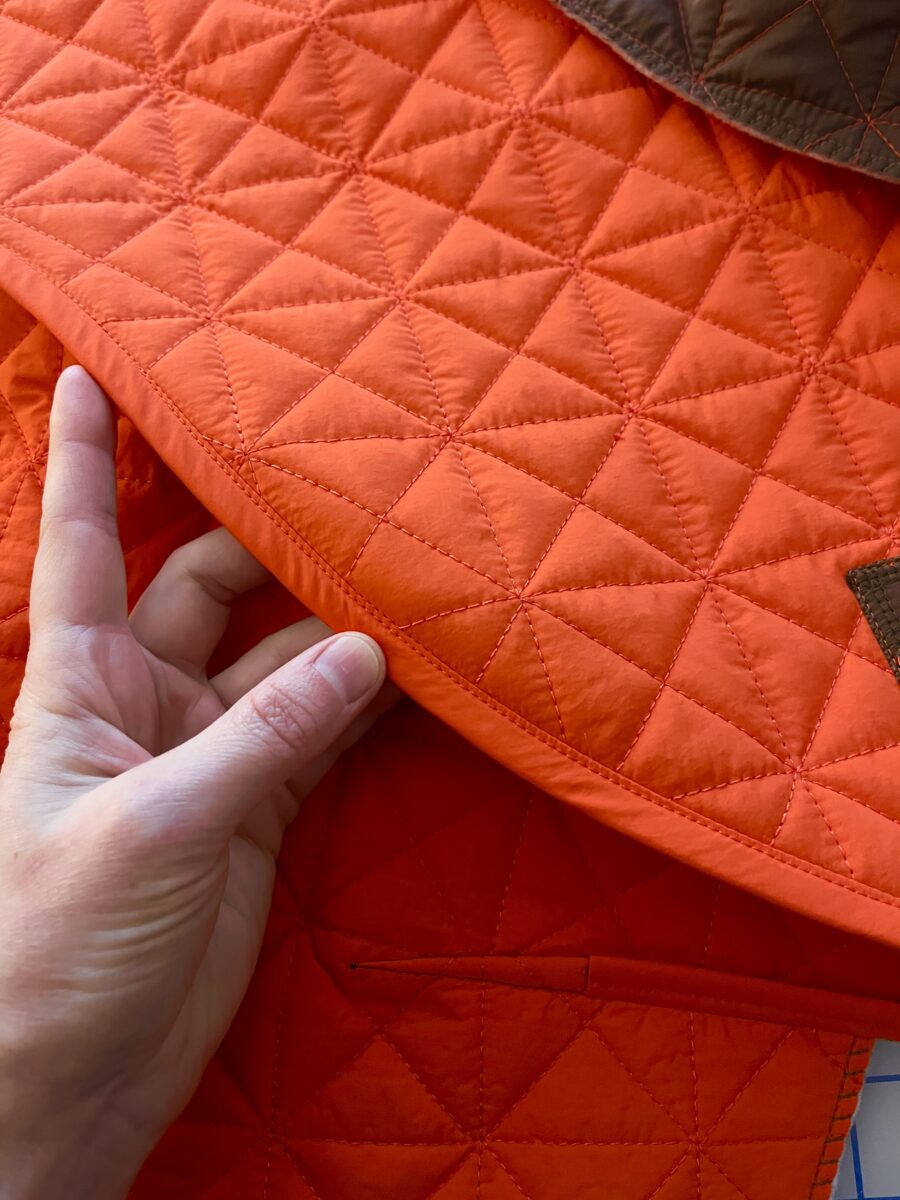
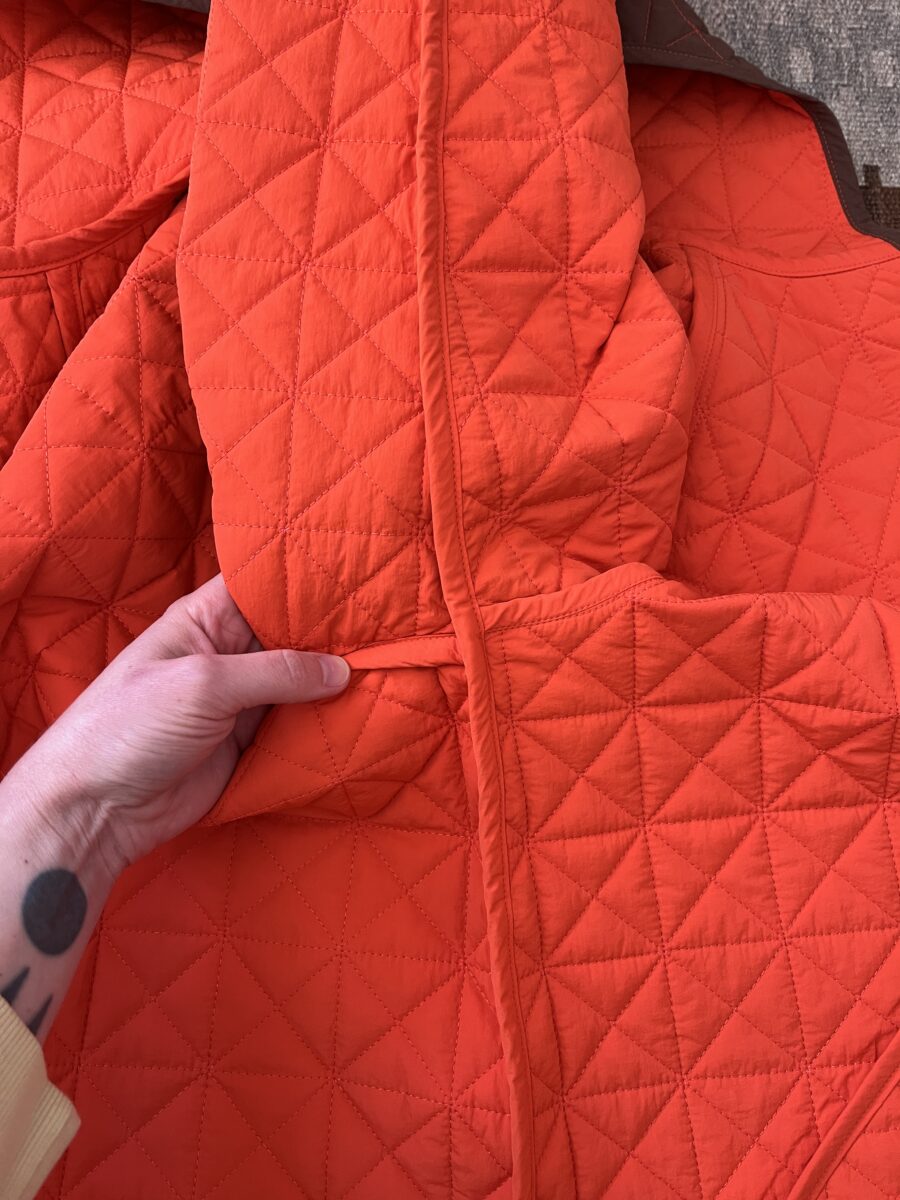
One thing to note about both the front and back pieces is that they have these little tabs. The instructions aren’t explicit, but you’re supposed to bind around and off like I’ve done here. It’s a tiny curve, so just do your best!

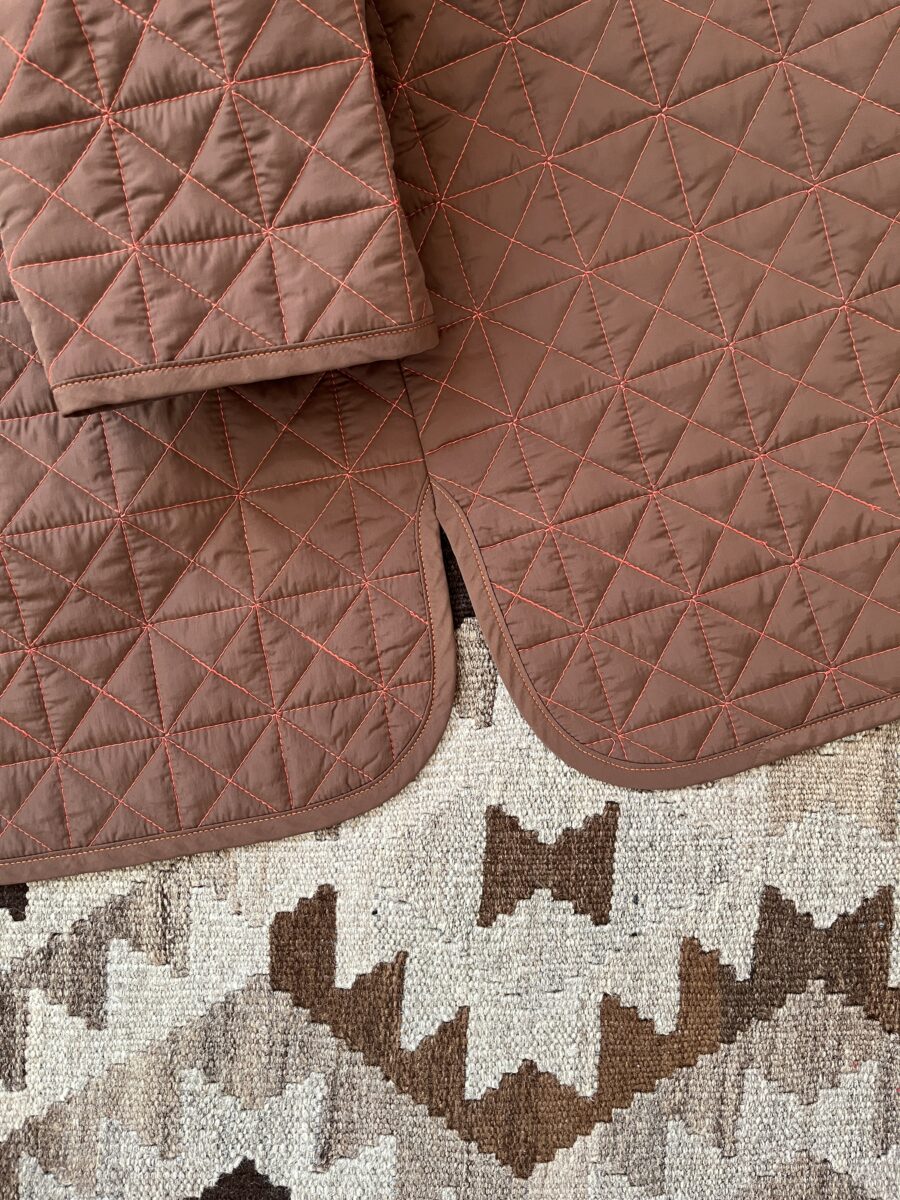
I think this is the nicest looking split hem construction I’ve seen on a quilted coat.

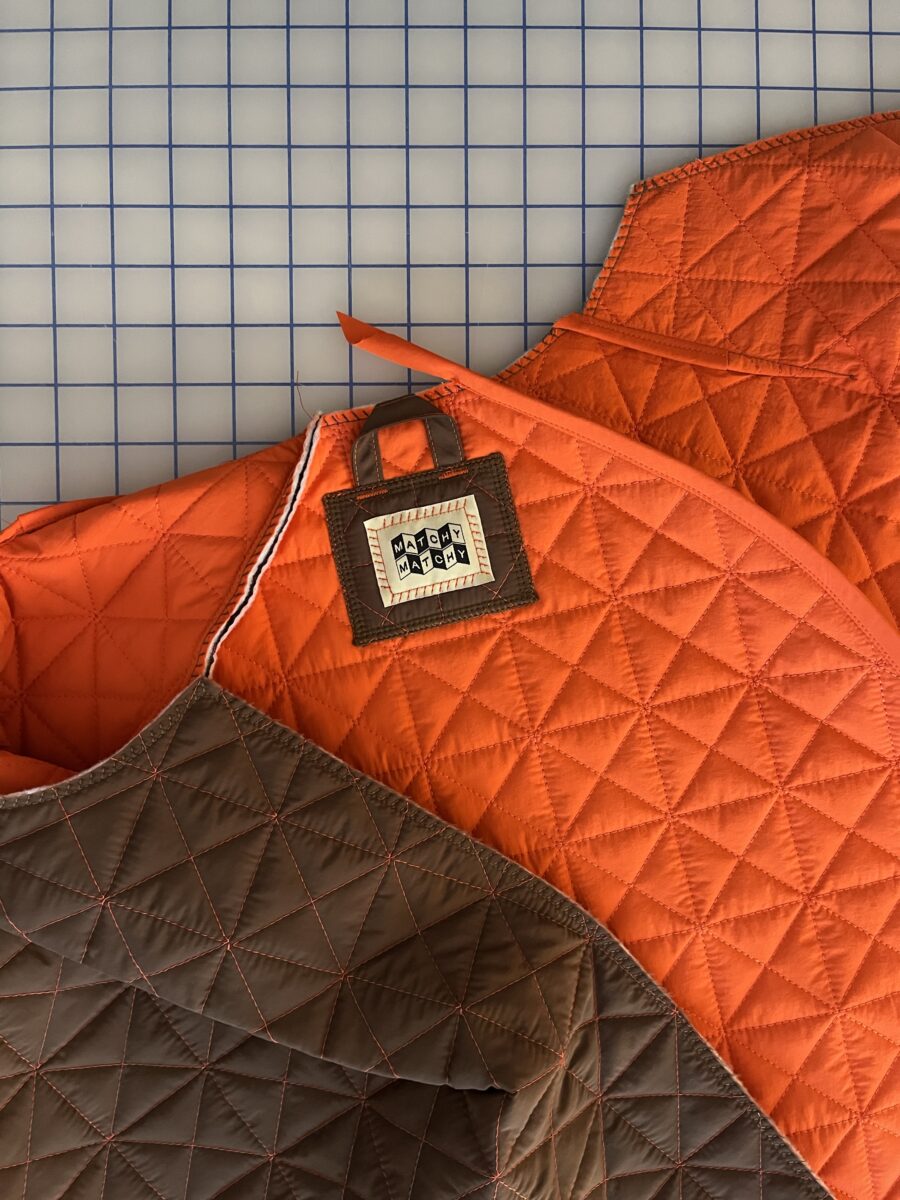
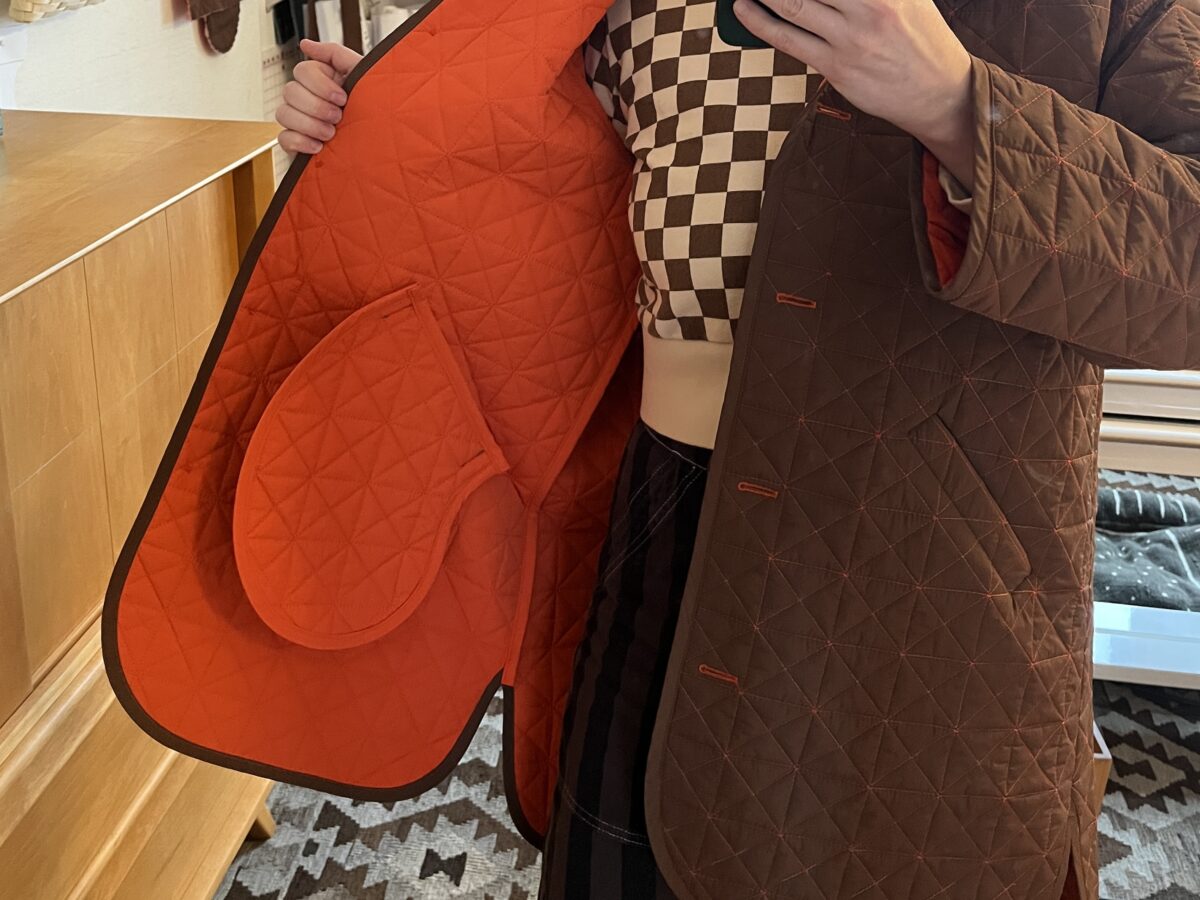
I purchased the matching nylon fabric in each color because I wasn’t sure if I’d like the brown binding on the inside of the coat. I’m glad I went this route and also that I cut out binding as I needed it, not all at the beginning of project. It saved a lot of fabric, time, and it minimized the need to stitch binding strips together. I also found that the top of the pocket was fine to bind with the larger width of binding, you just have to be careful when attaching it.
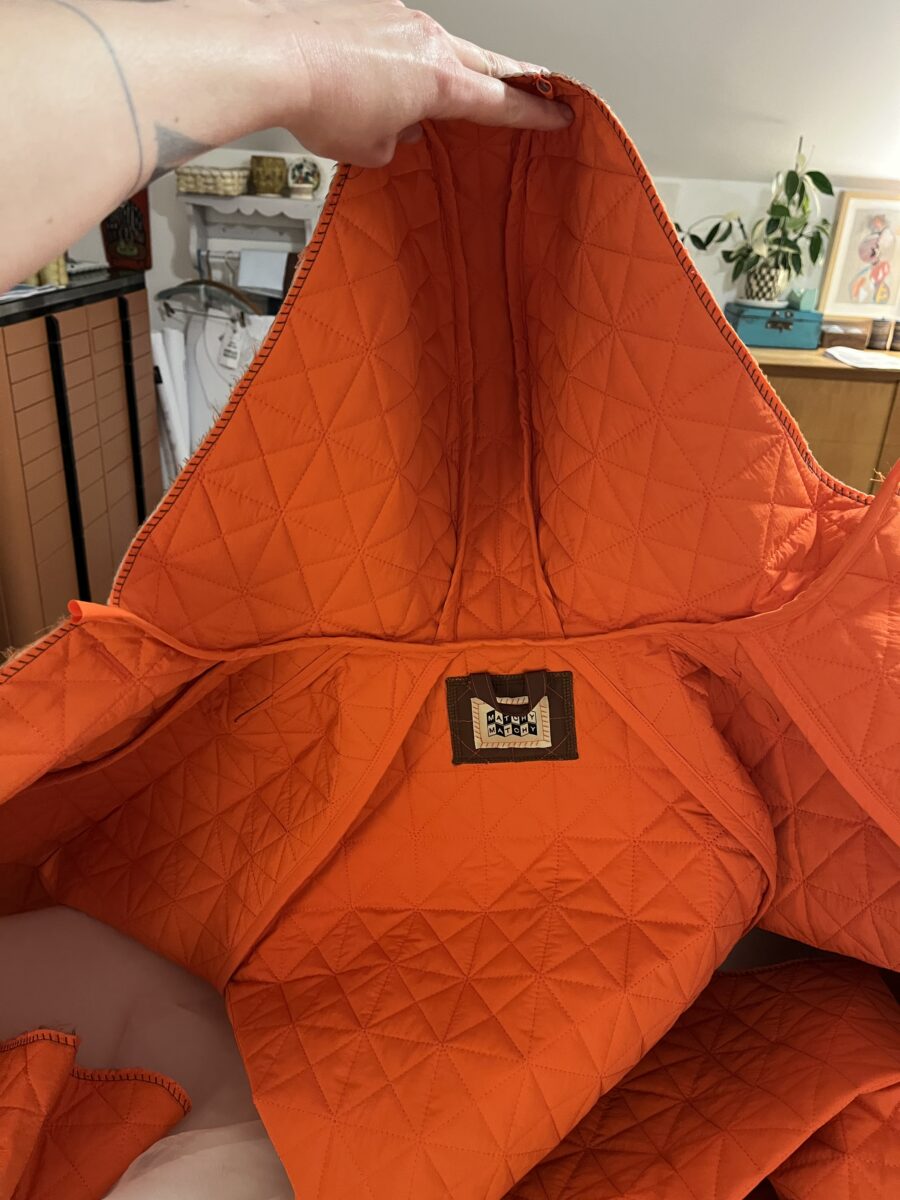
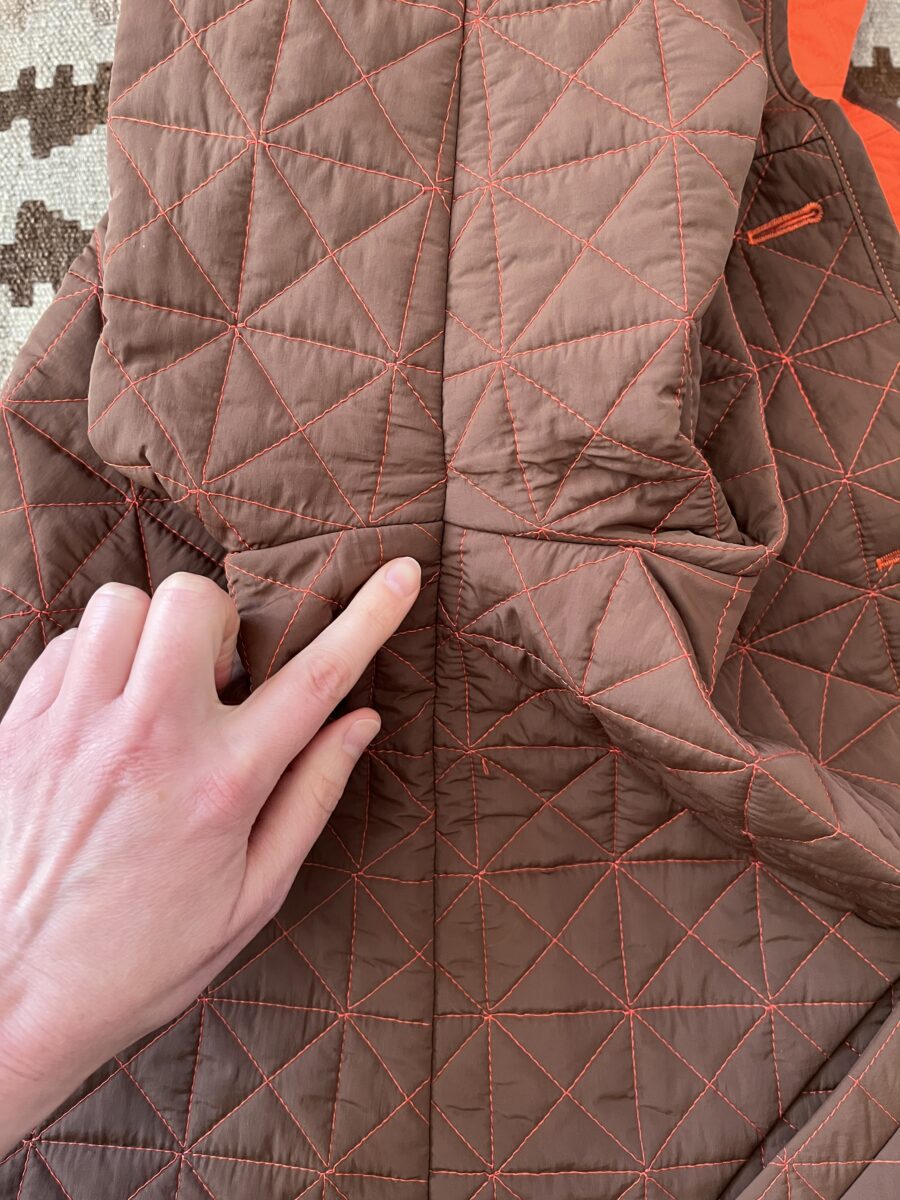
I’d say the most challenging part of this make was binding the seam between the hood and the body of the coat. There are a lot of intersecting bulky seams right at center back. Smashing them with a hammer and slowly hand cranking over them was the only way I could make it work. I used a Microtex 80 needle for most of the construction and a size 90 while attaching the hood.

I was so focused on making it through the hood step that I didn’t notice I’d caught one seam in the wrong direction until it was time to sew up the side seams. The pattern instructs you to press the raglan seams in a way that will allow you to nest the underarm seams, which a) makes them join together really nicely and b) reduces bulk. So one seam on my coat twists from the neckline to the underarm. It hasn’t been causing any problems while wearing, so I probably won’t fix it!

I had already purchased Matchy Matchy’s coordinating Tomato buttons for another project (they ended up being too small) and they were perfect here.

I didn’t actually read the binding tutorial in the instructions, but my preferred method is to attach the binding to the wrong side, then topstitch it from the right side. This method means you’re less likely to miss catching the folded edge and you just have a lot more control over the end result.

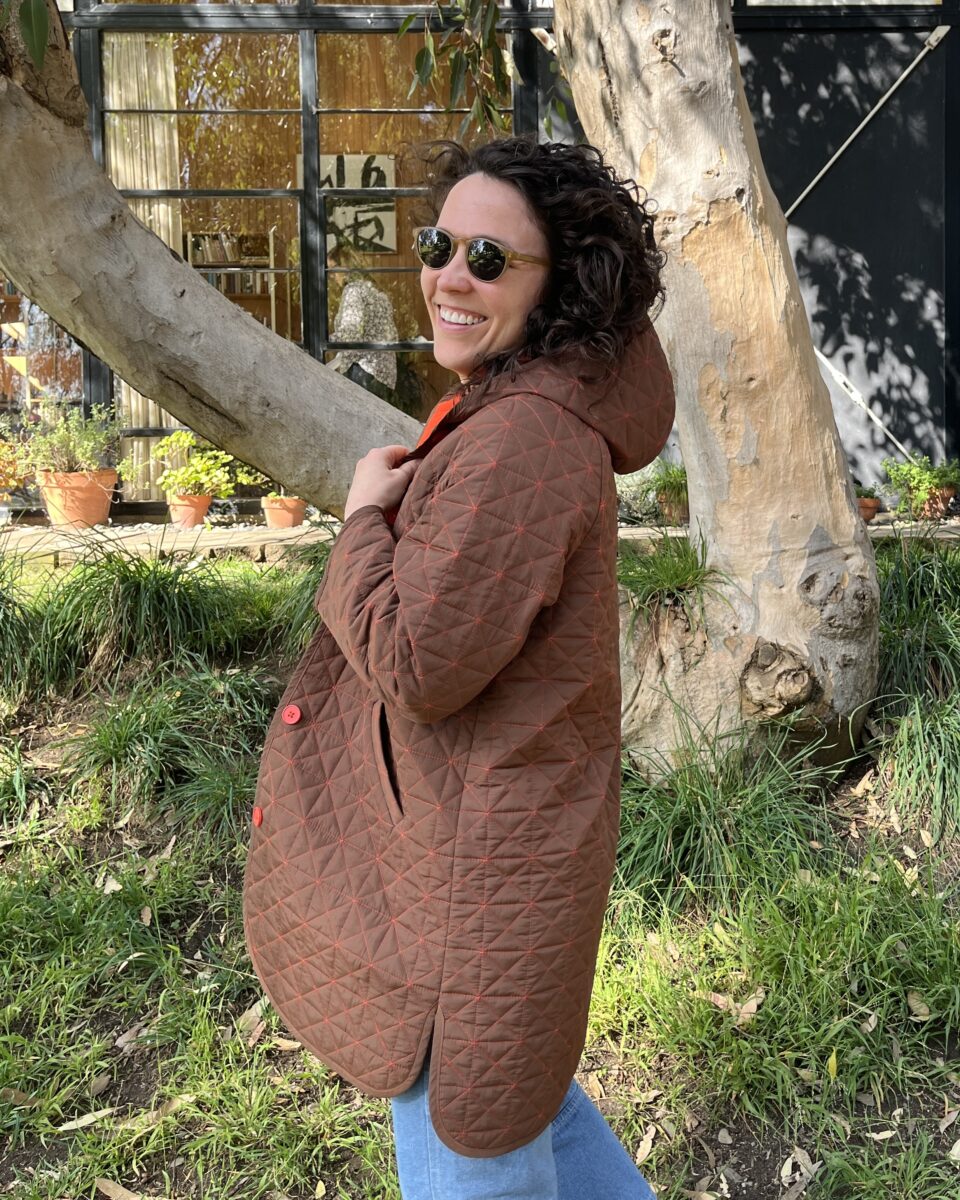
The fit of this coat is so good! I think the raglan sleeves fit really well and this is a rare pattern where I didn’t have to shorten the sleeves. If you never have to shorten sleeves, you’ll probably need to add some length. I also love how instead of patch pockets, this quilted coat pattern uses angled welt pockets. It’s so easy to just put your hands in these pockets, or grab whatever is stored in there. Patch pockets are great, but these are greater.

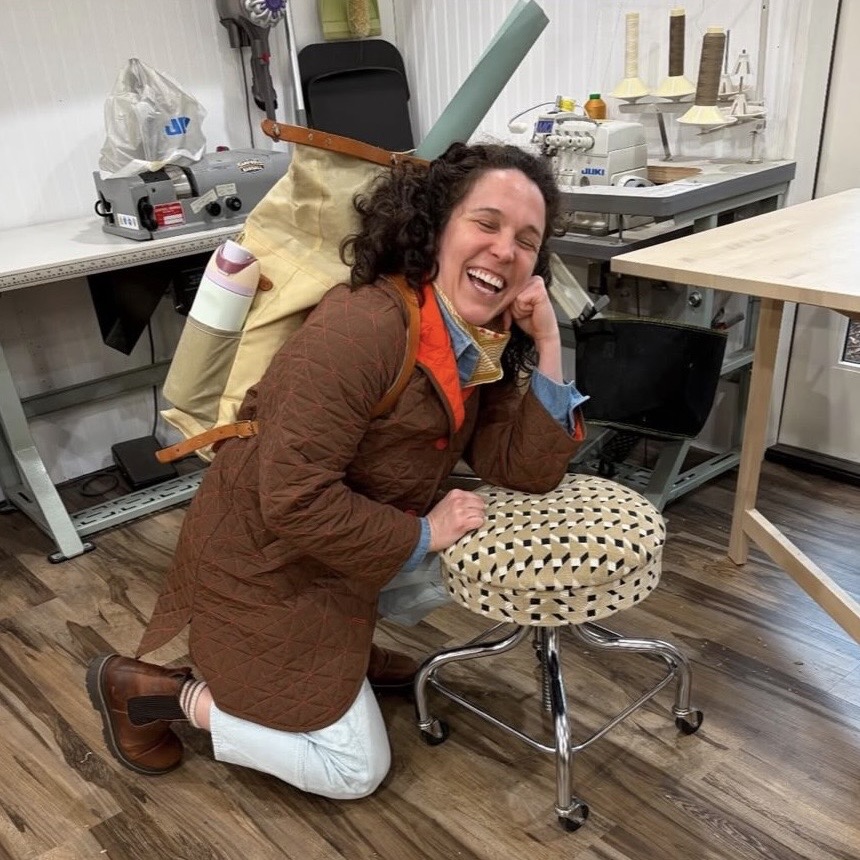
This pattern and fabric combo is so nice. The quilted puffer is perfect for layering over a sweater or just a t-shirt and gives a decent amount of warmth for being so thin. I usually don’t like using plastic fabric, but I also really hate cramming a wool sweater into a grippy cotton coat sleeve. The hood is unfortunately quite small for my big head and hair.

This pattern is fantastic, this fabric is nice, and the final coat makes me super happy.

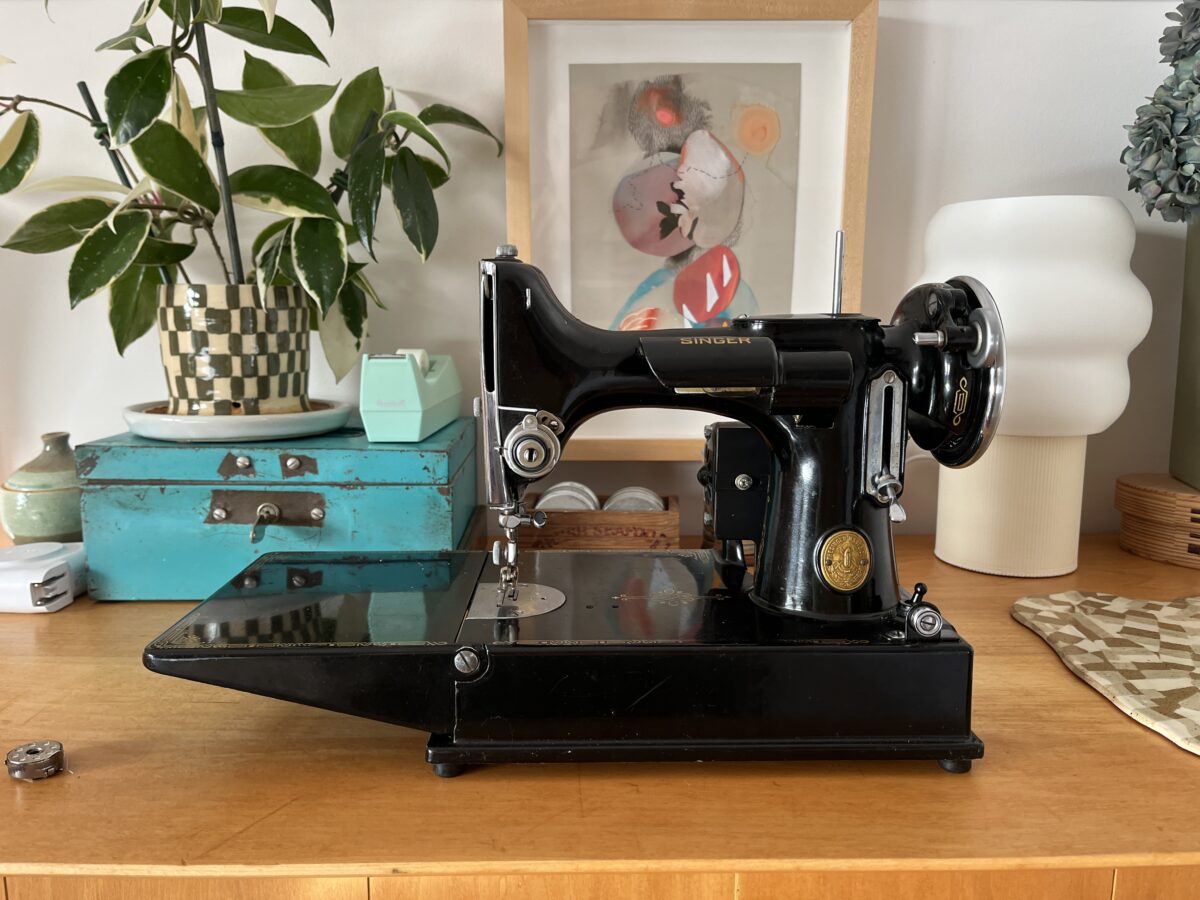
On a totally unrelated note, my MIL gifted me A SINGER FEATHERWEIGHT! It needs a new belt, a deep clean, and the case needs a lot of work, but I’m so excited! The serial number isn’t documented, but I’m guessing it’s either from the late 30’s or very early 40’s before WWII halted production. I’d like to document getting this machine in working order, but who knows if I’ll keep that promise : )

3D Weaving

2 Comments

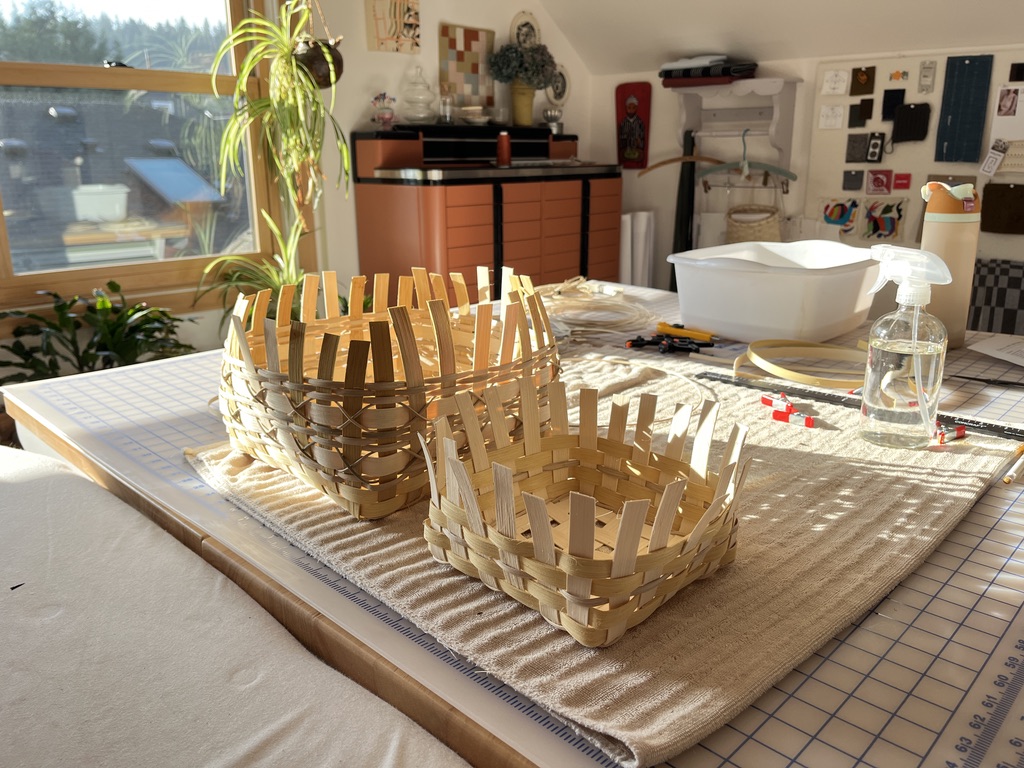
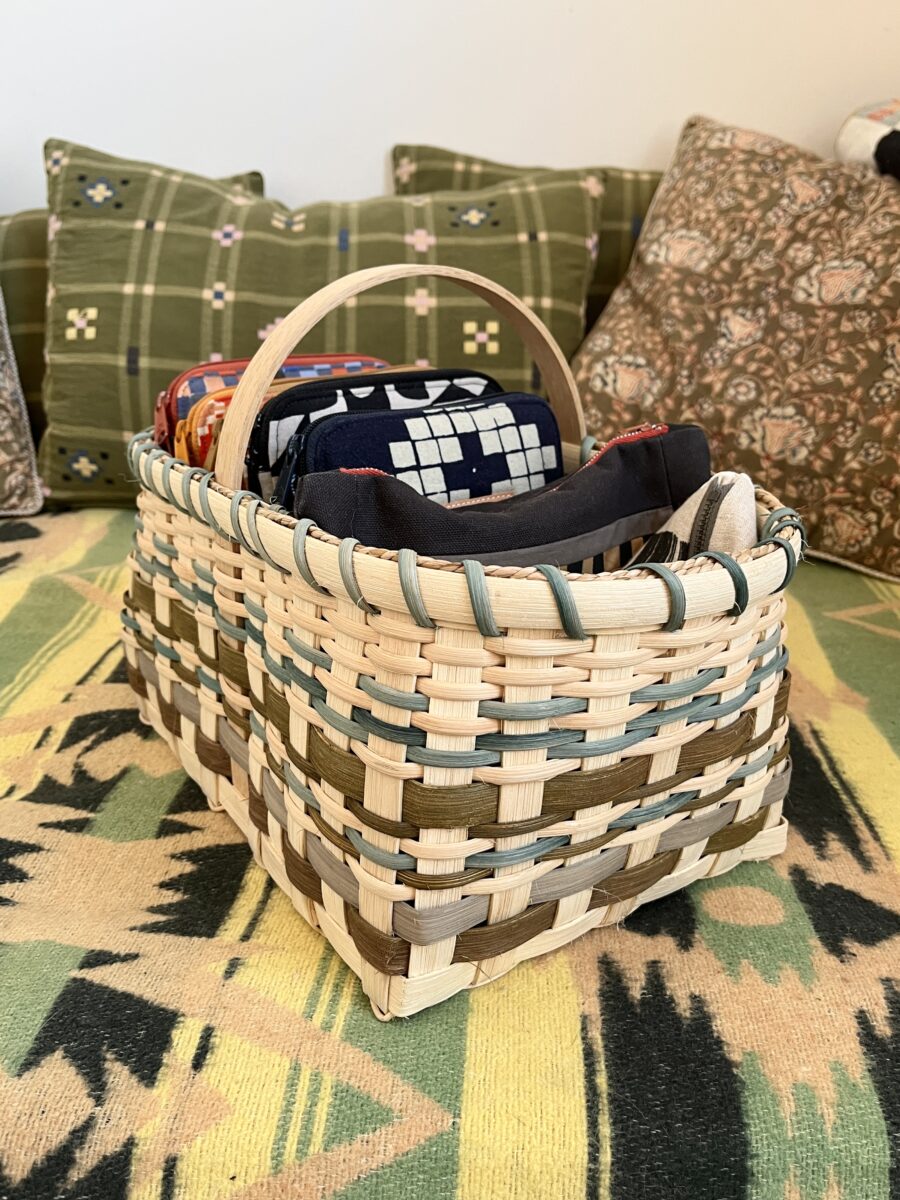
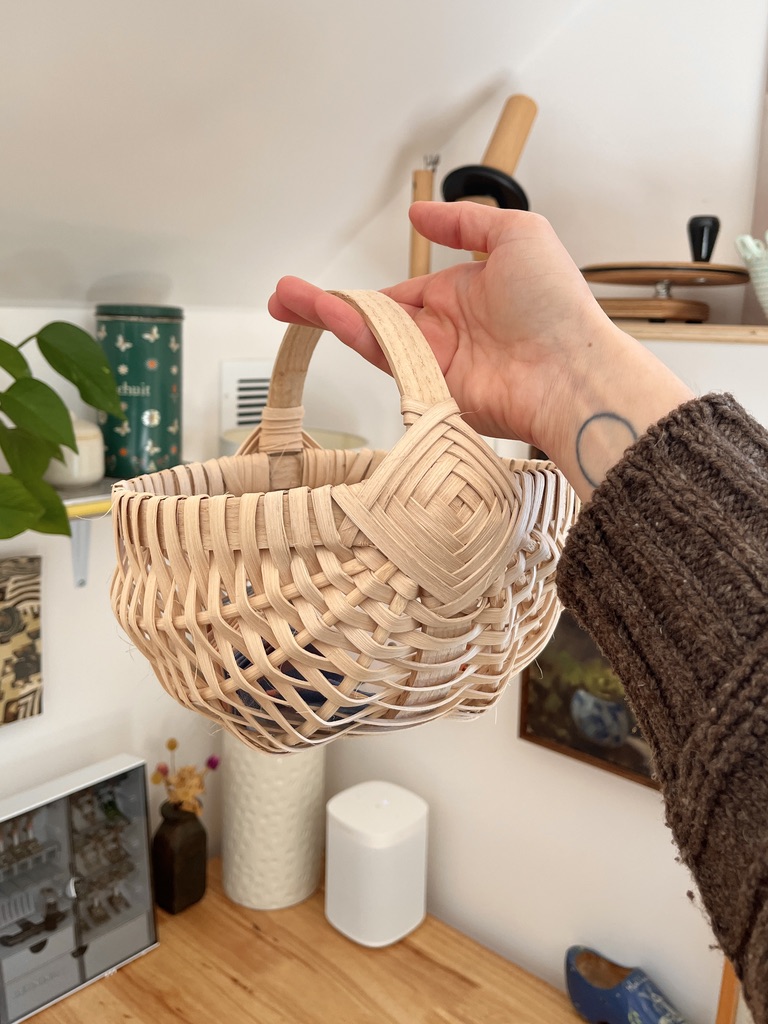
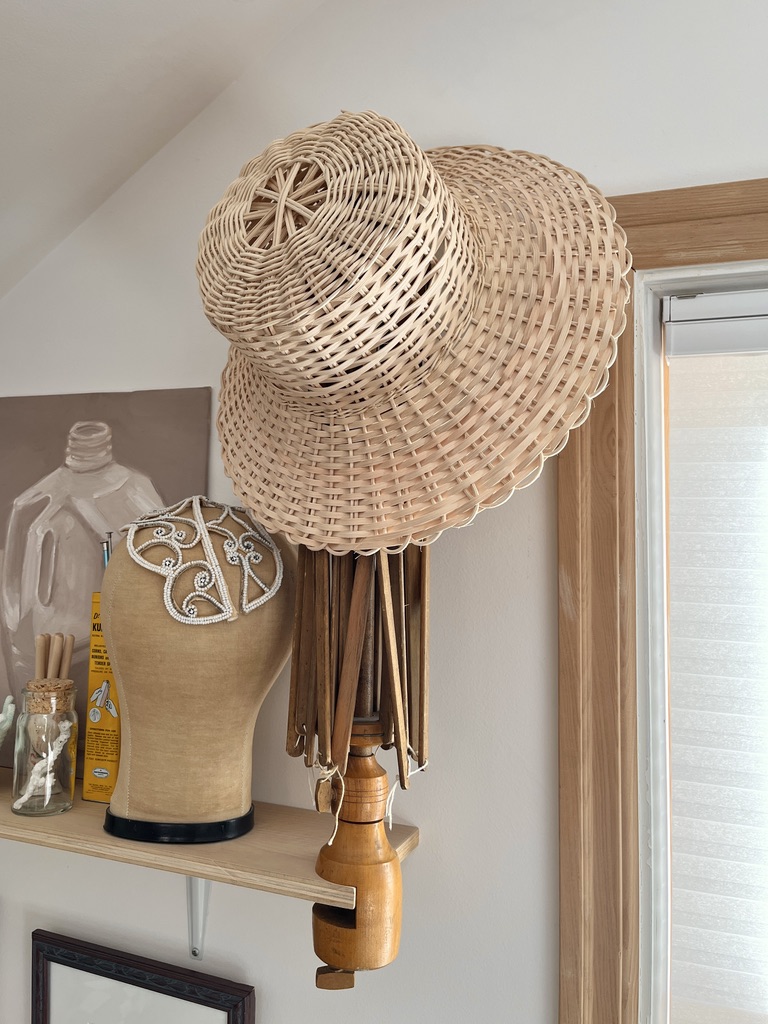
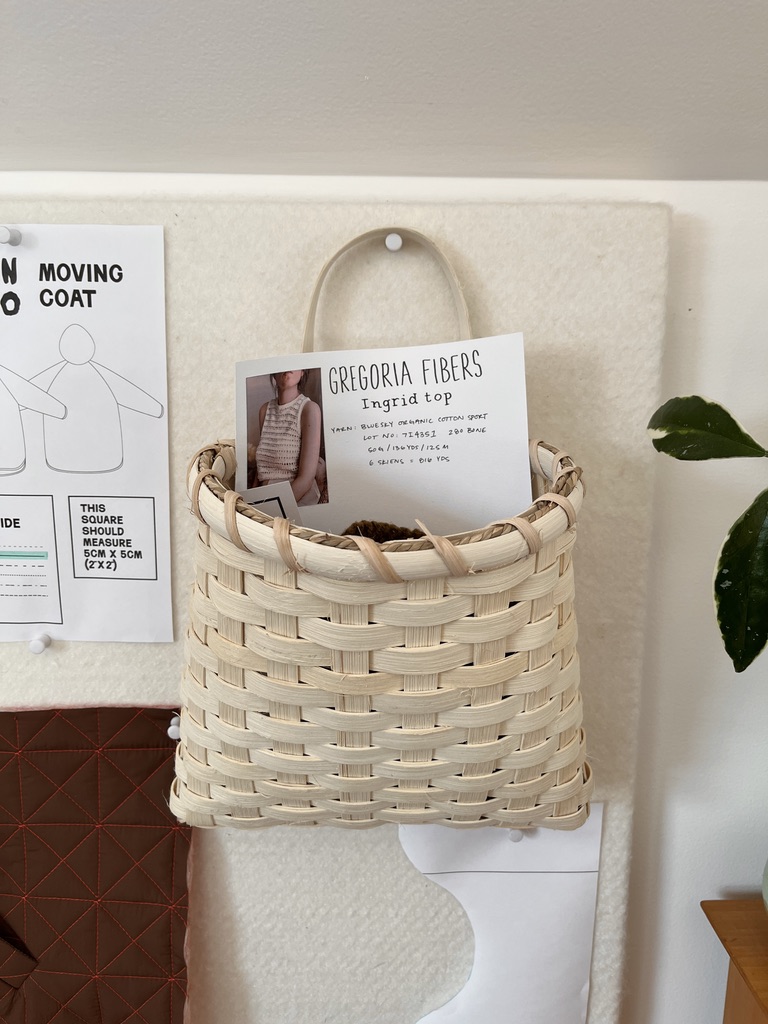
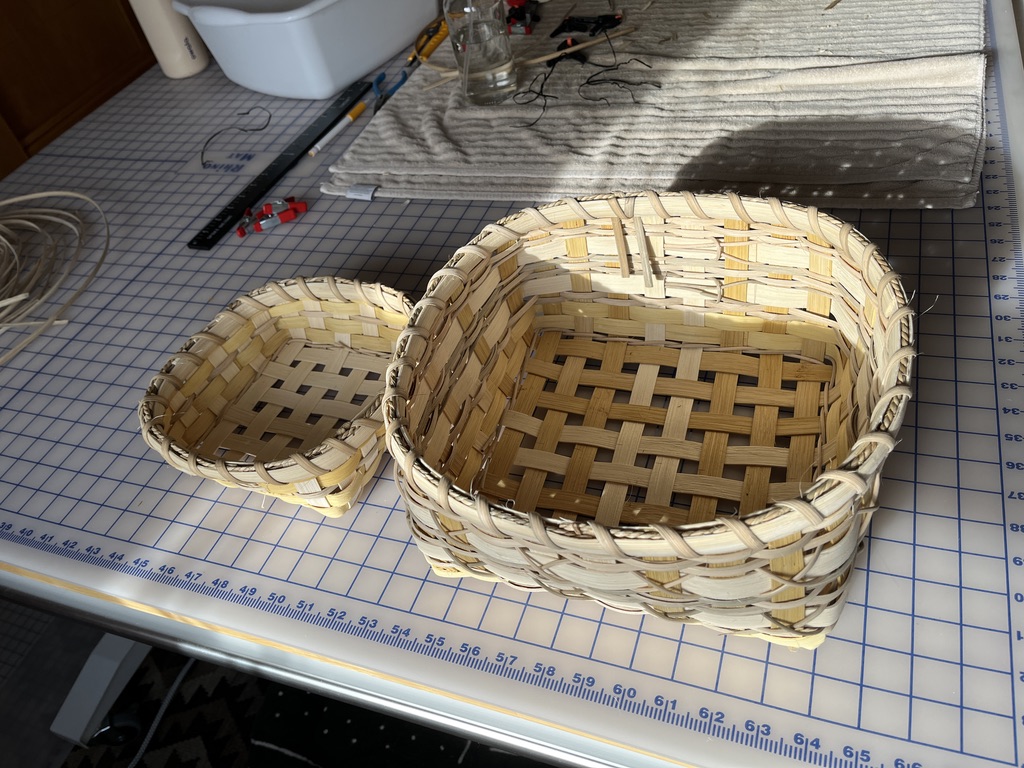
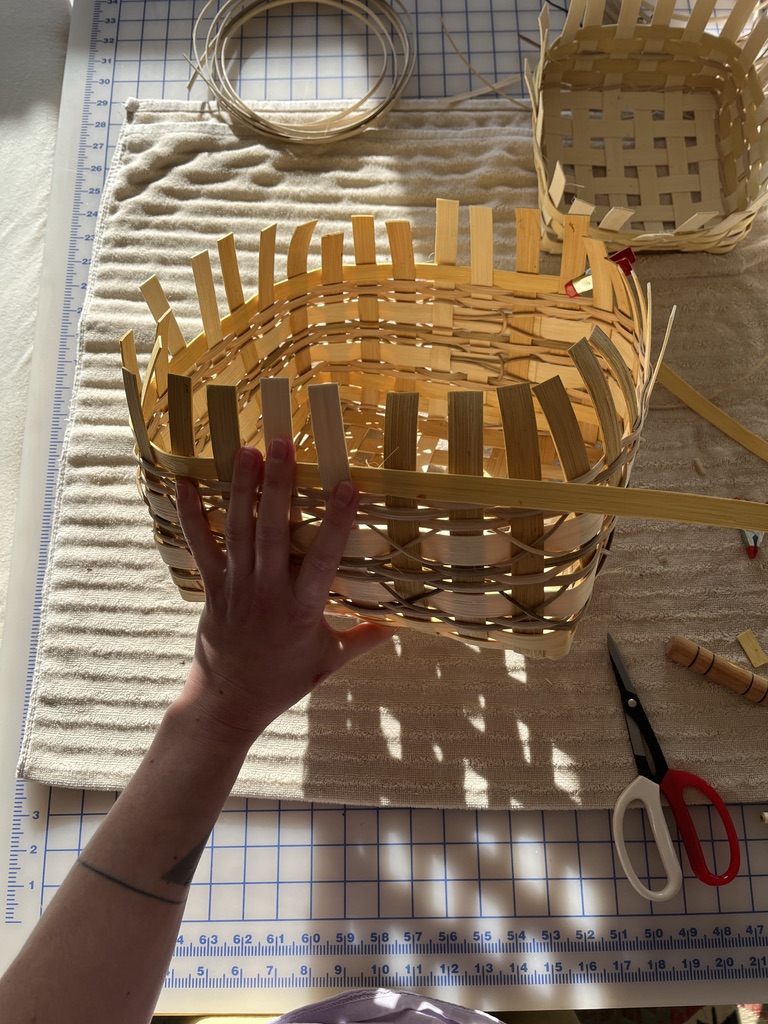
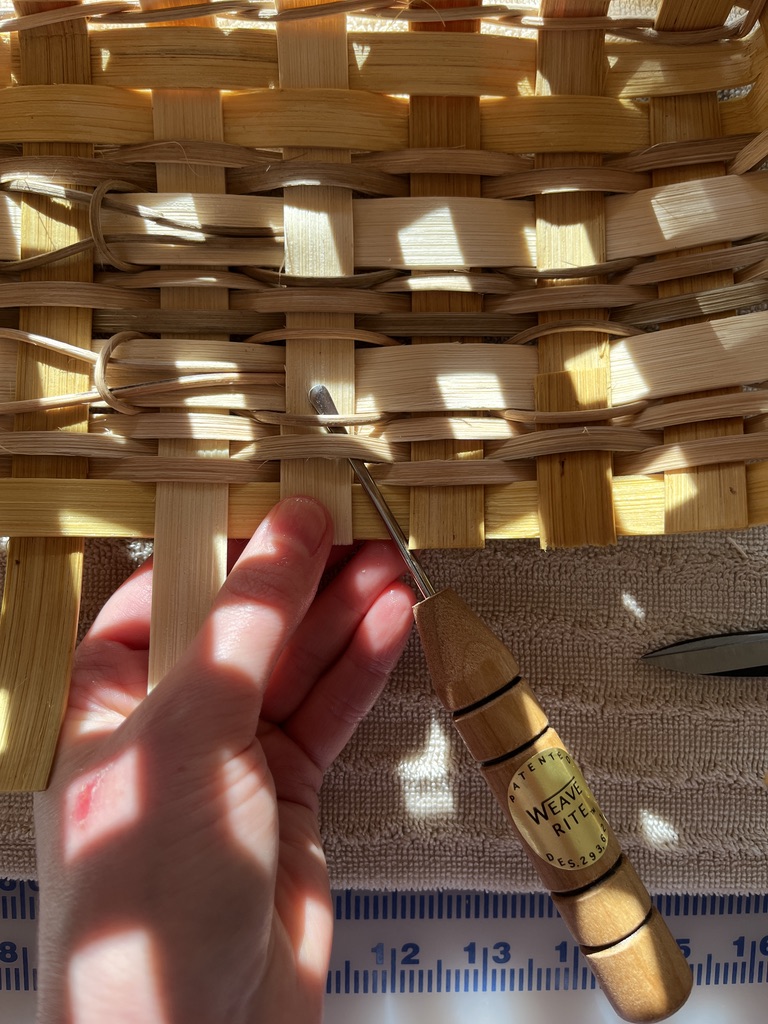
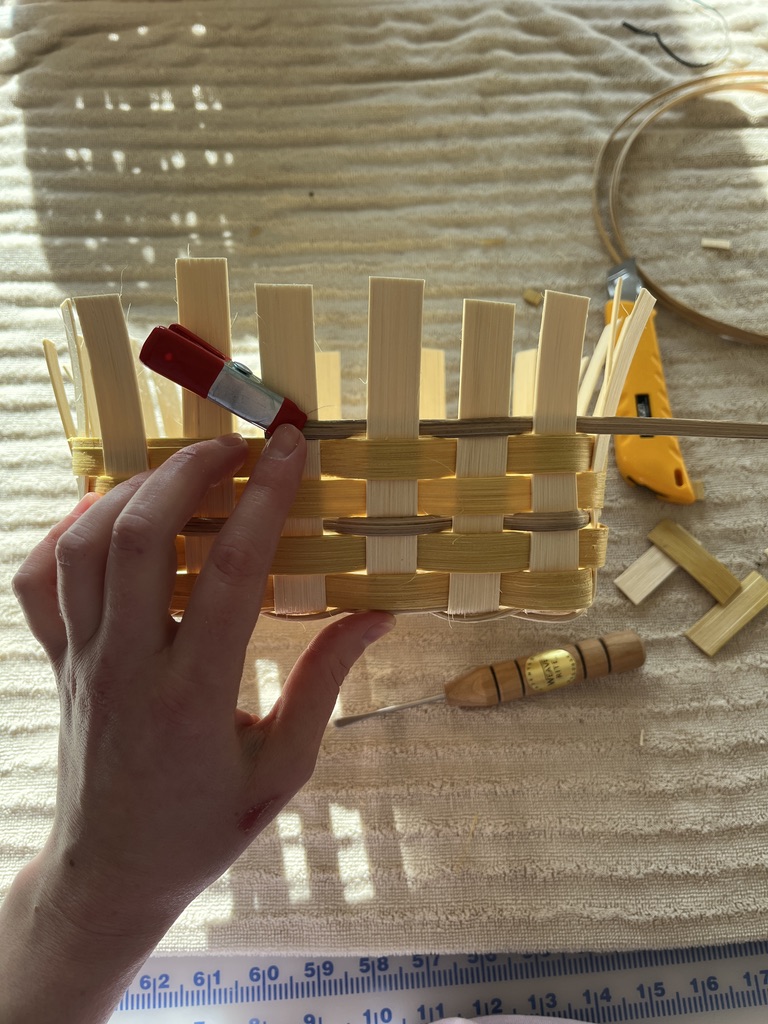
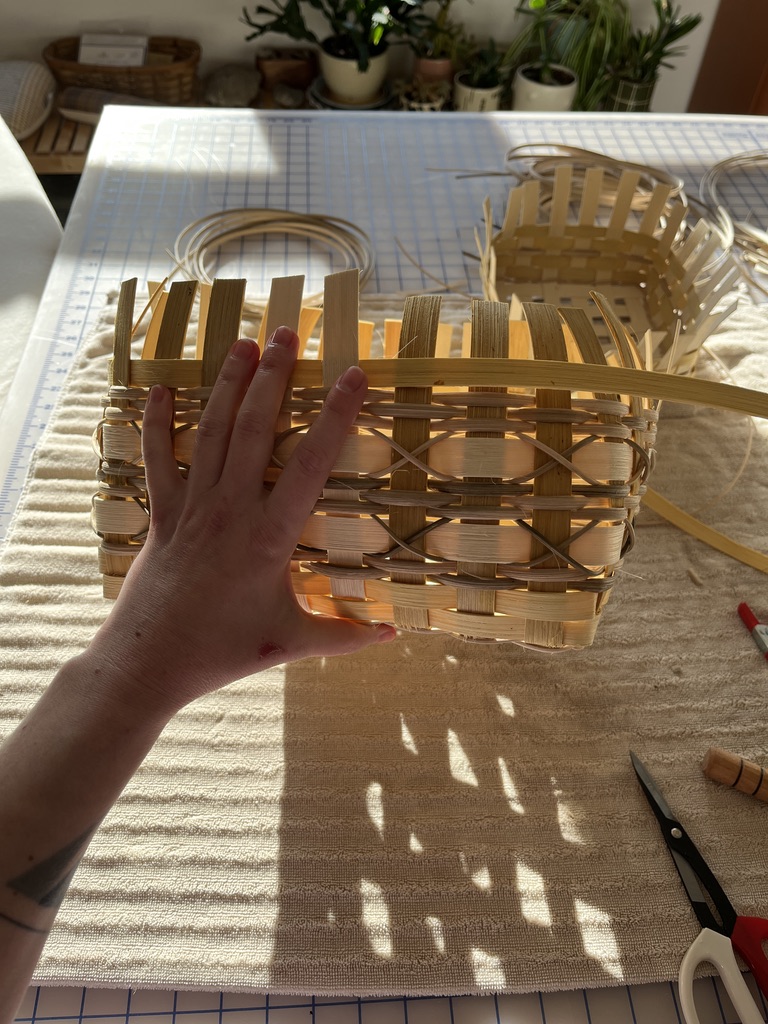
I’ve taken a few basketry workshops and I think it’s safe to say, I like making baskets. I don’t have a huge need for these containers, but they are extremely satisfying makes. Here’s a round up of my baskets.

Basket #1

This was my intro to basket making – a Wildcraft class led by Brittany Stanton of Textile Indie. It’s my most used basket as it holds all of my knitting tools. Brittany dyed some of the reed for us.

Basket #2

After making the first basket, I quickly signed up for another workshop, this time for a melon basket. This one’s function is questionable for my needs, but it sure is cute. It’s holding some hand sewn quilt hexies.

Basket #3

The fanciest of all baskets – a sunhat! This workshop, also by Textile Indie, was such a complex make. The fit isn’t quite right, so I hope to make it again some day.

Basket #4

This workshop was on sale and it was a breeze to make. It’s currently being used to hold old kitting swatches on my work-in-progress board.

Basket #5 & 6

After taking FOUR workshops by Brittany I decided to purchase one of the many kits she offers. I ended up having just enough to make a little basket out of leftovers.

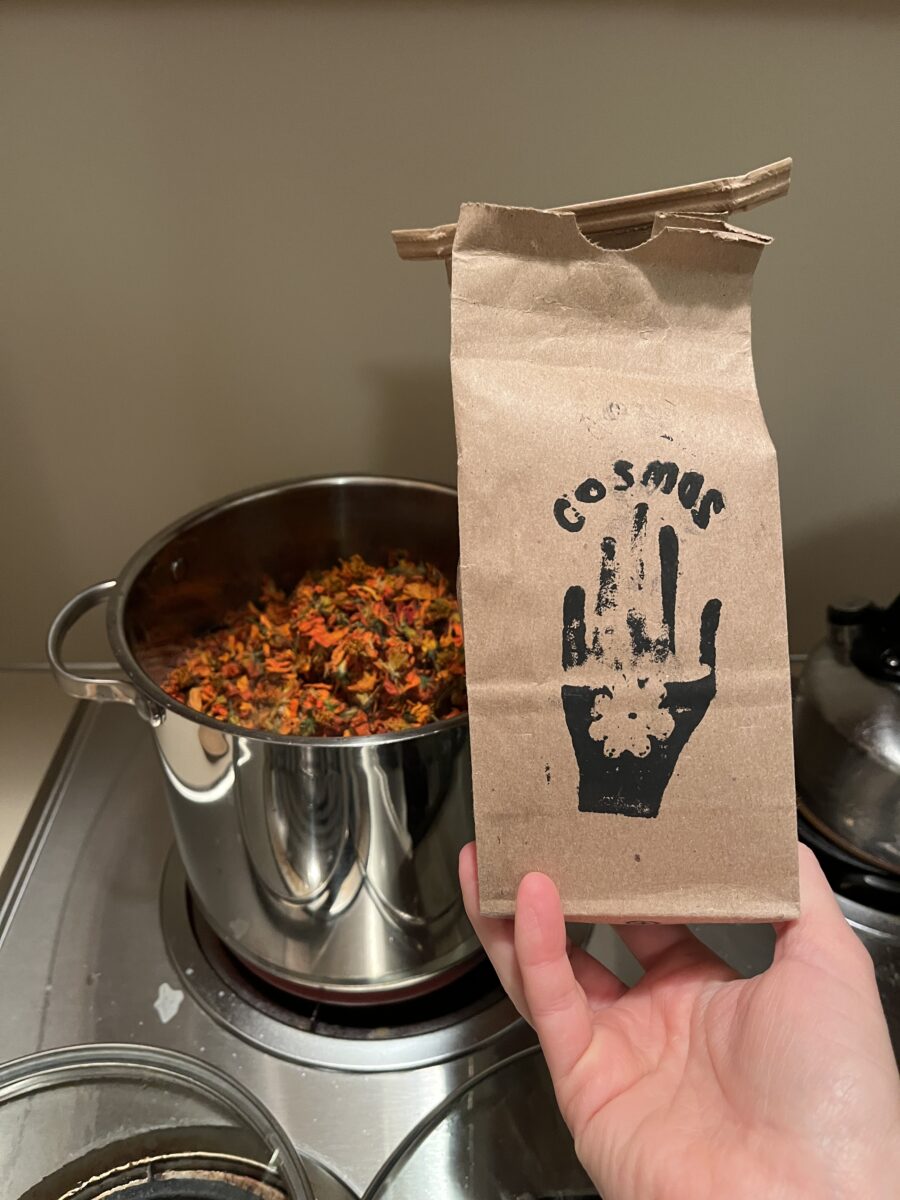
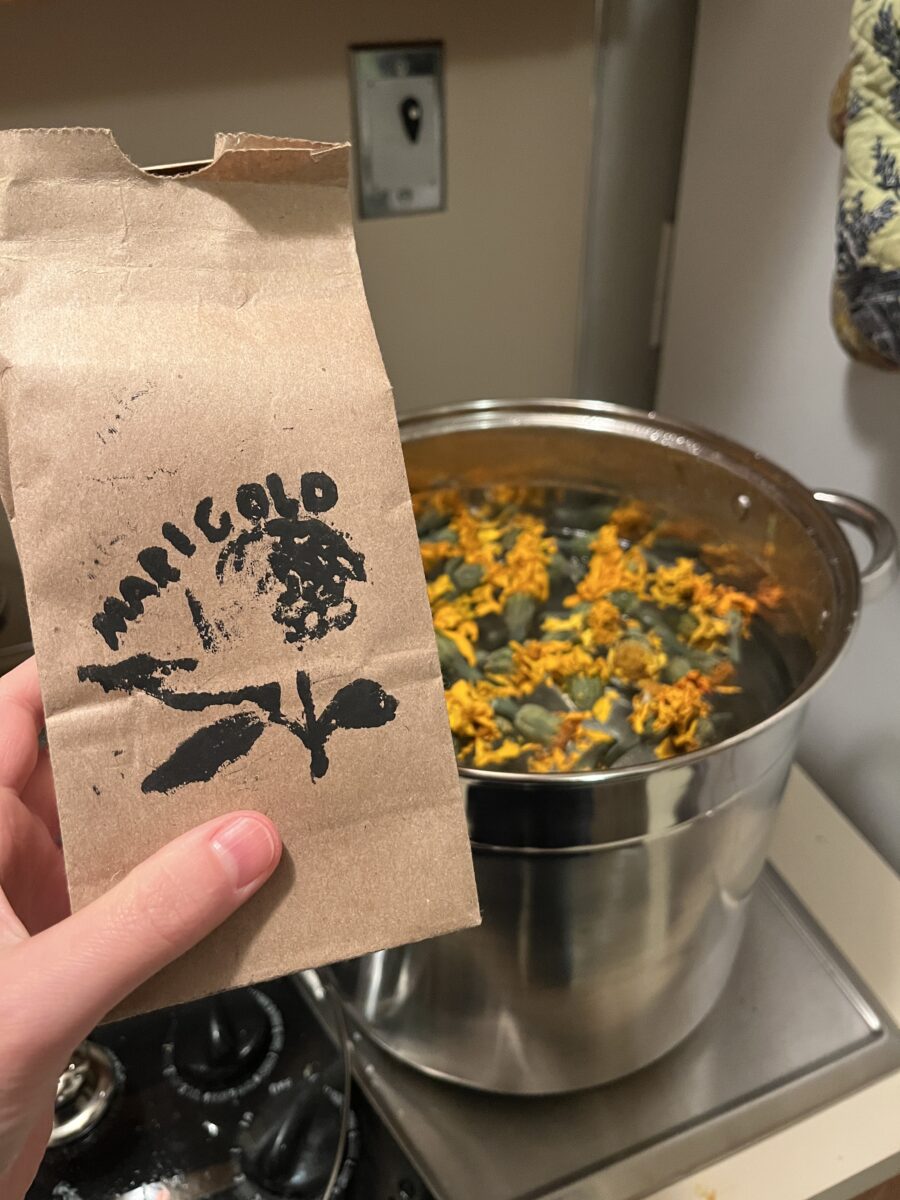
I attempted naturally dying some of the reed with dye flowers from Farm & Folk. I didn’t prep the reed at all, so we’ll see if it lasts. It definitely didn’t dye very vibrantly either.

There are a couple other kits I have my eyes on in Textile Indie’s shop.

Some Pottery Wins*

1 Comment

And disappointments*

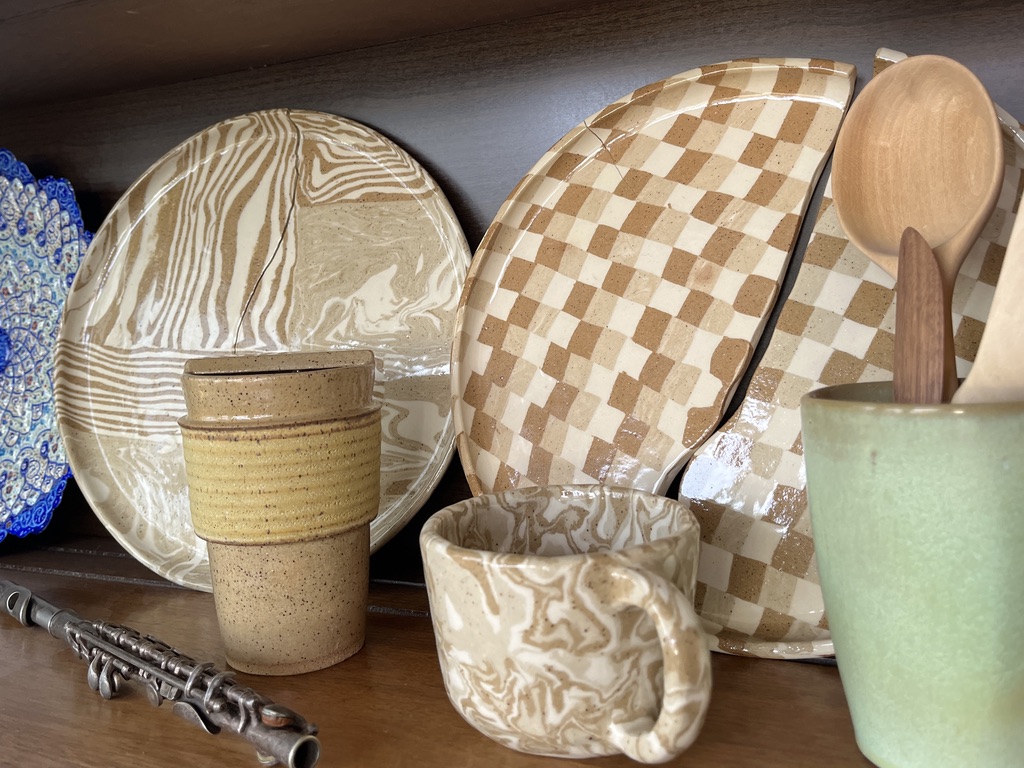
I have not been making it into the pottery studio very much this month. It might be because I’ve been sewing a little more… and because of my big plate disappointments. These were doomed even before the bisque, but I still fired them anyway. Maybe one day I’ll rent a tile saw and cut them into coasters?

Wall Art

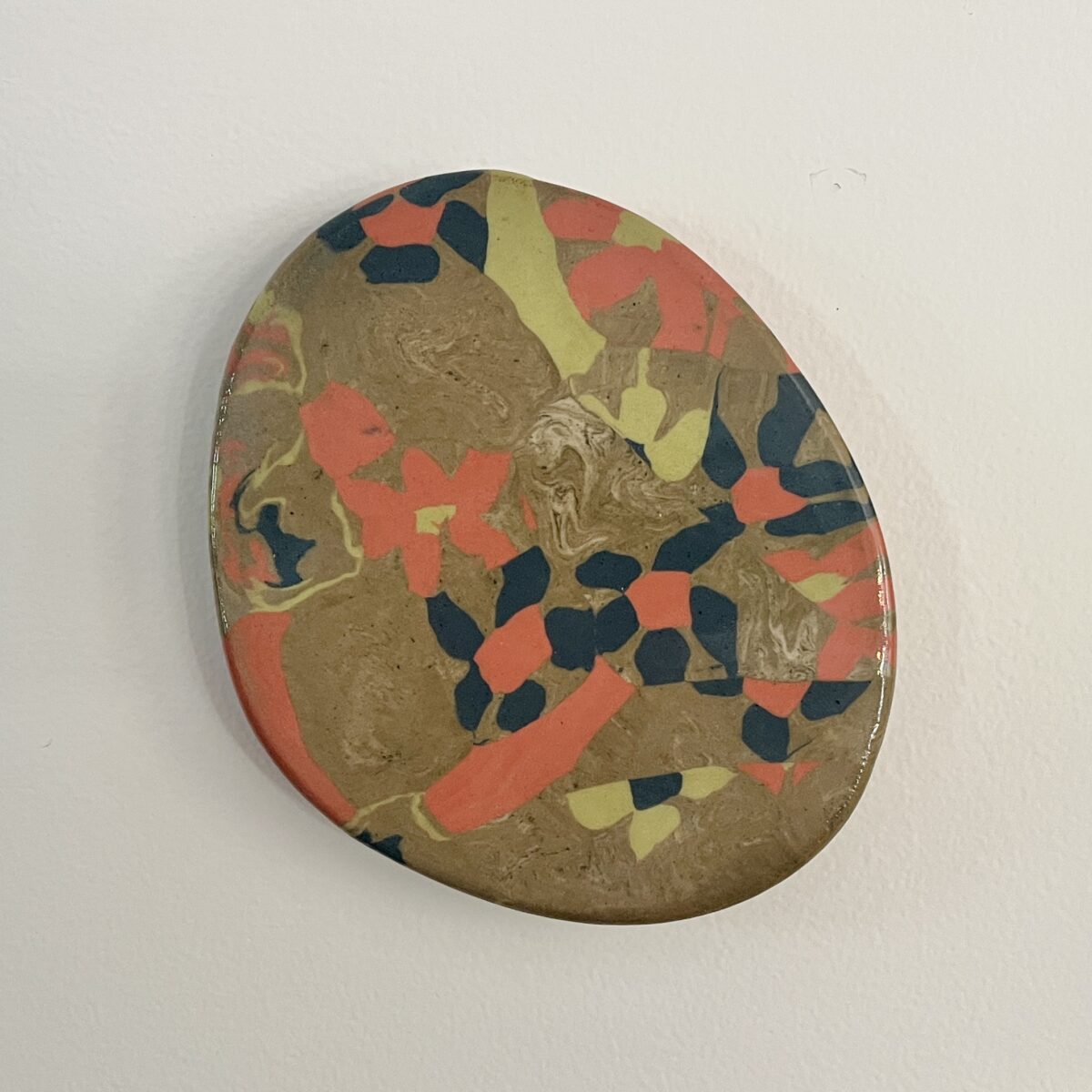
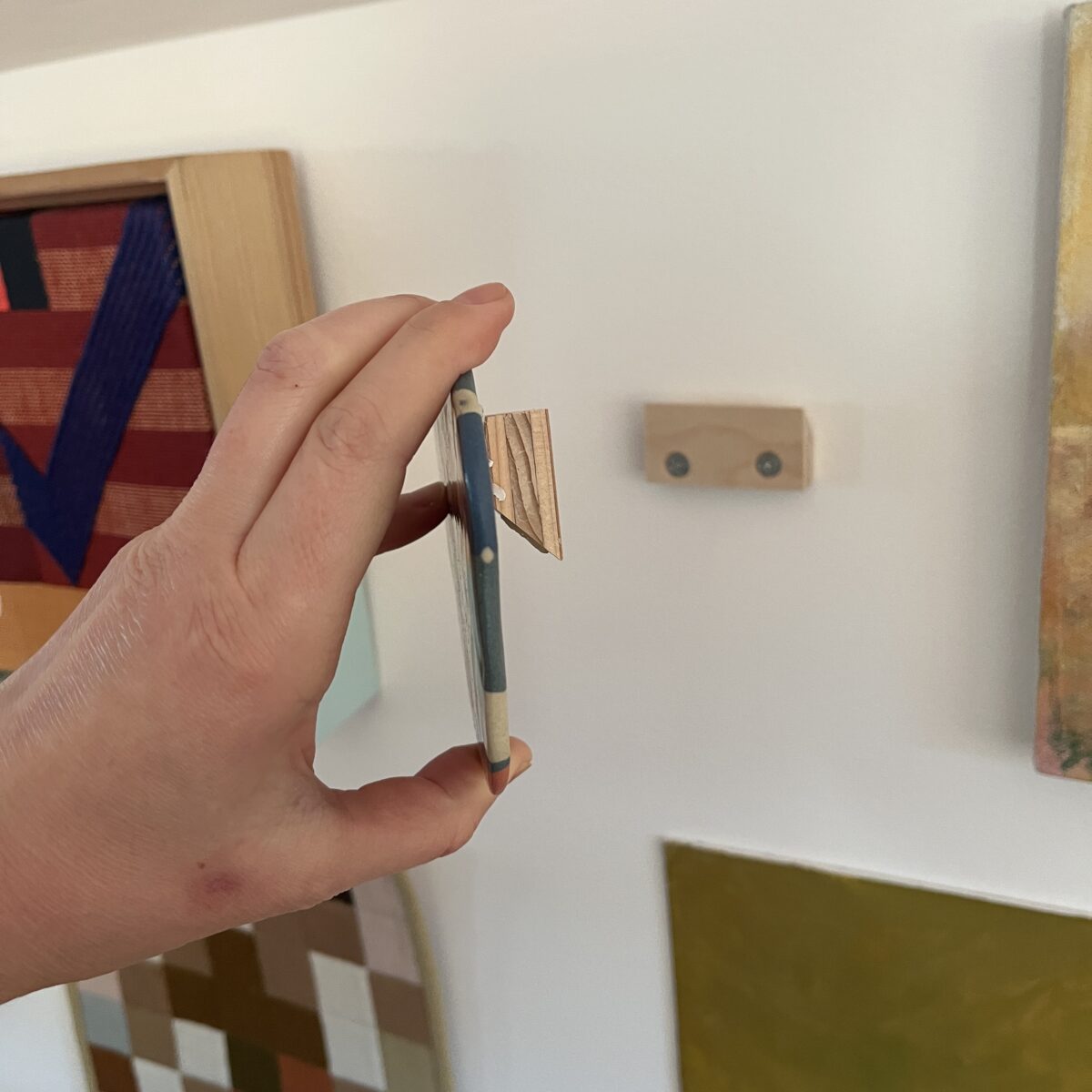
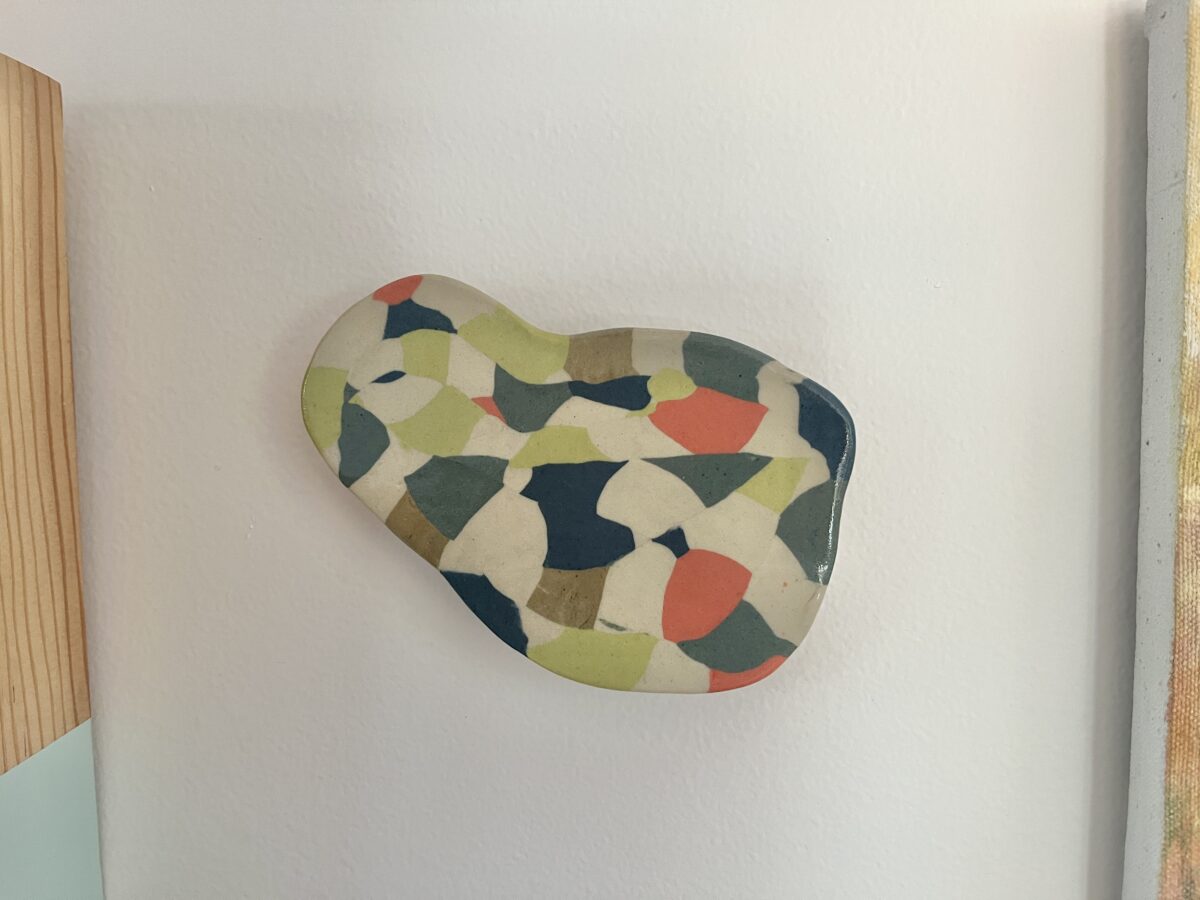
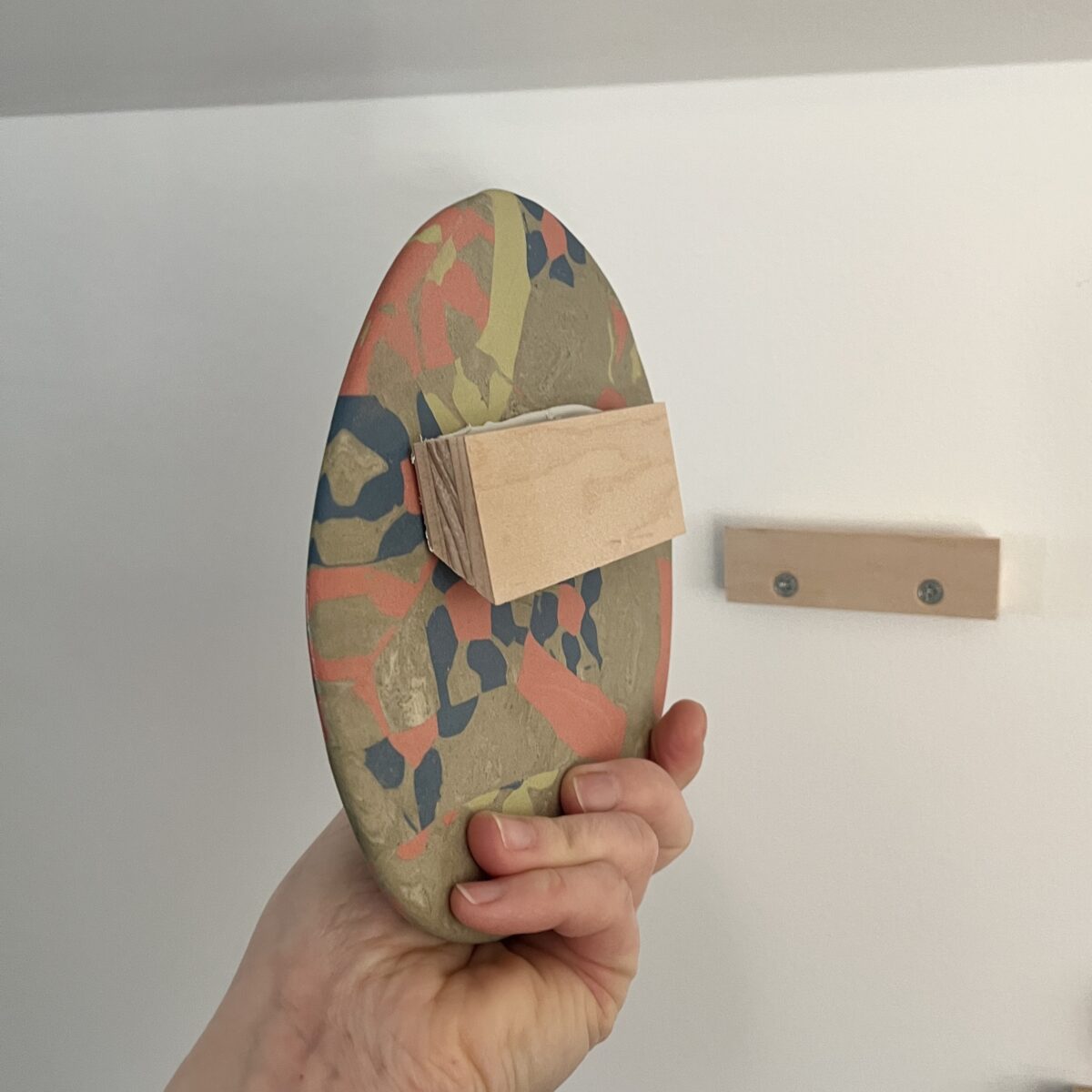
These are some older pieces that I finally got around to hanging with French cleats. The amount and method for spreading the epoxy needs some work, but I’ll get there.

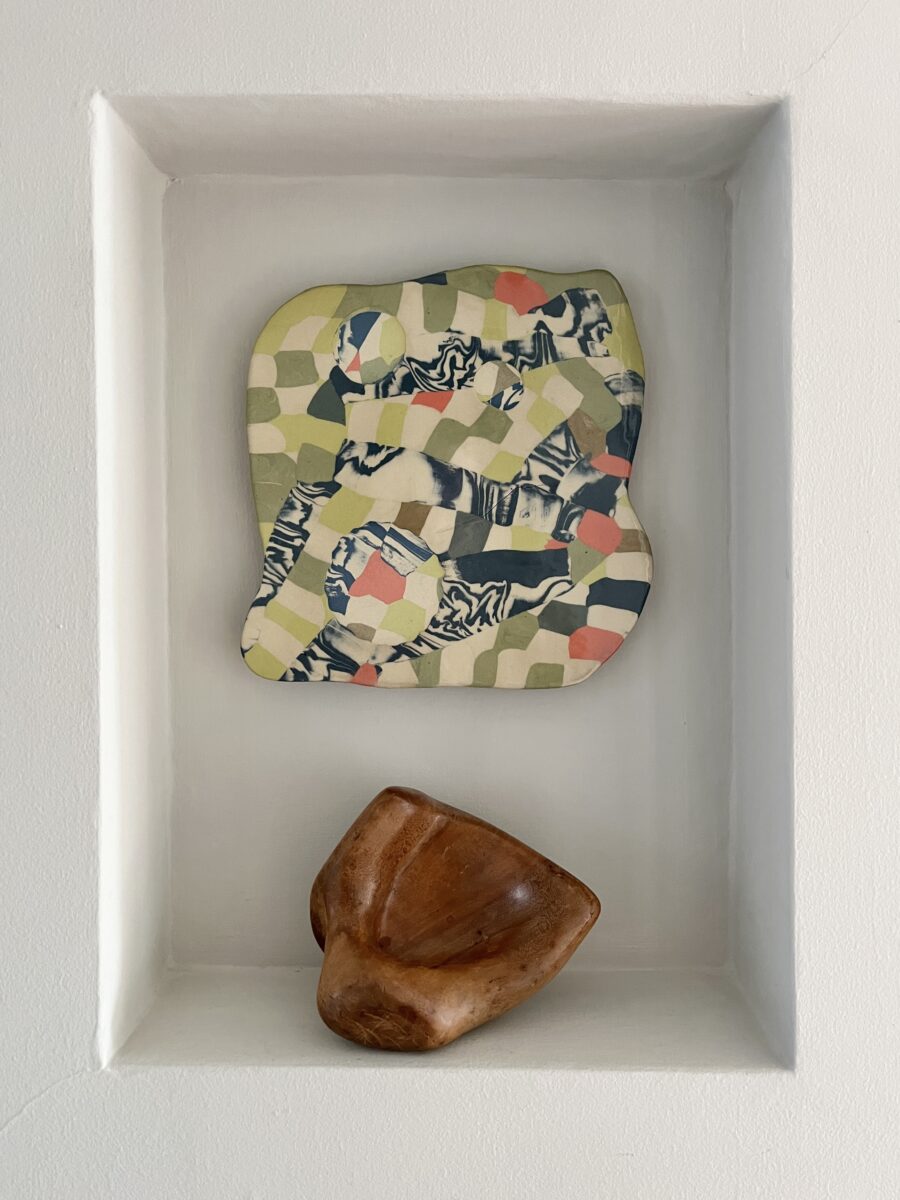
This guy cracked too but it totally looks great in this empty phone niche in our hallway.

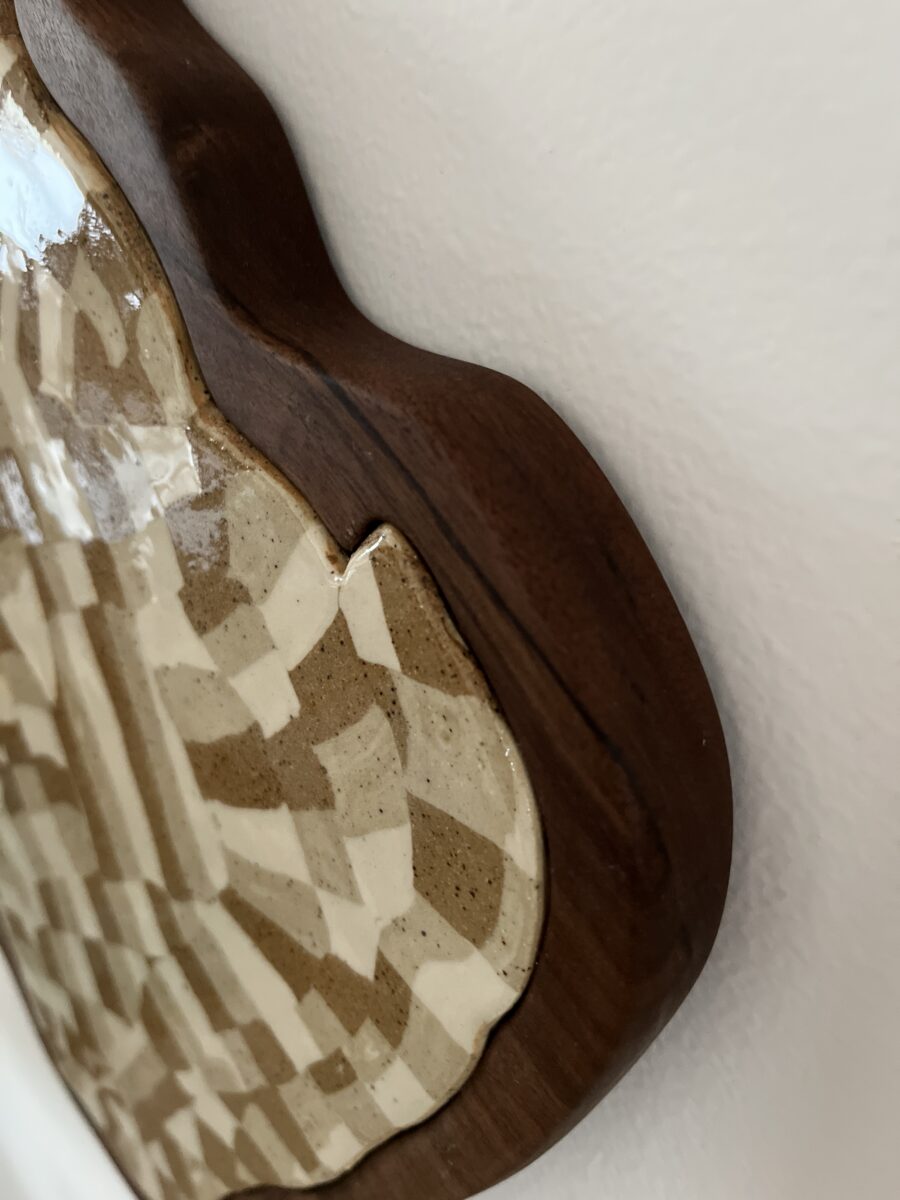
And another disappointment. I bought some walnut wood that I’m going to set it into so that it can be hung on the wall making the cracks “intentional.”

Buttons

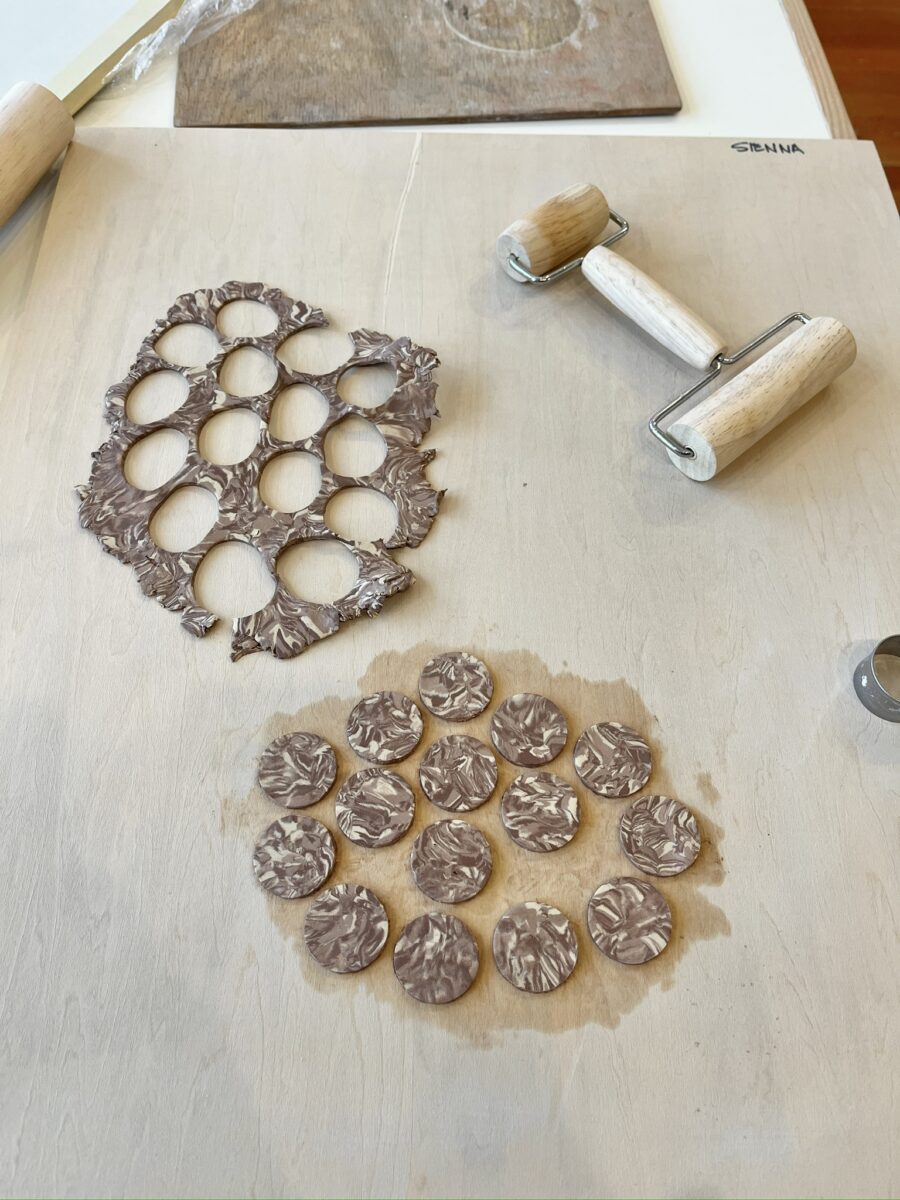
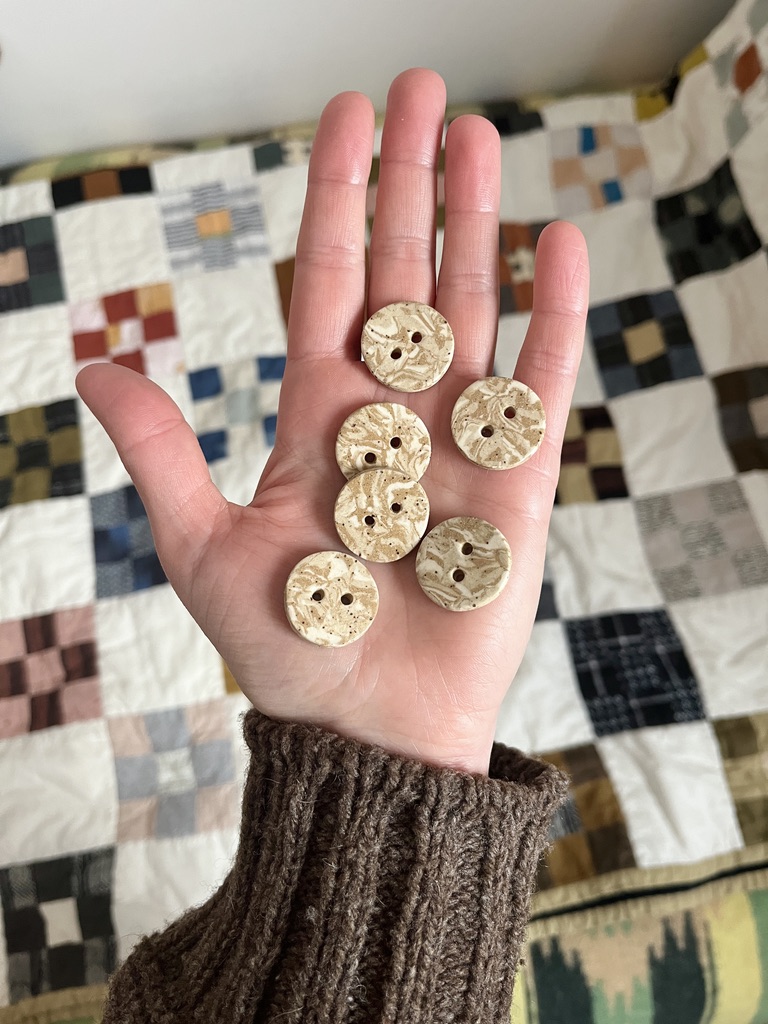
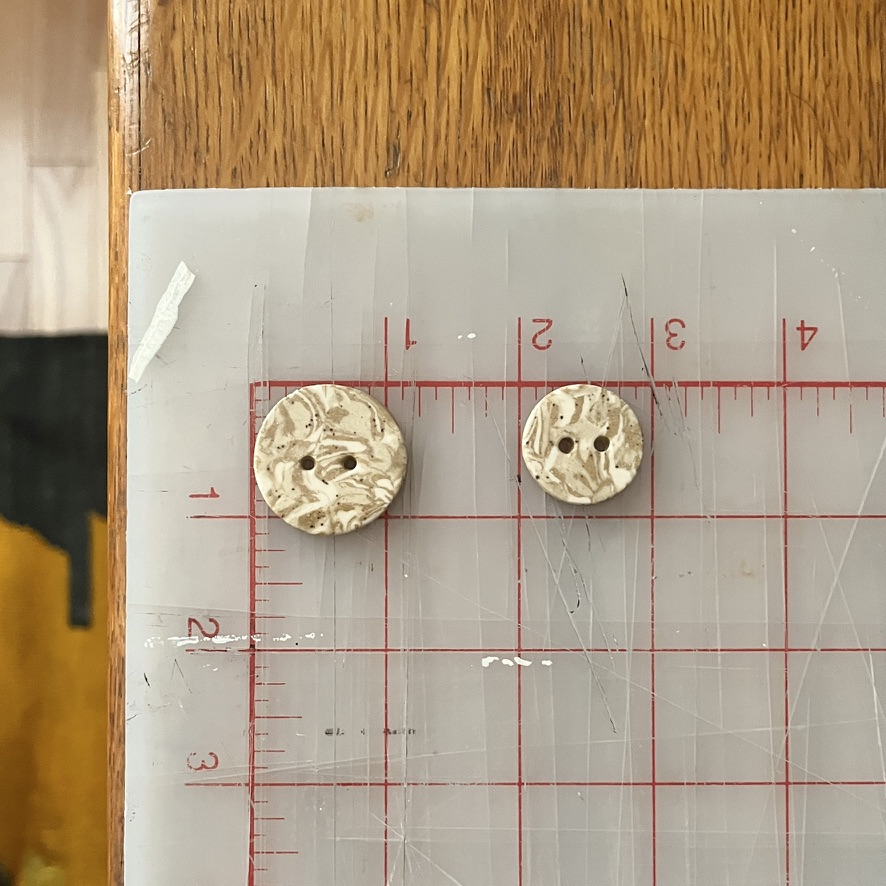
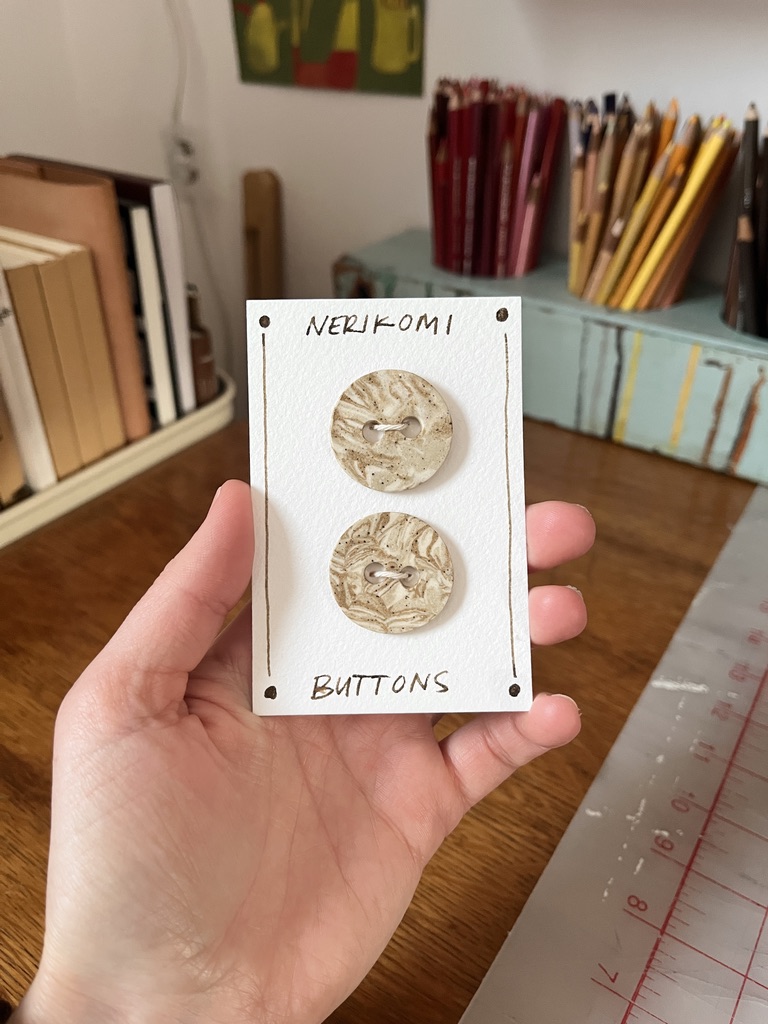
I used trimmings from nerikomi projects to make buttons!

There are two sizes and I think they’d be great for hand knitted cardigans.

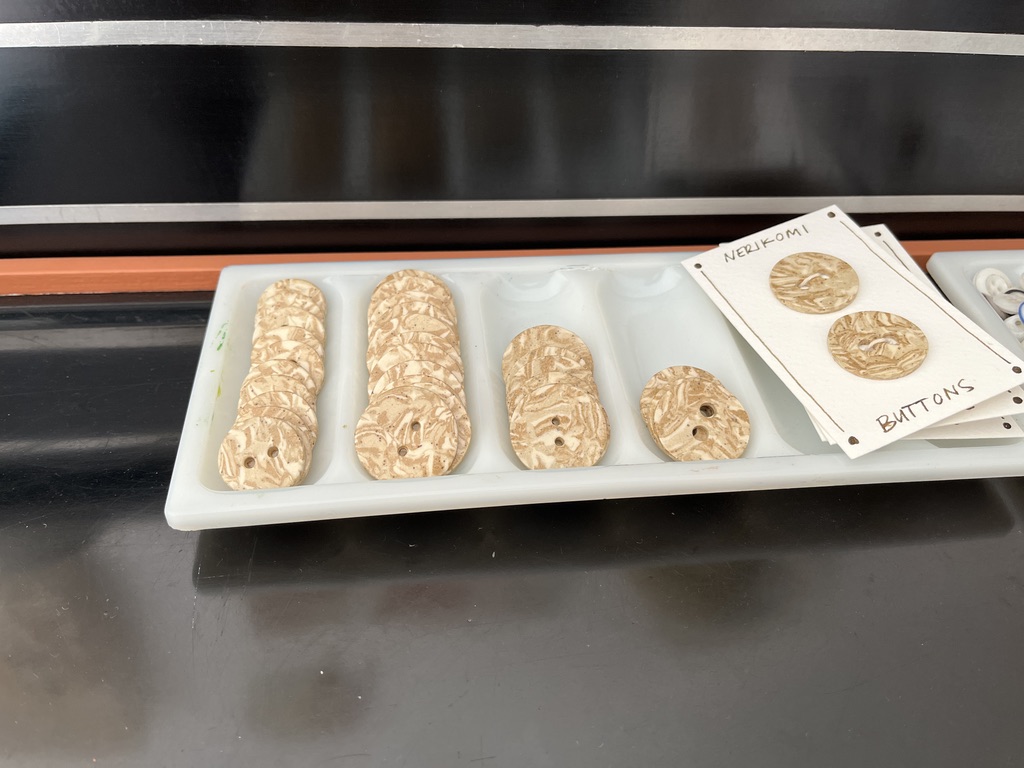
I plan to sell some sets in the Fine Things storefront.

More functional things

I made two mugs like this but one suffered a crack in the base that glaze did not fill.

On this mug, I tried burnishing the exterior. It worked sorta well but the cheap spoon I was using deposited a lot of marks onto the white clay that didn’t completely burn off. The manganese bits also burst through the smooth surface making this guy pretty rough.
And this… awkward vase? While making it, I had the idea to eventually make a lamp like this but taller. I have the lighting kit all ready to go, but I’m completely out of clay.
And an update on replacing my IKEA dishes. There are now five medium plates, three little plates, and one large plate. I’ve sold / am selling some small and medium plates at the shop that either varied in thickness or I just didn’t love. I’m aiming for at least six of each size.

Cleaned the studio, had to document.

4 Comments

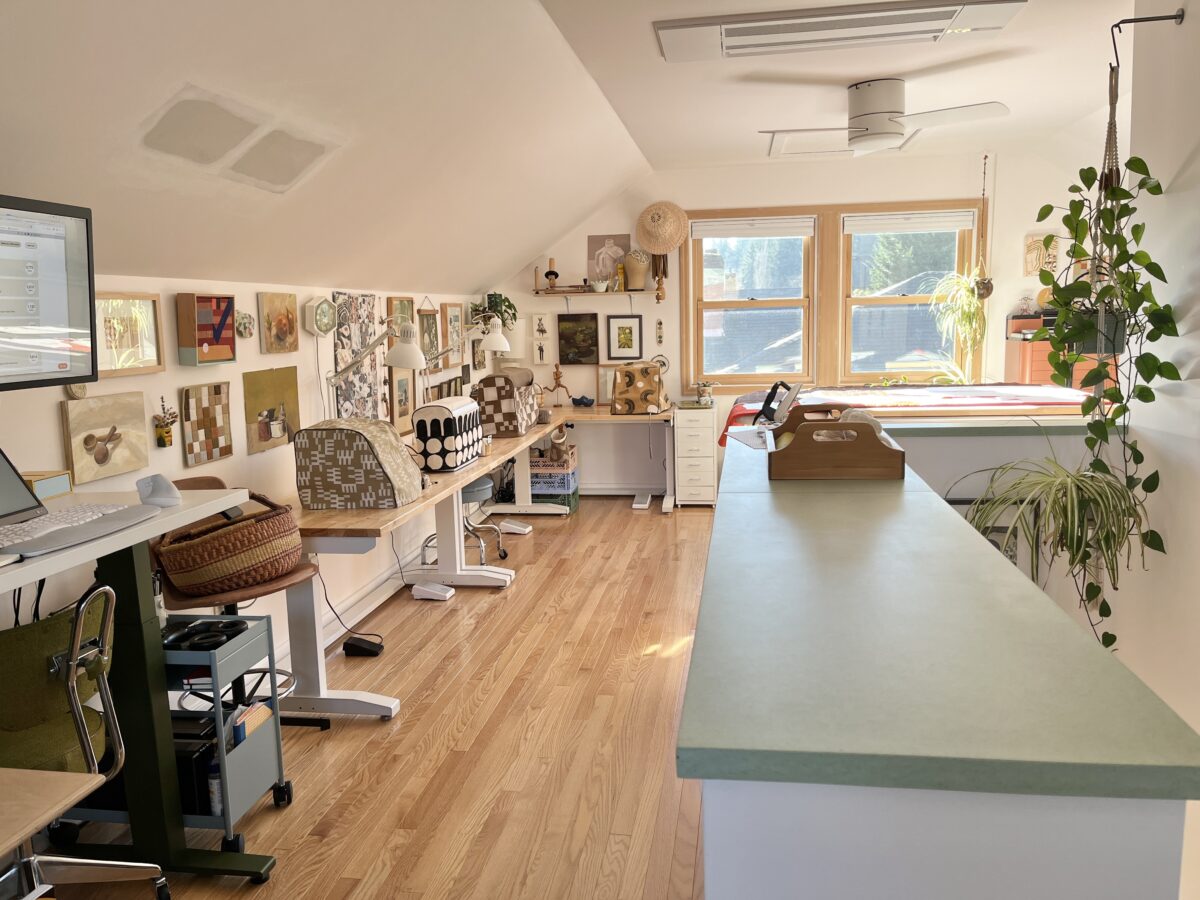
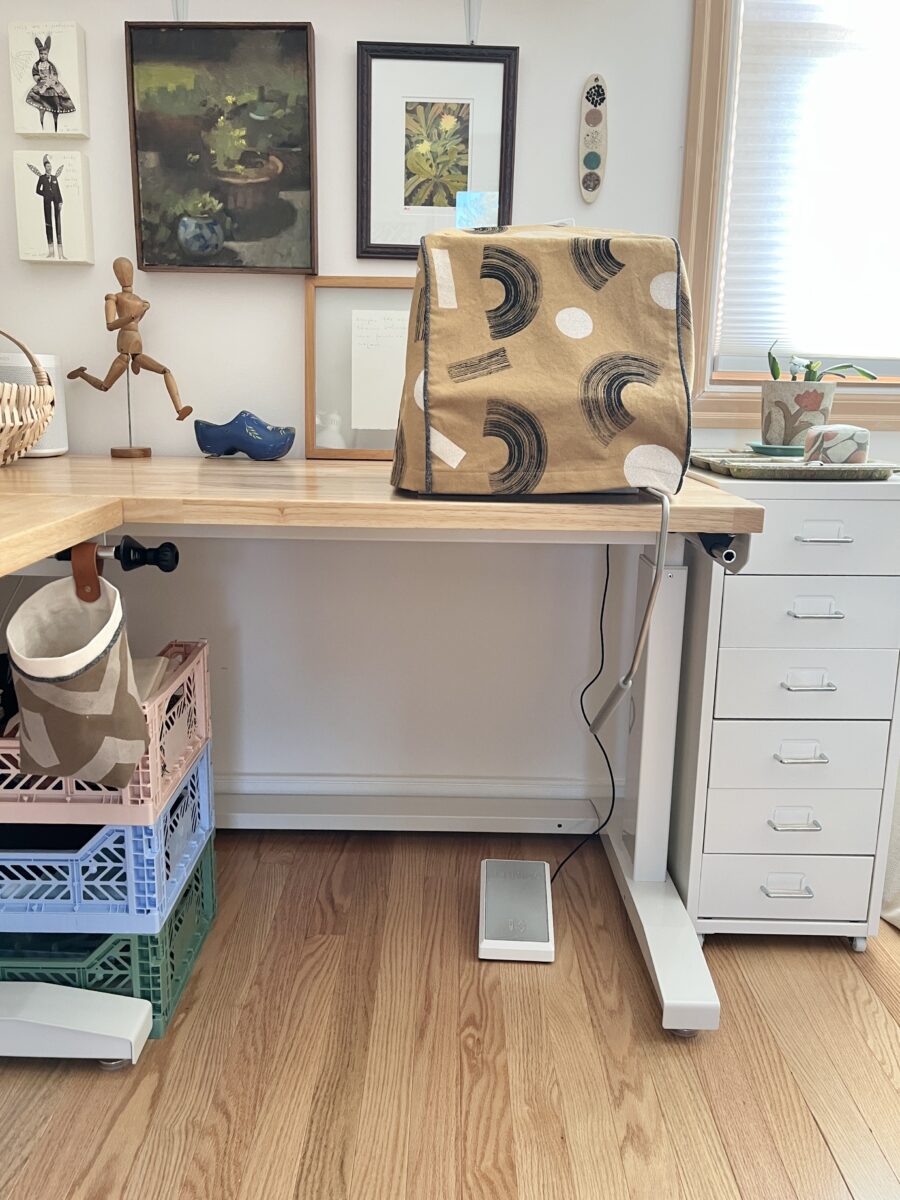
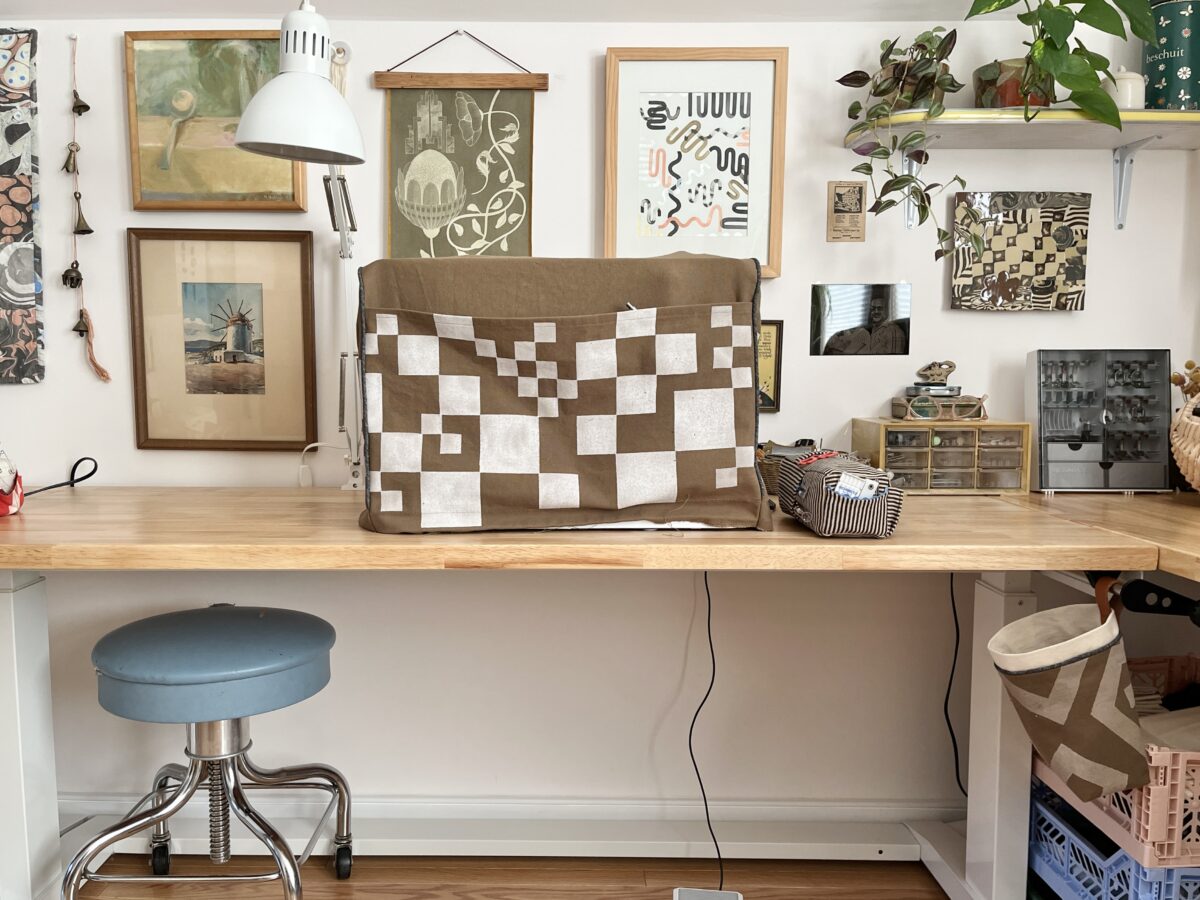
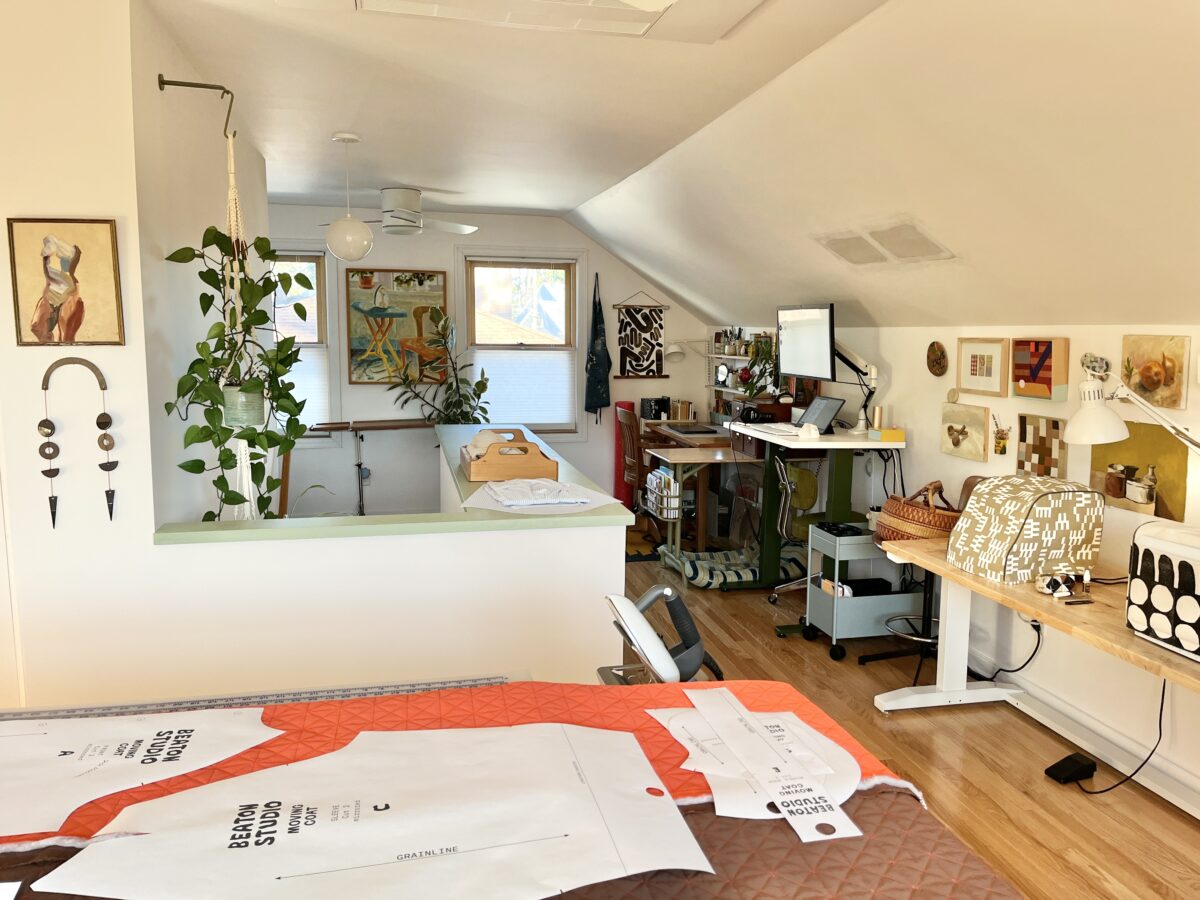
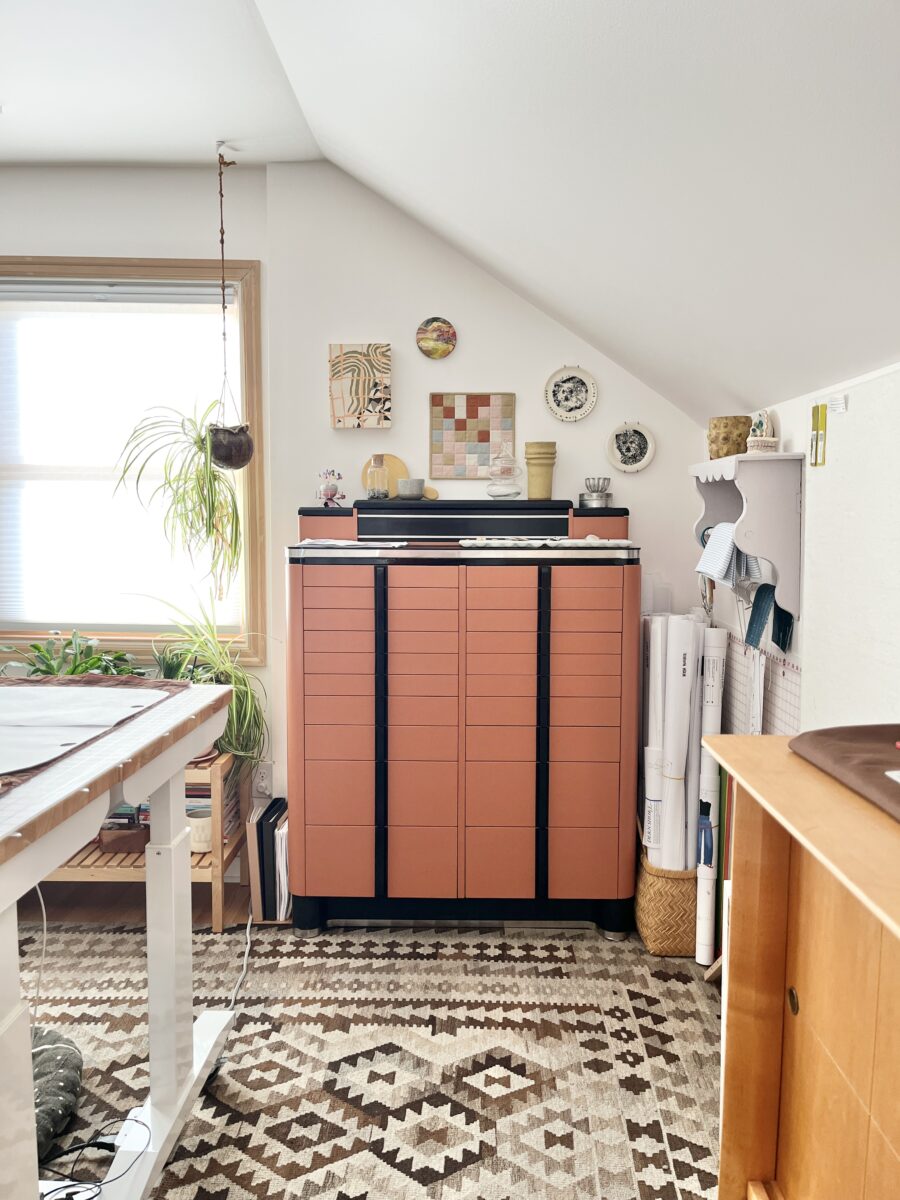
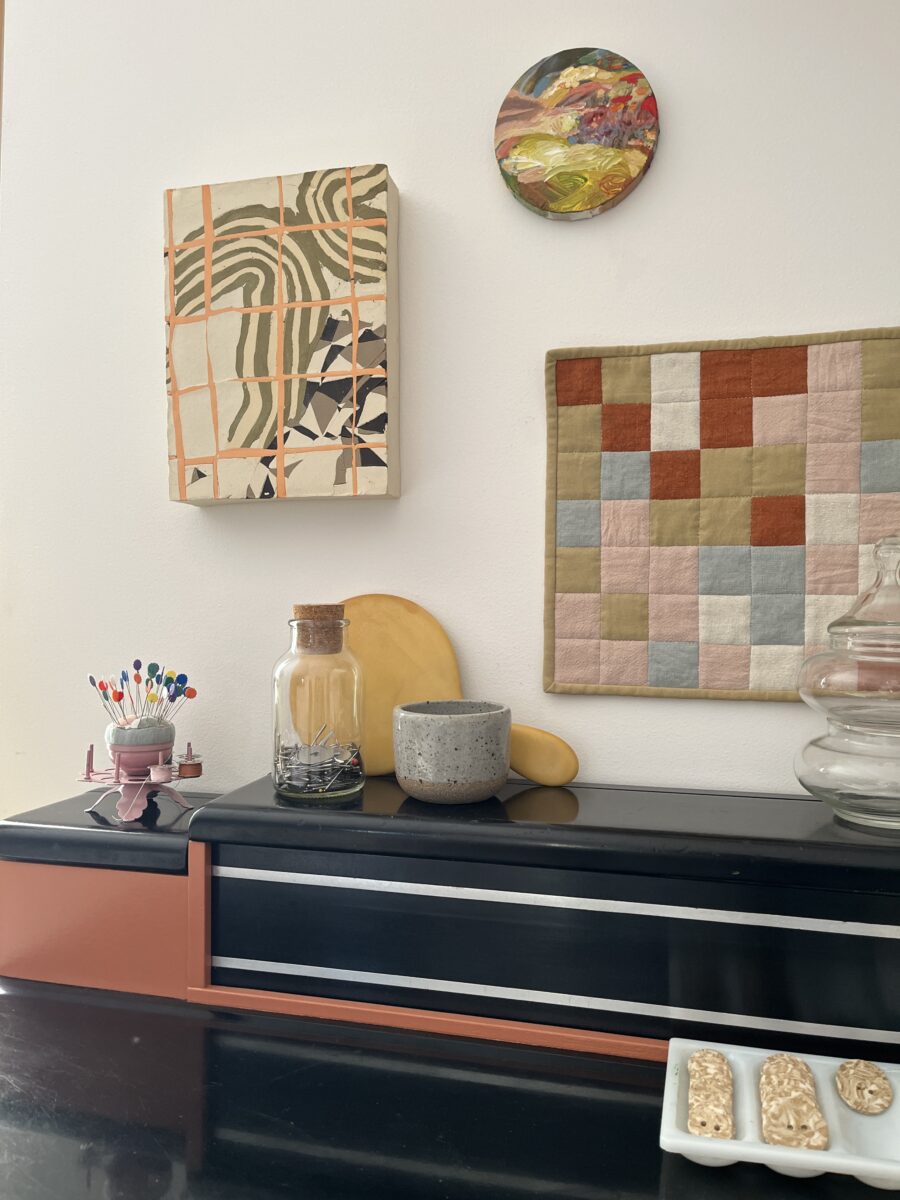
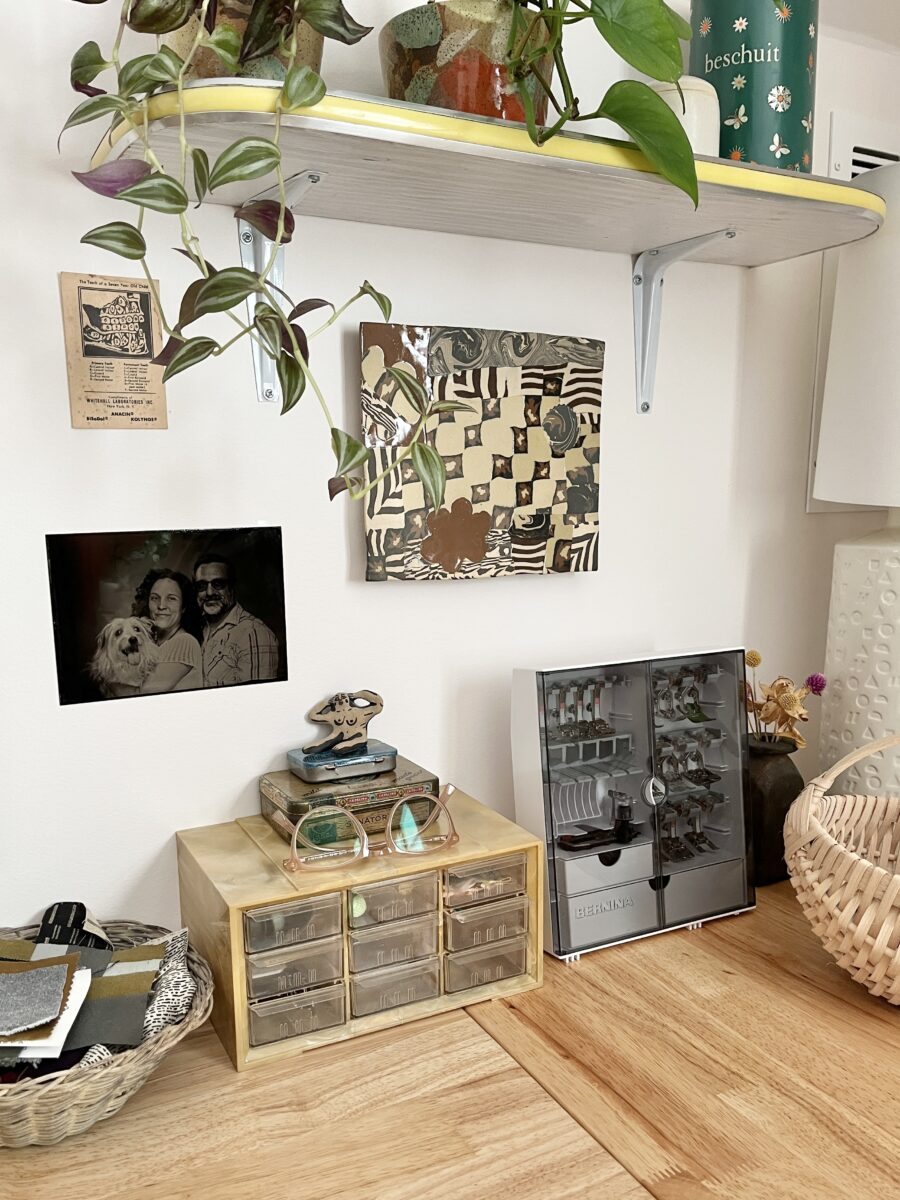
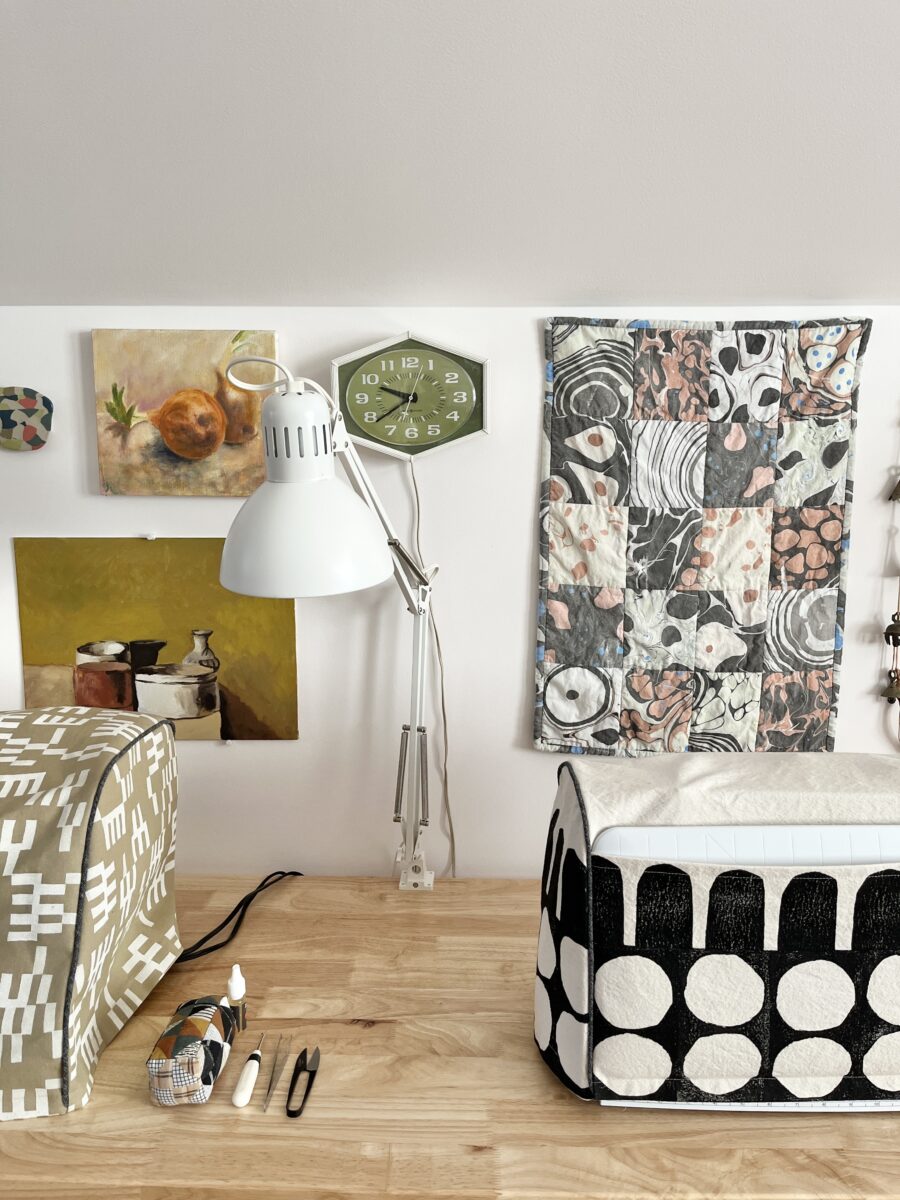
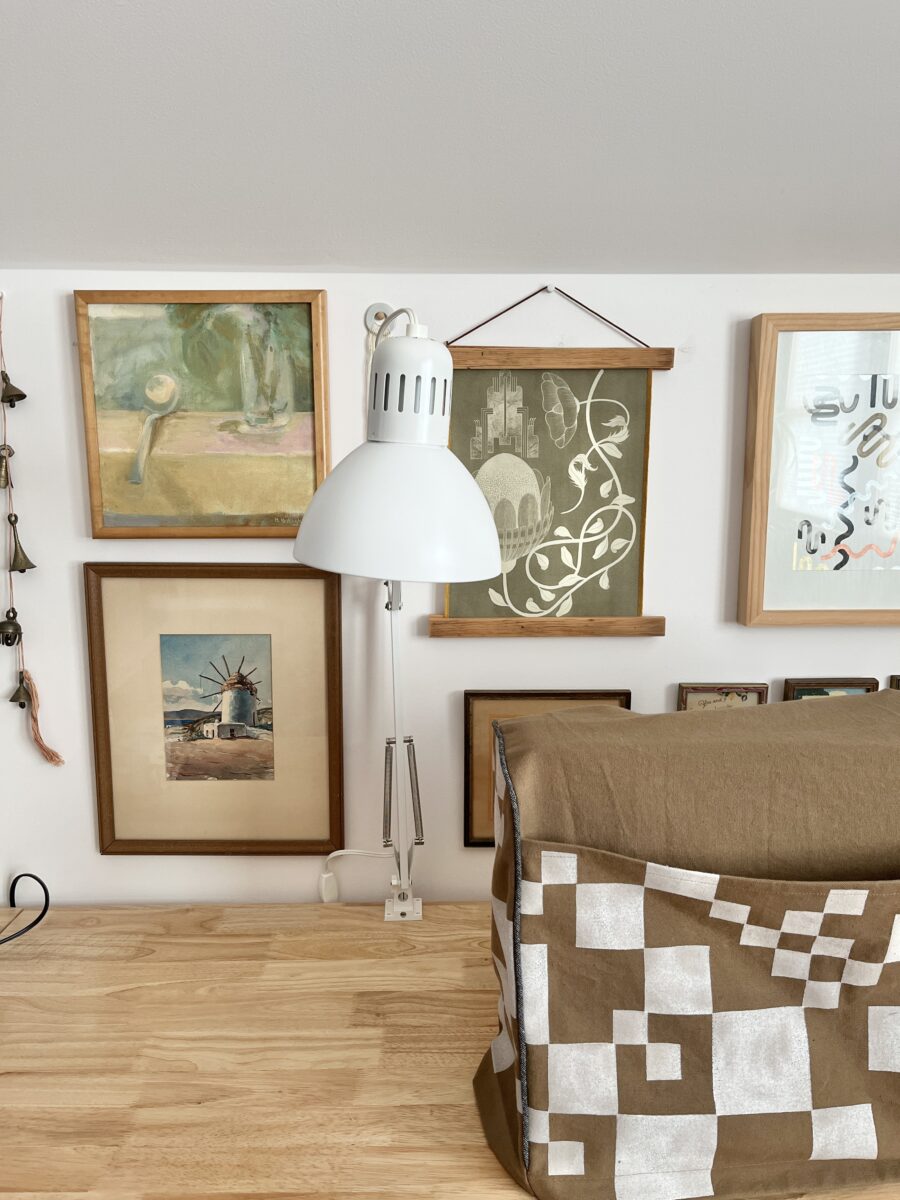
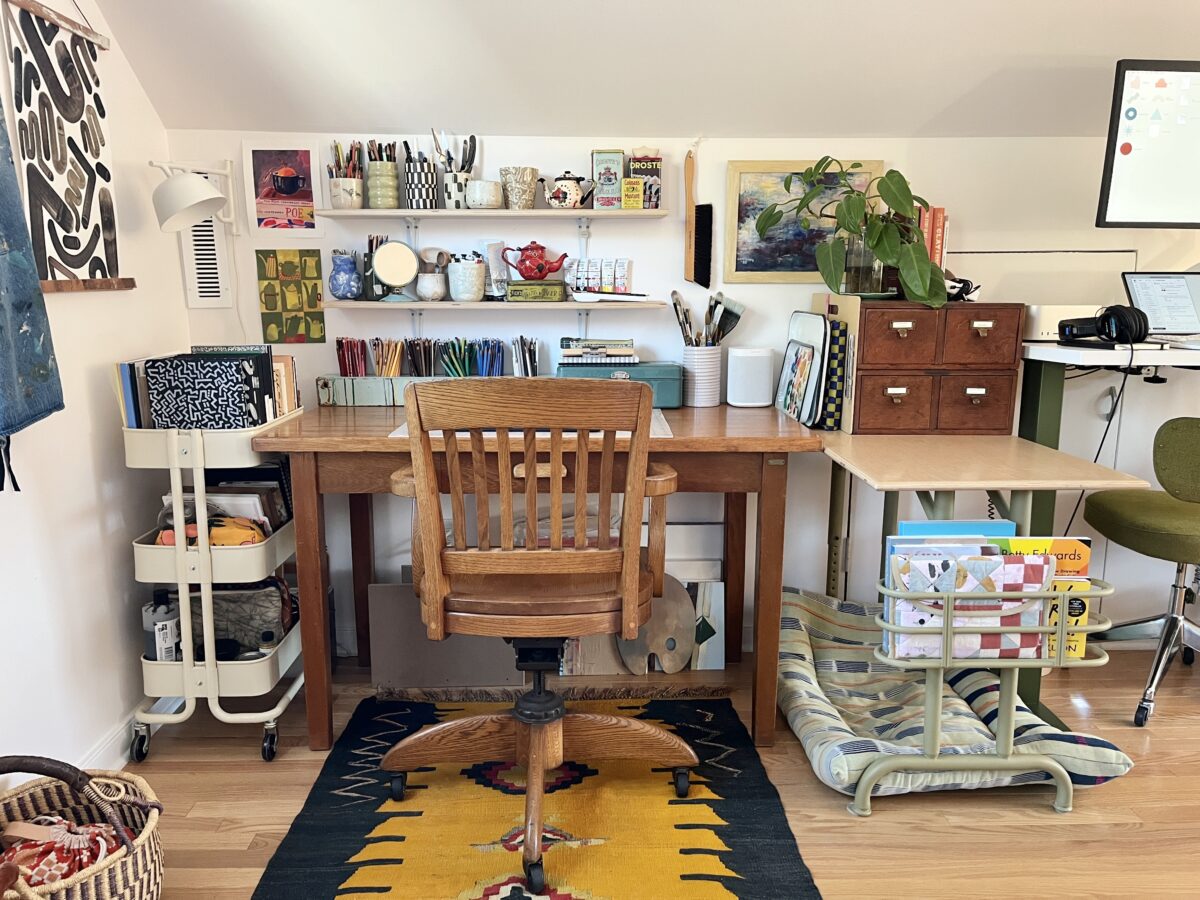
I haven’t done a full studio tour in a while, I think the last one was shortly after finishing the gentleman’s cabinet. Not a lot has changed, but I did feel inspired to do a deep clean after taking photos of my recent knitted FOs. As you can see, I had an unsightly cord mess, which is what inspired the cleaning.

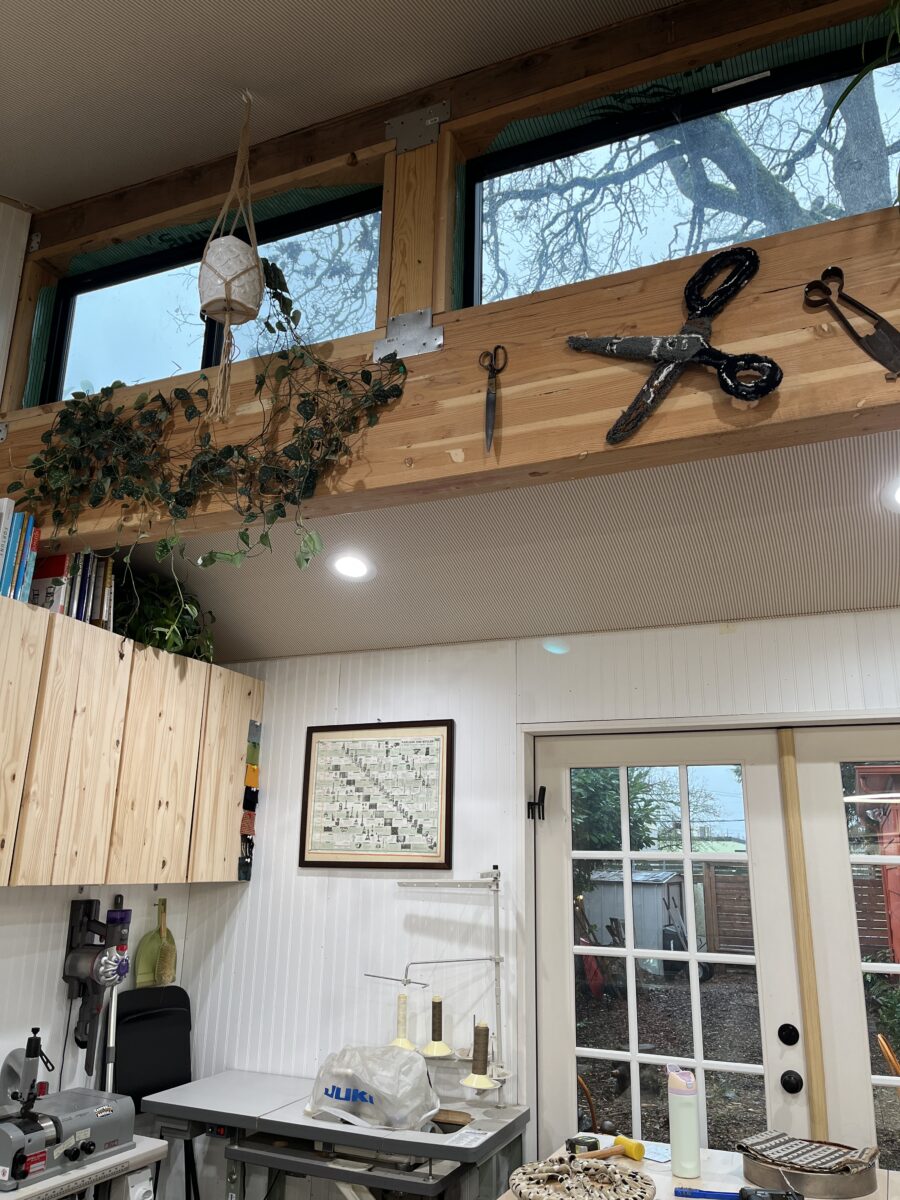
As I’ve mentioned before, I am super lucky to have the whole upstairs. Managing the climate up here has been a struggle until we installed this ceiling mini split. I need to paint over the failed heating/cooling attempt in the sloped ceiling, but I’m not quite ready for how much of a pain that will be as I also need to paint all of the window trim. It’s essentially painting the whole space again and I just can’t.

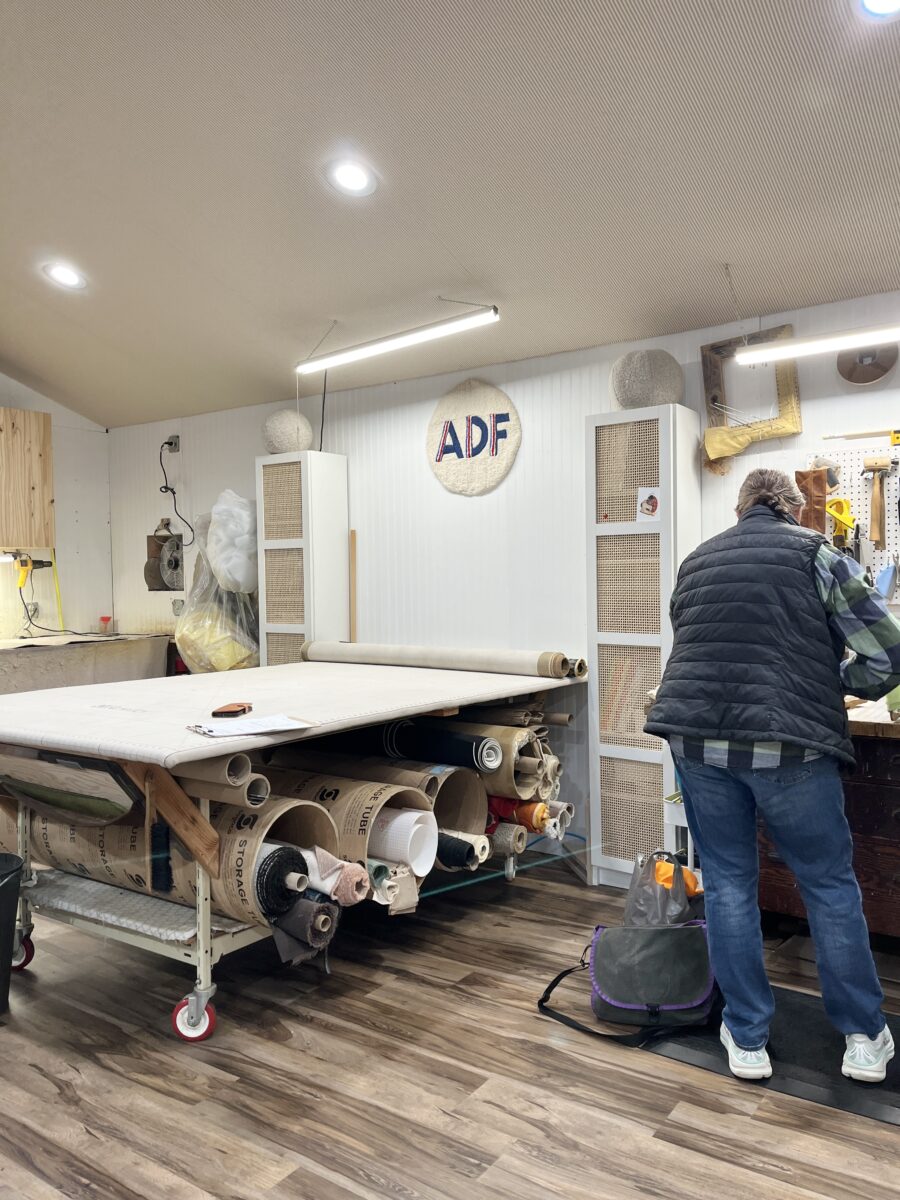
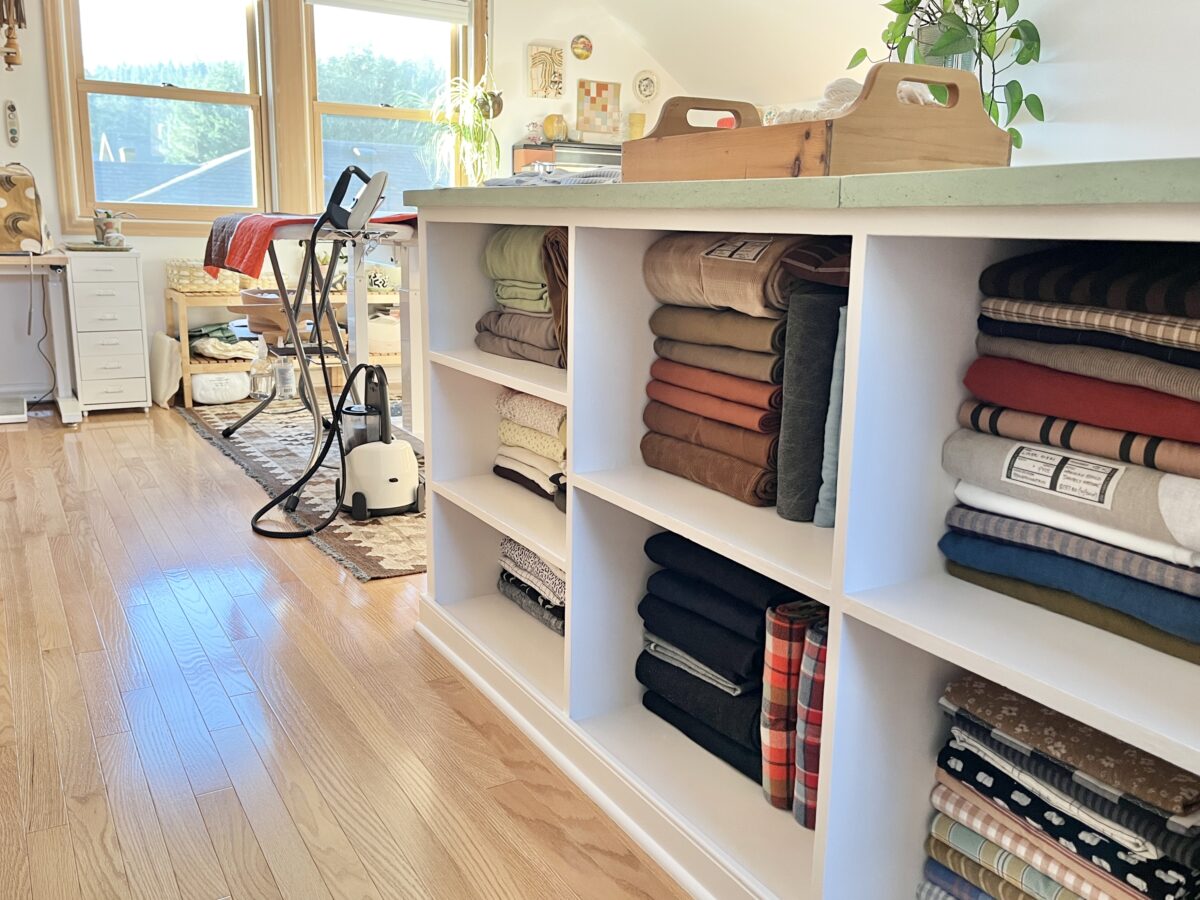
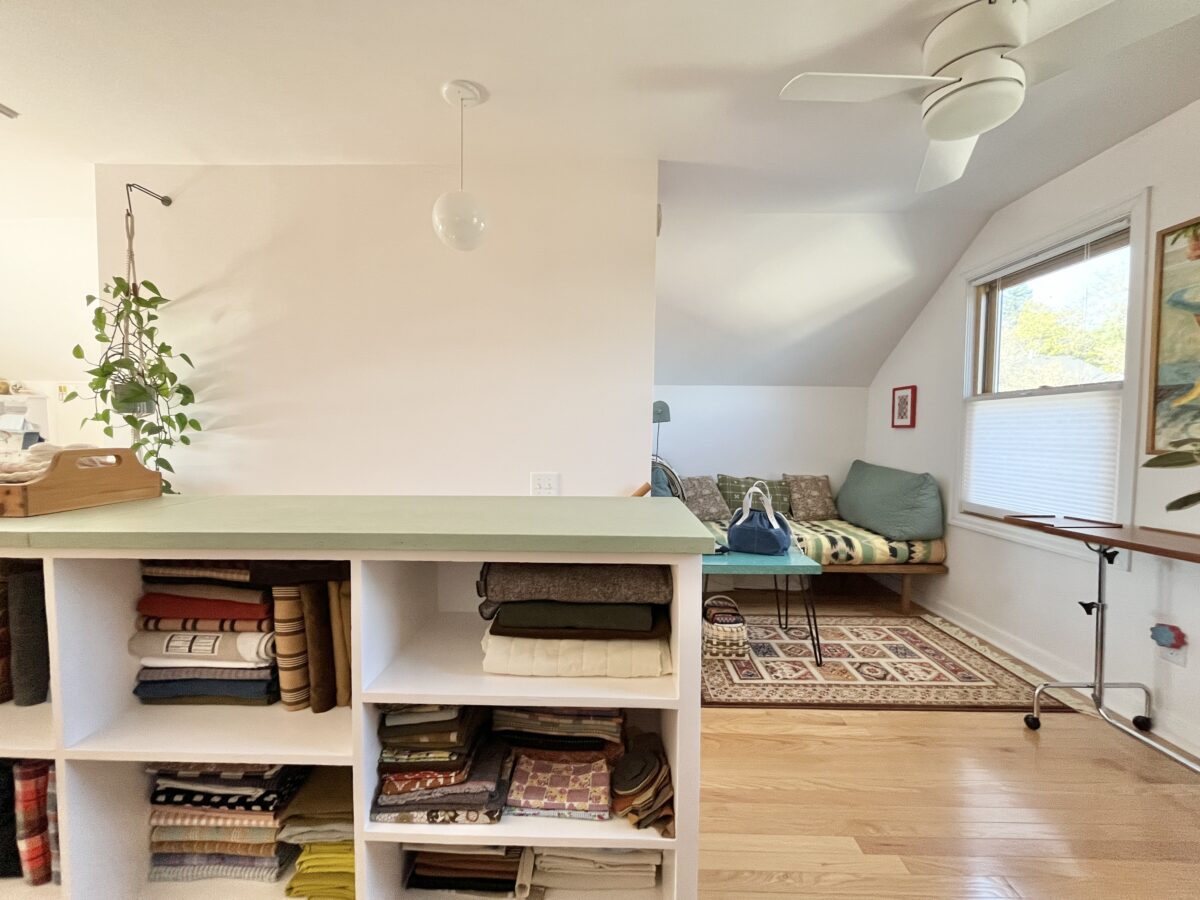
Fabric storage is still in the built-in shelves, but now my stash is fully contained here (I used to have a stack of fabric underneath one of the sewing tables). Over the past year, I’ve really been trying to use up some oldies and only purchase fabric when I have a project in mind and the desire to make it immediately.

My birthday gift from my husband was this long coveted piece by Sarah Sullivan Sherrod. I rearranged this whole section of artworks so that I could see it from my work computer.

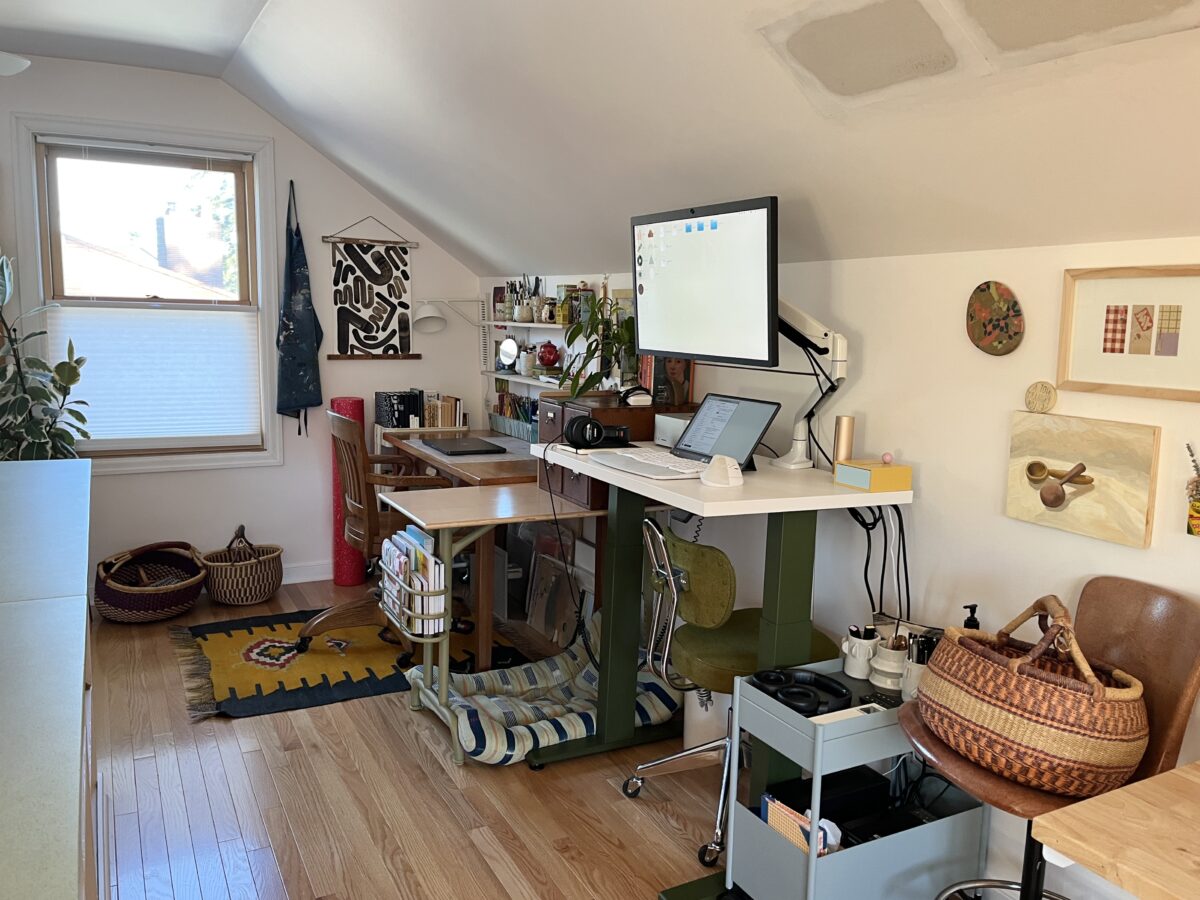
And the work from home space. Not an exciting view, but I did work on the cord management here too. I’m thinking about knitting a fun and colorful sleeve for the cords since they’re still so visible.

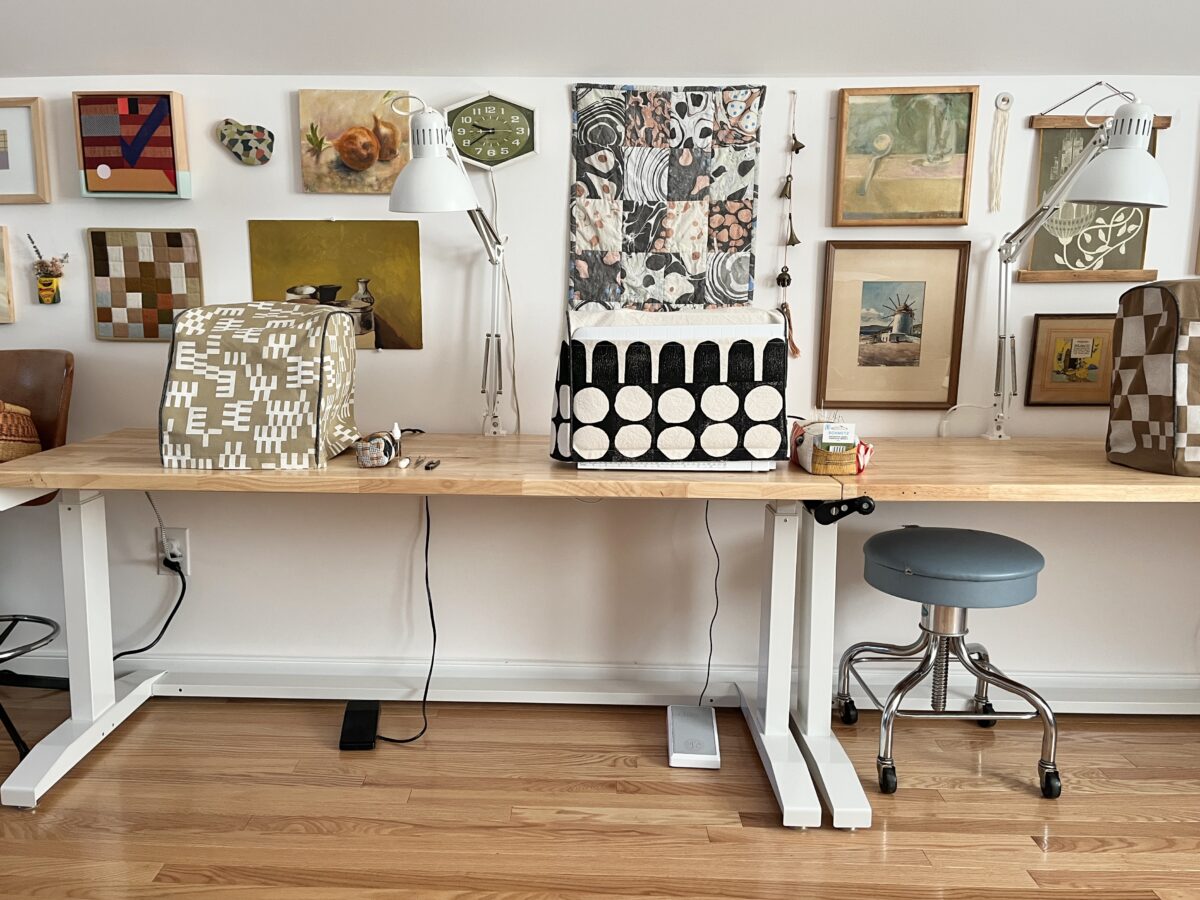
Tidying up the sewing machine cords feels so great! I also realized that my table depth is shallow enough to allow the foot pedal cords to run through the back.

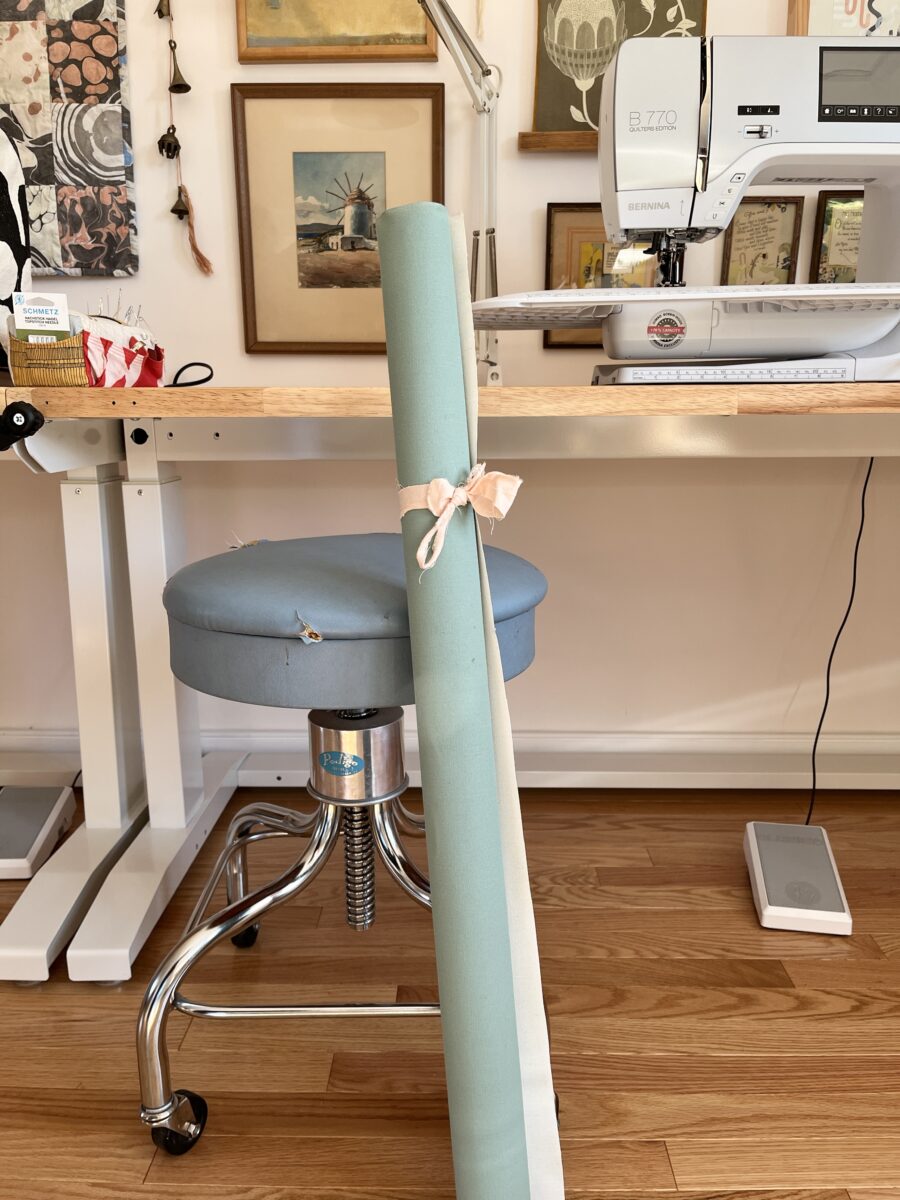
I recently bought this vintage medical stool for sewing and definitely prefer it to the old green chair I’d been using. It can be pushed right under the table and there’s no longer a risk of bashing a seat back into my machines’ free arm systems. The top of the stool is torn, so I signed up for a local upholstery class – very excited to learn from a professional.

And now we’re over by the cutting table.

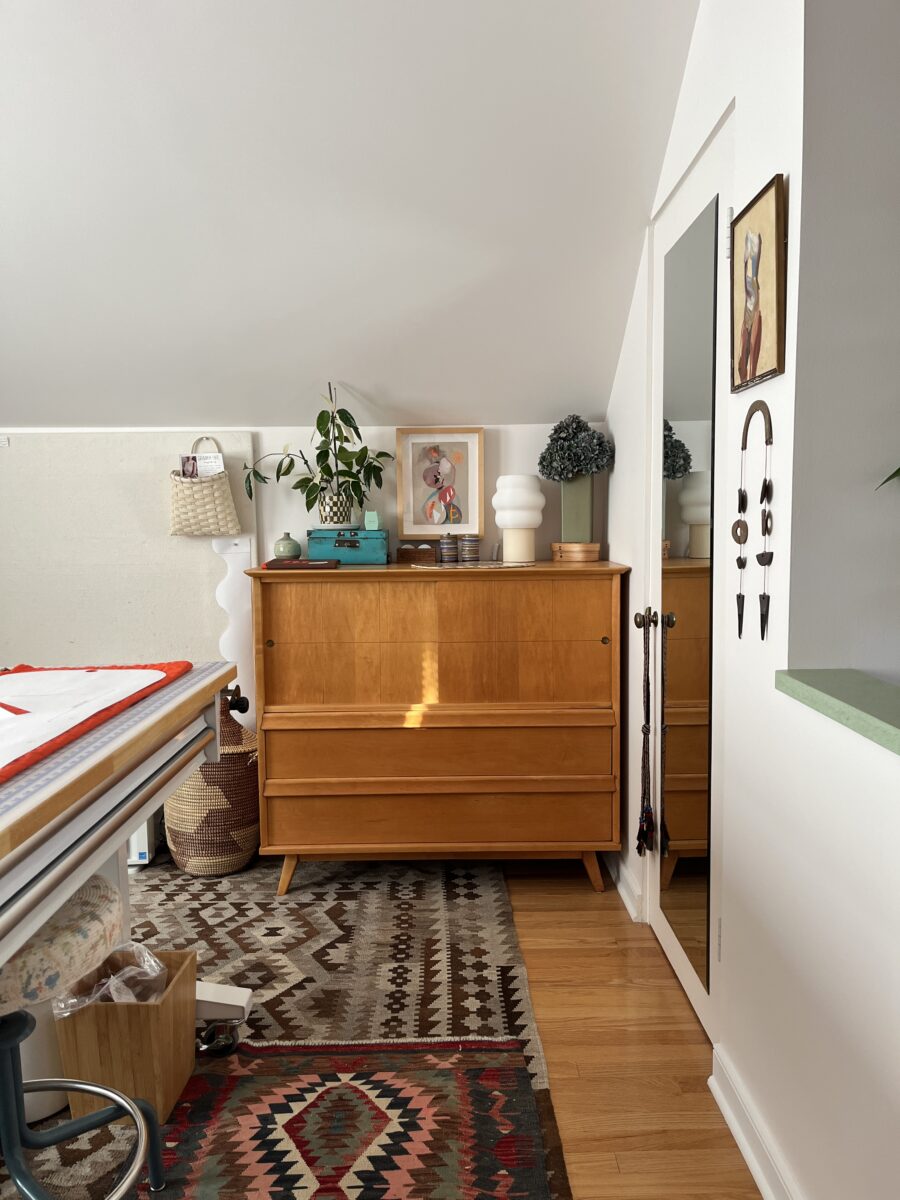
Slowly replacing IKEA furniture and fixtures (usually from my former classroom) with old, solid, and well-made pieces has really transformed the space. Both of these cabinets were refinished and restored by me and I am still very, very proud of how they came out. Not having all my thread and notions on display frees up the space for artwork, which I definitely prefer.

I am keeping my eye out for a low bookcase to sit underneath the window since these IKEA benches aren’t great for storing books. My husband and I might design and build something ourselves though. I have some ideas percolating.

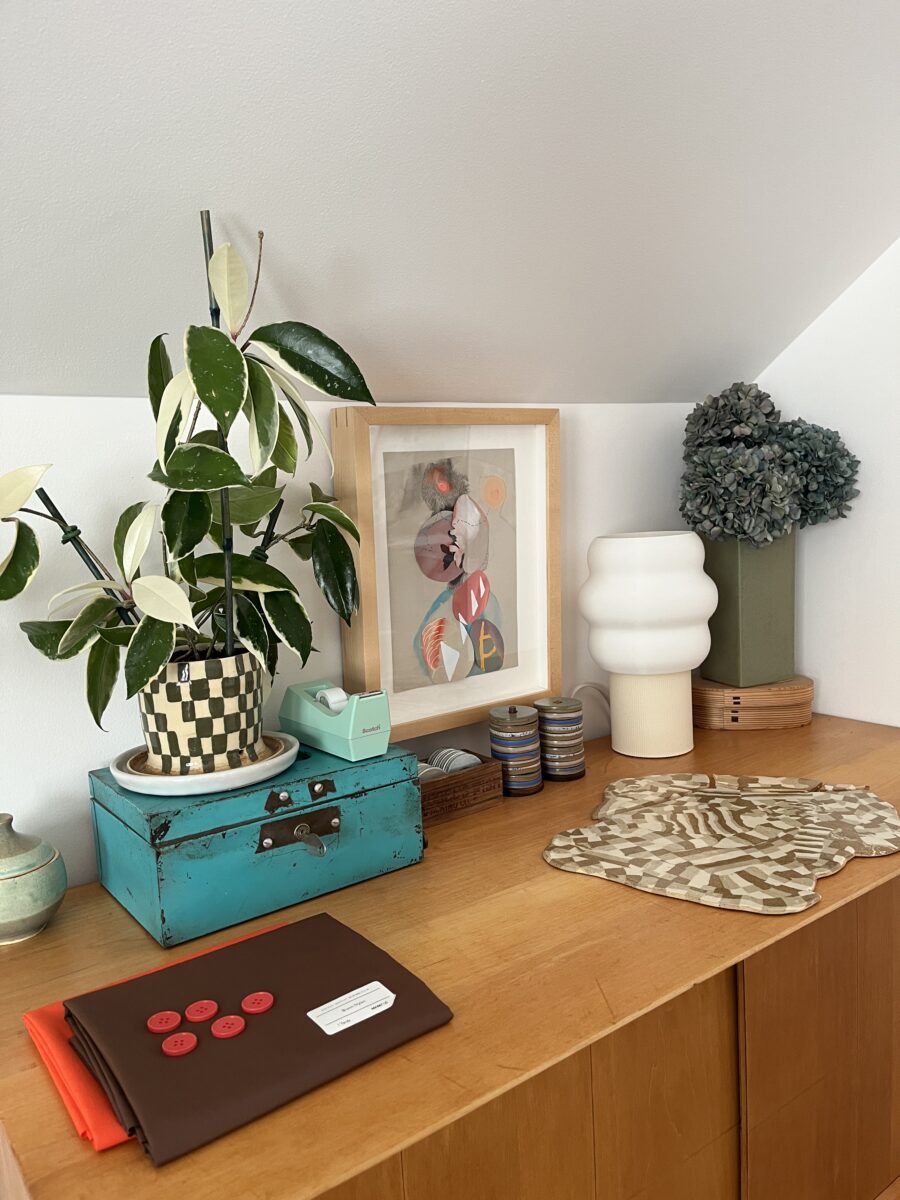
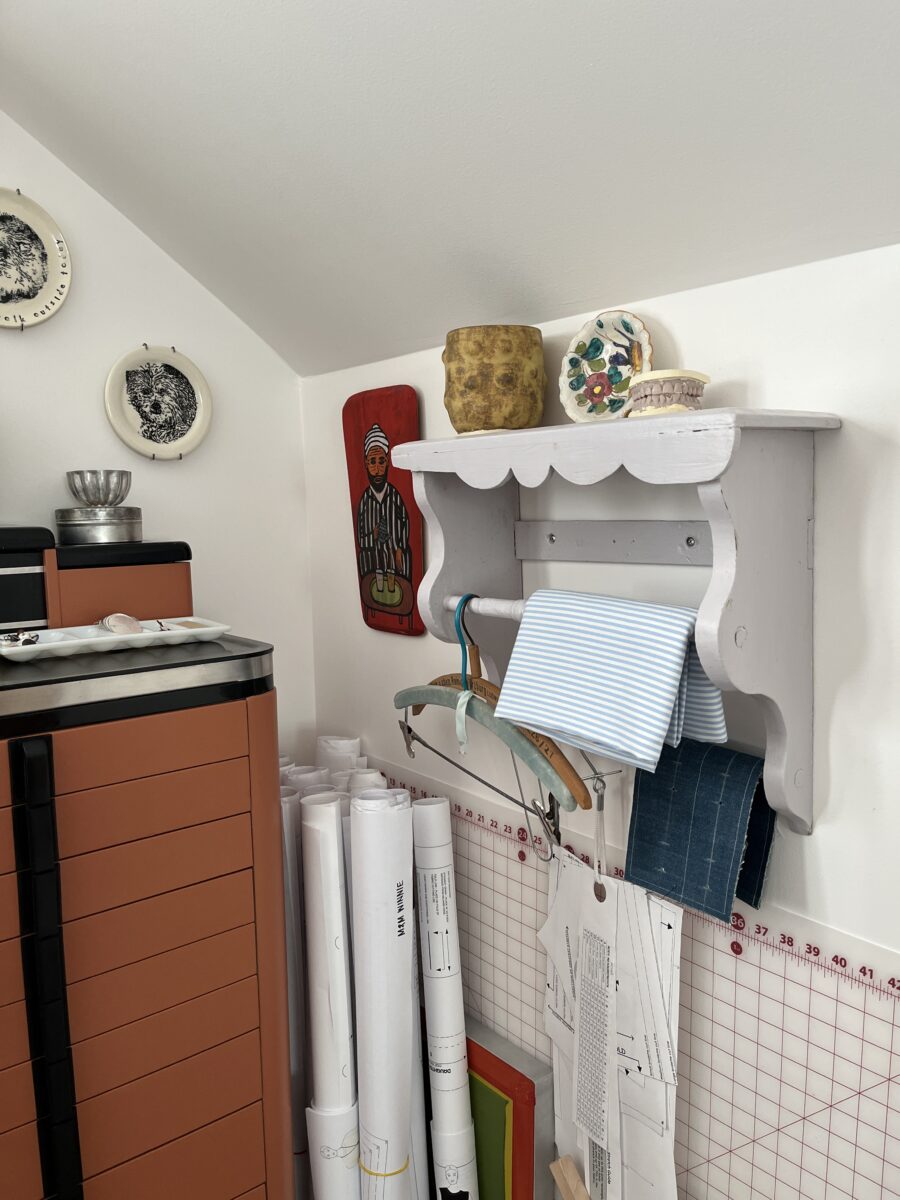
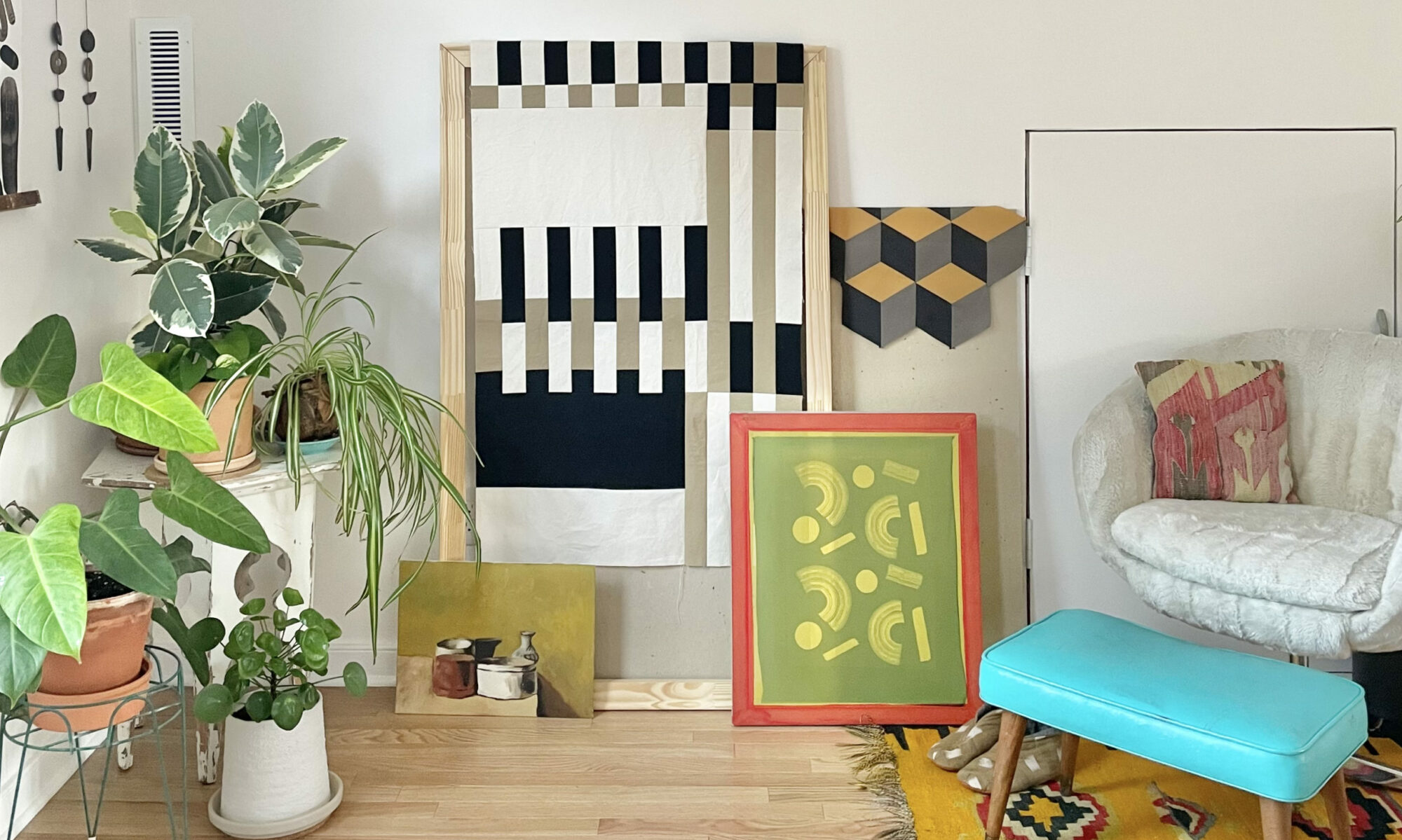
And here are some some vignettes from around the room.

And back over to other side of the space, I have my somewhat neglected art table and the knitting nook. This art practice is one of my greatest achievements and I’m really trying to get back into the habit. It’s such a challenge to make time for all my creative hobbies.

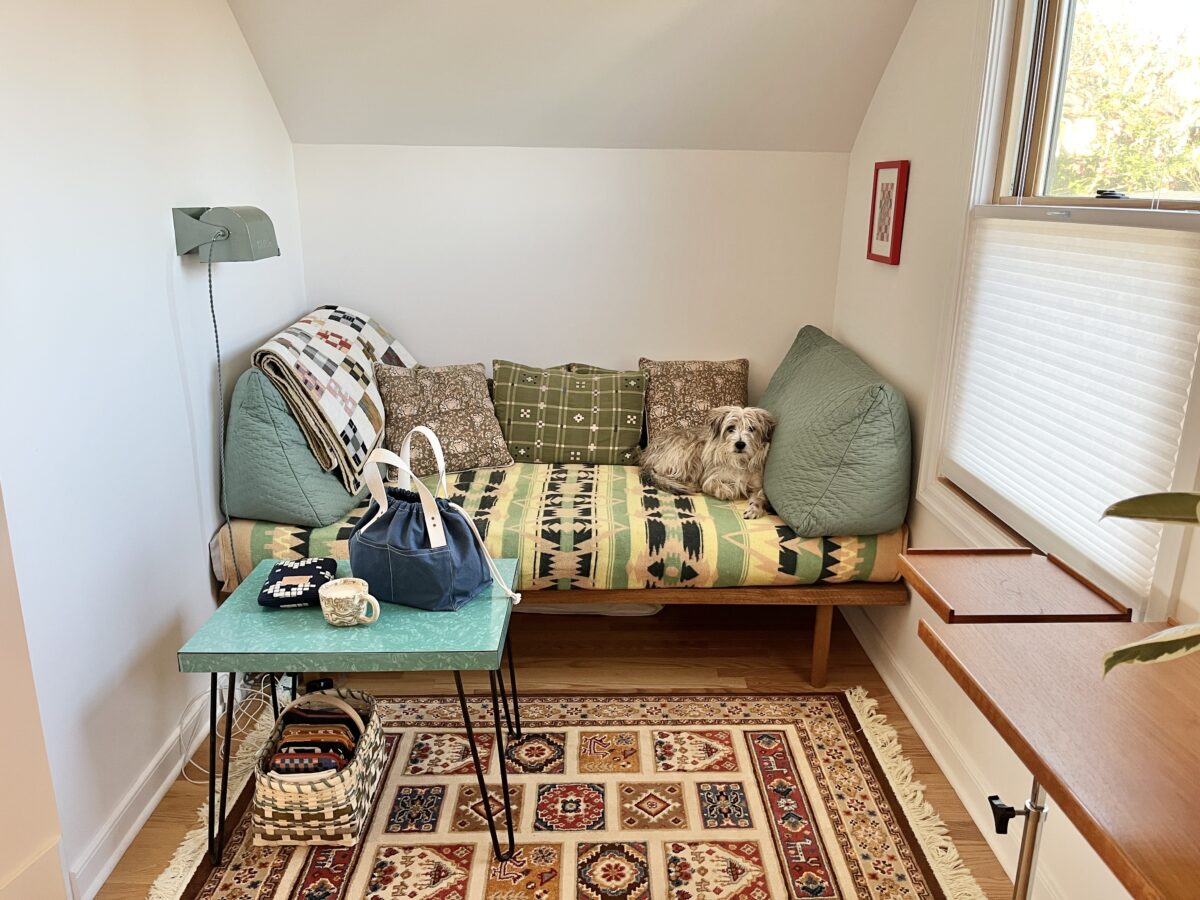
My husband built this incredible daybed last year. This little nook is about 2″ shorter than a standard bed or couch so I wasn’t going to find anything secondhand. It’s so cozy over here now.

Since this space also doubles as a guest room, I want to create a curtain a la Adam Pogue for some privacy. It’ll cut the window off at weird place, but I think it’ll be okay. Other plans for this area are to:

  • Paint it a cozy color to further differentiate it from the rest of room. Ugh more painting.
  • Build some under bed storage for guests.
  • Maybe find another rug to better match the space.
  • Add more art.
  • Make a little shelf with hooks. Possibly a ceramic and wood collab.
  • Sew a wall quilt for the big white wall.

I so enjoy seeing other people’s creative spaces. It’s also fun for me to look back on the iterations of this space.

A refashion and two cardigans

Duplicate Stitch | Towns Sweater | Ozetta

This was my first worsted weight sweater and it was rustic. I knit the whole thing continental and my loose purls caused a lot of rowing out. There were some noticeable color differences in the skeins despite being from the same dye lot. The collar was also just terrible (too high and lumpy).

So with loads of leftover yarn, I slowly started adding some duplicate stitch shapes to see if it would hide the base color shifts, my unintentional row stripes, and make it something I’d actually reach for. I think it worked!

Port Jacket | Ozetta

I had a relatively low knitting year in 2025, but I managed to make two much needed cardigans. I’d had my eye on Nora Madara yarn since I first saw the Sake colorway in a LYS, but then I found the brown and it was a done deal. This is definitely one of my most worn sweaters.

Lakes Cardigan | Ozetta

And here’s the second cardigan I finished last year, last day of the year. It’s also Noro Madara because I couldn’t help myself. Overall, I’m pleased with this sweater, but the deep v-neck makes it always kinda feel like it’s about to slide off my shoulders. Otherwise it’s perfectly oversized.

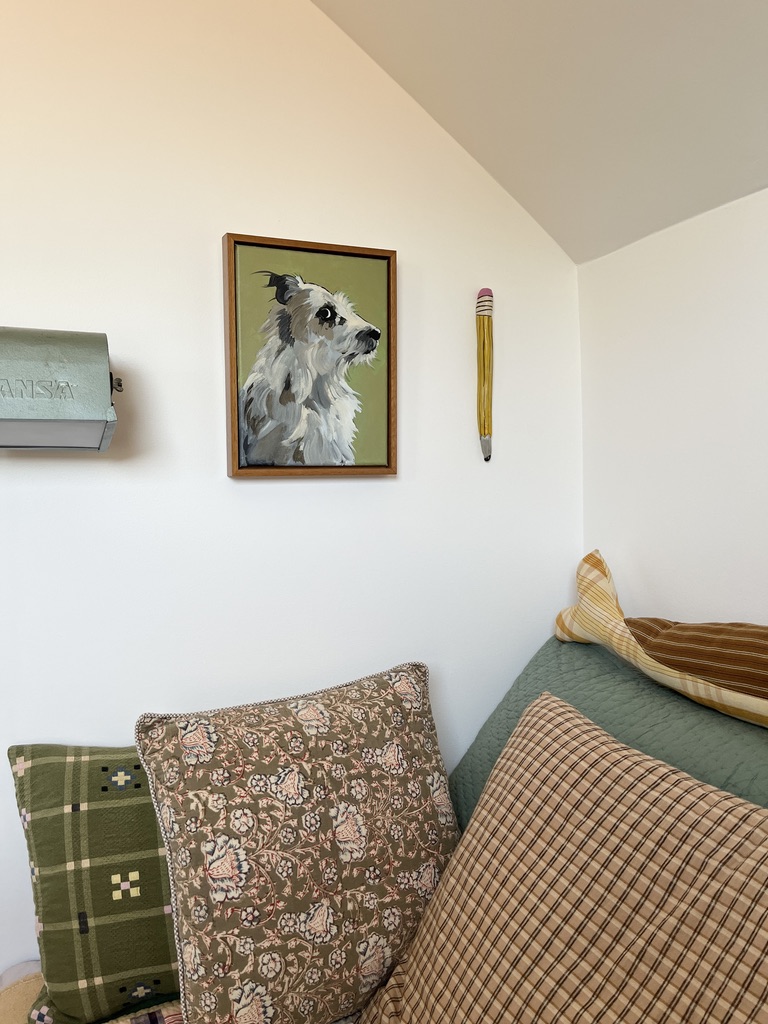
Finally found a light for the knitting nook!

I have been on the hunt for fun lighting for, honestly, years. I wanted something that could be mounted to the wall, was semi adjustable, and looked cool.

Vintage lighting is so hard to find. If it’s already been rewired, it’s a million dollars. If it’s cool looking, it’s a million dollars. If it’s close to garbage, it’s a million dollars.

I finally found this vintage Hansa darkroom safe light at an antique shop for not a million dollars ($46), but still kinda too much money. The tag said it worked, but the the cord was only 3′ long/gross, and it was missing the glass.

I took it home, removed the wiring, cleaned it with WD-40 and then began searching for a new wire ($22.10). Since it was going to be exposed, I figured a cloth covered wire would look the best. I also wanted to use a dimmable bulb. Next, I went to TAP Plastics and bought some mystery scrap for the screen ($2.50).

Rewiring this was HARD. The twisted cloth wire was much stiffer than the original, so I really had to muscle it into the housing. I wish the dimmer switch was closer to the light instead of the plug, but it’s fine. I am so pleased with this $70-ish light! It’s a good reminder to wait to find cool old things. I think it’s suits the knitting nook perfectly.